Volvo Executives Advocate for Enhanced EV Charger and Subsidy Support to Scale Low-Emission Trucking in Korea
The advanced technology for **electric trucks** and other **low-emission transport solutions** is fully developed and ready for widespread adoption. However, their crucial deployment in **South Korea** continues to face significant hurdles due to existing policy and **infrastructure gaps**, states **Volvo Trucks**. The company is urgently appealing to the **South Korean government** for robust support in developing **charging infrastructure** and providing essential **incentives** to accelerate this transition.
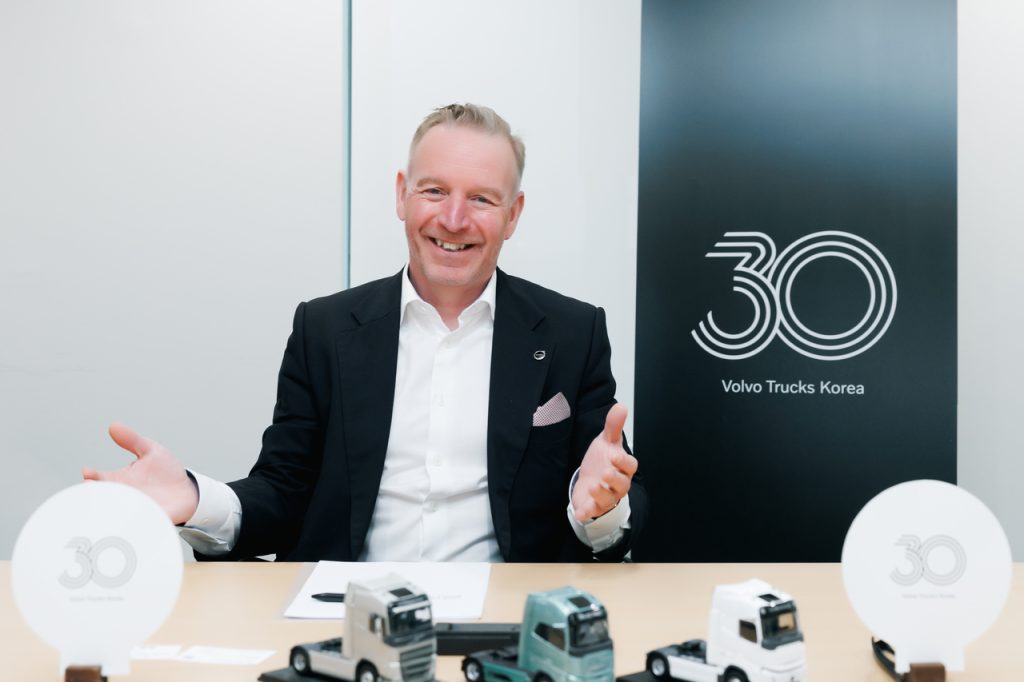
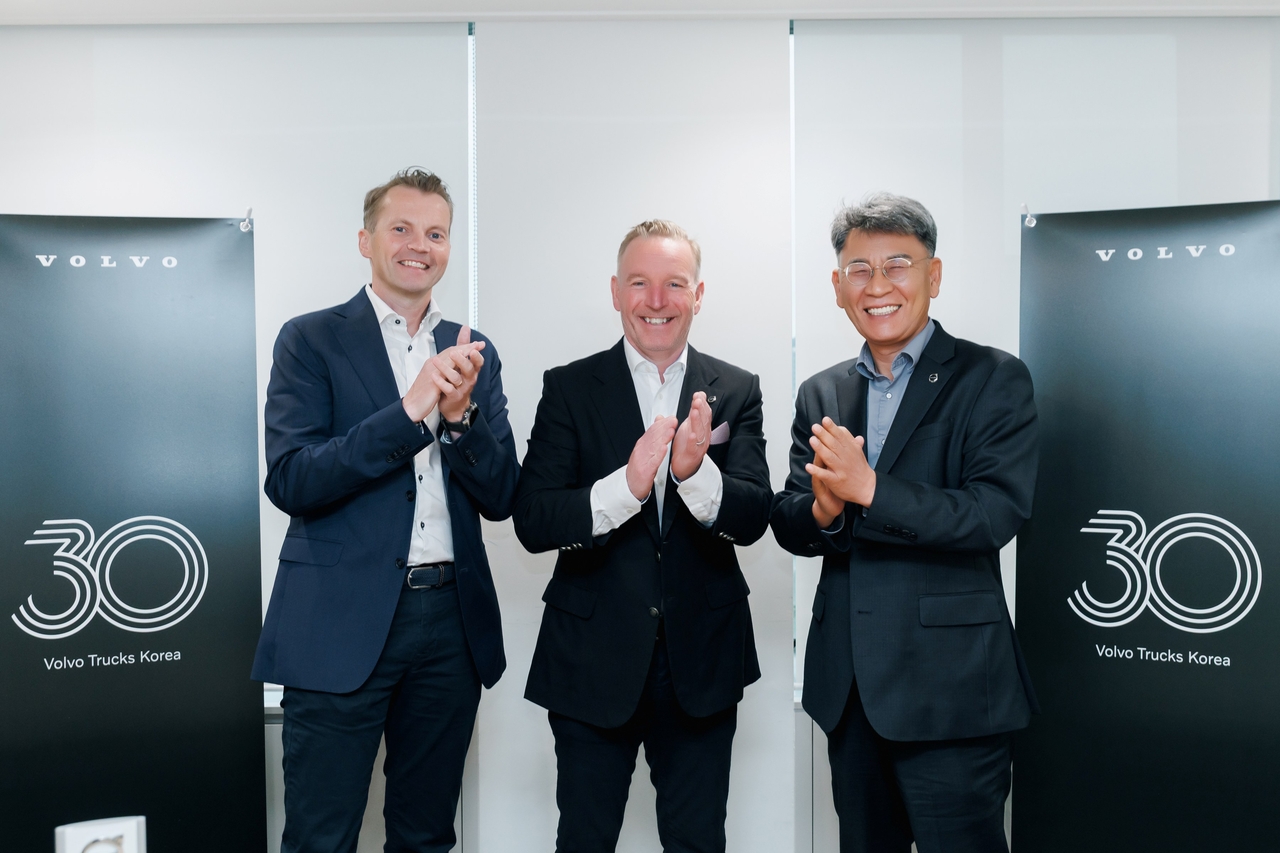
Per-Erik Lindstrom, Senior Vice President of **Volvo Trucks International**, emphasized during an interview with The Korea Herald in Seoul, “The sustainable transport solutions are readily available in the market. Our immediate challenge is to scale their implementation, which critically depends on strong **incentives** and significant investment in **charging infrastructure**.” Lindstrom’s visit to **South Korea** coincides with the notable 30th anniversary celebration of **Volvo Trucks Korea**, underscoring the market’s importance.
Lindstrom aptly characterized the current dilemma as a “Catch-22.” While **Volvo** has pioneered **electric trucks** engineered for ultra-fast charging capabilities of up to 700 kilowatts, the widespread adoption and large-scale deployment of these advanced vehicles are contingent upon a commensurate development of comprehensive **charging infrastructure**. This challenge extends equally to the future of **hydrogen trucks** and other promising alternative energy transport solutions.
He further stressed, “We at **Volvo Trucks** are committed to this transition with serious dedication and substantial investment. However, we cannot achieve this alone. A concerted effort from society as a whole is essential to effectively **reduce CO2 emissions** from heavy-duty transport.”
**Volvo Trucks Korea** President Park Gang-serk reiterated this crucial perspective, asserting that the **Korean government’s subsidies** for **electric heavy-duty trucks** are presently inadequate. He strongly advocated for comprehensive and sufficient policy support to drive market adoption.
Park emphasized, “For the entire **commercial vehicle industry**, the imperative to **reduce carbon emissions** is no longer an option, but a fundamental necessity.” He elaborated on the economic barrier: “While customers demonstrate a clear desire to acquire **electric trucks**, prohibitive costs without realistic **subsidies** make them unaffordable. This lack of demand, in turn, prevents manufacturers from achieving the production scale required to lower unit costs, thereby perpetuating a vicious cycle that significantly impedes the vital **transition to sustainable transport**.”
These significant appeals coincide with **Volvo Trucks’** recent launch of its groundbreaking new generation of **electric trucks** in April. Among these innovations, the **FH Aero Electric** stands out, offering an impressive driving range of up to 680 kilometers on a single charge, even while efficiently hauling substantial loads up to 48 metric tons.
Lindstrom confirmed that **Volvo Trucks** is actively working to introduce the advanced **FH Aero Electric** to the **South Korean market** following the completion of all necessary local certification procedures.
**Volvo Trucks** anticipates the official launch of the **FH Aero Electric in Korea** next year. It is important to note, however, that the final specifications for the Korean market may vary from the European version due due to specific regulatory differences.
**Volvo Trucks’** forward-looking strategy for **sustainable transport** extends beyond exclusively **battery-electric vehicles**. The company is actively pursuing a comprehensive three-pronged approach that integrates **internal combustion engines** powered by renewable fuels, advanced **battery-electric solutions**, and pioneering **fuel cell technology**, specifically including **hydrogen fuel cells**.
**Volvo Trucks** underscored that **combustion engines** will retain a vital role in the transport sector for years to come, especially when optimally paired with innovative **renewable fuels** such as biodiesel, hydrotreated vegetable oil (HVO), biogas, and biomethane, significantly reducing their environmental footprint.
Since commencing commercial production in 2019, **Volvo** has successfully sold over 6,000 **electric trucks** across 50 countries globally. These **electric vehicles** have collectively achieved an impressive milestone, logging more than 400 million kilometers in real-world customer operations worldwide, demonstrating their reliability and performance.
**Hydrogen fuel-cell technology** remains a cornerstone of **Volvo’s long-term roadmap** for sustainable transport. However, Lindstrom acknowledged that its widespread commercialization would require a longer timeline, primarily due to the current high associated costs.
Regarding **autonomous trucks**, **Volvo** is making substantial investments through its specialized division, **Volvo Autonomous Solutions**, leading the charge in developing self-driving transport solutions.
**Volvo’s autonomous trucks** are already proving their capabilities, actively operating on Texas highways and integrated into demanding Norwegian mining operations, showcasing their robust performance in controlled environments.
Company executives affirm that **autonomous technology** is sufficiently “mature” for deployment in predictable, repetitive routes, including highways, port operations, and dedicated logistics hubs. Nevertheless, broad-scale integration into complex urban environments is still considered several years away.
Johan Selven, Vice President of Sales and Marketing at **Volvo Trucks International**, highlighted, “Human drivers will undeniably maintain a crucial role in transportation for a significant period.” He further explained that **autonomous driving** is expected to be adopted first in consistent, predictable routes before gradually expanding into more intricate city distribution scenarios, a transition he noted would “take some time.”
Reflecting on **Volvo Trucks’** extensive presence and decades of operation in **South Korea** since its market entry in 1996, executives characterized the nation as a highly demanding and profoundly influential market. They noted that the **Korean market** has been instrumental in shaping the company’s global product development, service offerings, and comprehensive customer support strategies.
Lindstrom reiterated, “**South Korea** represents an exceptionally important market for us, driven by very discerning customers.” He added, “The dynamic **Korean market** plays a pivotal role in helping us continually refine our product offerings and enhance our excellence in both service and sales operations globally.”
**Volvo Trucks Korea** has consistently solidified its leadership as the premier imported **truck brand in South Korea**. The company commands approximately 44 percent of the imported **commercial vehicle market** and holds about 24 percent of the overall **heavy-duty truck market**, according to its internal assessments, underscoring its strong market presence.
**Volvo Trucks Korea** attributes its sustained success to an unwavering commitment to superior **product quality**, unparalleled **safety leadership**, and a robust, extensive service network now encompassing 31 strategic locations nationwide, ensuring comprehensive customer support across **South Korea**.
**Volvo** also highlighted the indispensable role of its **Korean partners** in accelerating its ambitious **electrification strategy**. Notably, **Volvo’s electric trucks** are powered by high-performance batteries supplied by **Samsung SDI**. Park emphasized that this strategic partnership has been absolutely critical in advancing the successful commercialization of **battery-electric heavy-duty trucks** since 2019.
Furthermore, **Volvo Trucks Korea** is actively collaborating with the prominent **Korean charging infrastructure provider Chaevi** to develop and expand robust **charging networks specifically designed for commercial vehicles** across the nation, further supporting the transition to **electric mobility**.