South Korea’s AI Ambitions Face Power Grid Challenge as Experts Prioritize Electricity Over GPUs
South Korea’s ambitious pursuit of leadership in artificial intelligence is confronting a critical bottleneck that transcends mere chip acquisition: a robust and reliable electricity supply. The nation’s aspirations for AI competitiveness are increasingly tethered to its power infrastructure.
While global giants like the US and China invest hundreds of billions into advanced AI infrastructure, Korean experts highlight a shifting priority. The primary hurdle for South Korea is no longer merely acquiring cutting-edge Nvidia GPUs, but rather guaranteeing sufficient power, grid capacity, and strategic locations essential for operating the burgeoning AI data centers that these powerful chips demand.
Global Titans Intensify the AI Infrastructure Race
Mounting pressure from global investment underscores the urgency of accelerating AI infrastructure development worldwide.
In the US, the ambitious Stargate Project, backed by prominent entities such as OpenAI, SoftBank, Oracle, and MGX, was unveiled in January 2025. This initiative pledges a colossal $500 billion investment over four years into pioneering AI infrastructure. This extensive buildout is predominantly private-sector-led, with crucial government support anticipated for areas like permits, land acquisition, and power supply.
China, conversely, is pursuing a more state-orchestrated model for its AI expansion. Bloomberg News reported Beijing’s comprehensive plan to allocate approximately 2 trillion yuan ($295 billion) over five years to construct a nationwide network of advanced AI data centers. State-owned enterprises like China Mobile and China Telecom are expected to operate a significant portion of this infrastructure, while domestic suppliers, including Huawei, are tasked with providing critical AI technologies.
South Korea’s response, though on a smaller scale, reflects growing ambition. The Ministry of Science and ICT aims to stimulate 65 trillion won ($42.8 billion) in private AI investment between 2024 and 2027. Separately, the government plans to elevate its national AI budget to 10 trillion won in 2026 and mobilize up to 30 trillion won through public-private AI investment partnerships.
Korea’s AI Bottleneck Shifts: From GPU Acquisition to Sustainable Power
A fundamental pillar of South Korea’s initial AI strategy has centered on securing a steady supply of advanced AI chips. Nvidia, last year, announced plans to provide over 260,000 GPUs to the Korean government and leading corporations, including Samsung Electronics, SK Group, Hyundai Motor Group, and Naver Cloud.
However, industry experts now contend that the primary bottleneck is rapidly shifting from the procurement of these powerful chips to the intricate challenge of consistently operating them.
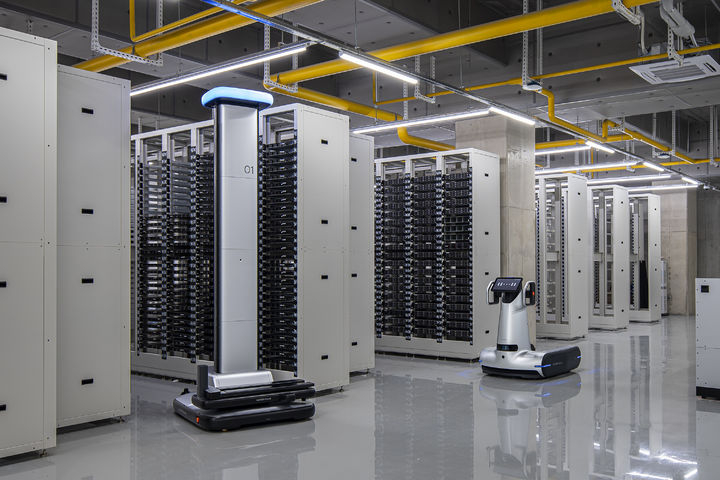
Modern AI data centers exhibit significantly higher electricity demands compared to traditional data facilities. Industry estimates indicate that a single server equipped with eight Nvidia B200 GPUs can require approximately 20 kilowatts of power, including essential cooling. A rack containing just four such servers can consume roughly 80 kilowatts, a stark contrast to the typical 3 to 5 kilowatts required by conventional data centers.
This stark disparity in power requirements has propelled robust electricity infrastructure to the forefront of South Korea’s national AI strategy.
Professor Park Jong-bae of Konkuk University’s Electrical and Electronics Engineering department warns that the continued clustering of AI data centers within the densely populated Seoul metropolitan area risks overwhelming the national power grid. He cautions that such concentration could lead to grid overload, severe transmission bottlenecks, and critical power supply stability issues across the country.
With over 70 percent of South Korea’s existing data centers already concentrated in the capital region, Professor Park identifies this as a growing vulnerability. He advocates for the strategic decentralization of new AI data centers, urging their construction outside the Seoul area, and calls for eased regulations governing direct power purchases by these facilities.
In response, the government has introduced measures such as the Distributed Energy Act and enhanced grid impact assessments to incentivize AI data center development beyond the capital region. However, industry officials emphasize that mere permitting support will be insufficient unless comprehensive solutions addressing stable power supply, adequate cooling capacity, land availability, and pressing environmental concerns are developed concurrently.
Charting a Unique Course: South Korea’s Strategic AI Infrastructure Options
South Korea’s challenge in the AI domain extends beyond just electricity. While Samsung Electronics and SK hynix maintain global leadership in memory chip production, the nation remains heavily reliant on Nvidia for GPUs and much of the broader AI accelerator ecosystem. This reliance sparks crucial discussions on whether South Korea should directly contend with the US and China in developing hyperscale AI infrastructure, given its established strengths in memory chips.
For South Korea, China’s state-led buildout strategy highlights a significant strategic dilemma: should it join the global race towards constructing ever-larger GPU-centric campuses, or would it be more prudent to pursue a diversified, distributed AI model built upon its inherent industrial strengths?
Professor Yoo Hoi-jun from KAIST’s School of Electrical Engineering advises against competing on identical terms with the world’s two largest economies. He asserts that the intensive battle centered on GPUs and vast hyperscale data centers is already an arena where the US and China have secured a clear and dominant advantage.
“Rather than competing in the same way, Korea needs to find niche markets where it can generate real economic value,” Professor Yoo suggested. He advocates for South Korea to leverage its strong foundation in memory technology, advanced processing-in-memory innovations, and the development of domestic AI accelerators, while strategically looking beyond massive hyperscale facilities.
Professor Yoo further explained, “For large-scale data center infrastructure, the framework is already largely set, so it will not be easy for new technologies to be adopted quickly.” He concludes that “on-premises systems, small data centers, and edge servers may offer more room for Korea to compete effectively.”
Such a strategic approach would more closely align South Korea’s AI infrastructure development with its core strengths in semiconductors, advanced manufacturing, mobility solutions, and cloud services, rather than compelling the country into a scale-driven contest with the economic might of the US and China.
yeeun