
Despite $8.5 Billion in Exports, Korean Gaming Industry Lacks Priority Government Support
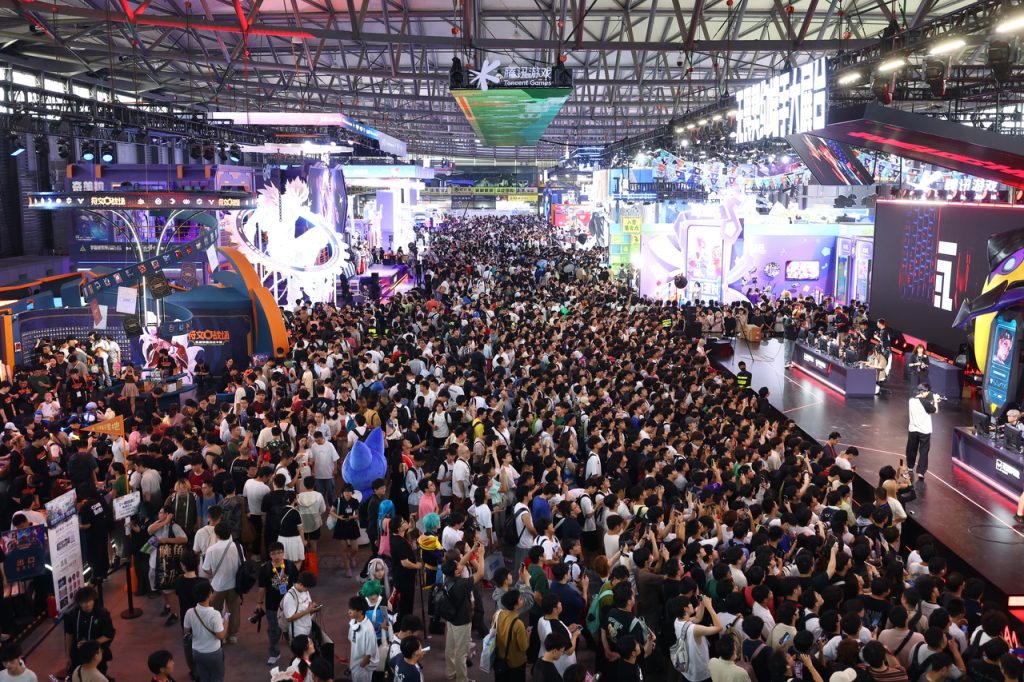
China’s remarkable ascent in the global gaming industry is no longer a forecast but a tangible reality, profoundly reshaping competitive landscapes across markets where Korean game developers once held a significant advantage.
From sheer market scale to robust global export capabilities, Chinese gaming companies are rapidly consolidating their influence. Meanwhile, Korean gaming firms contend not only with intense international competition but also a domestic regulatory environment that many industry stakeholders argue has yet to fully align with leading global standards.
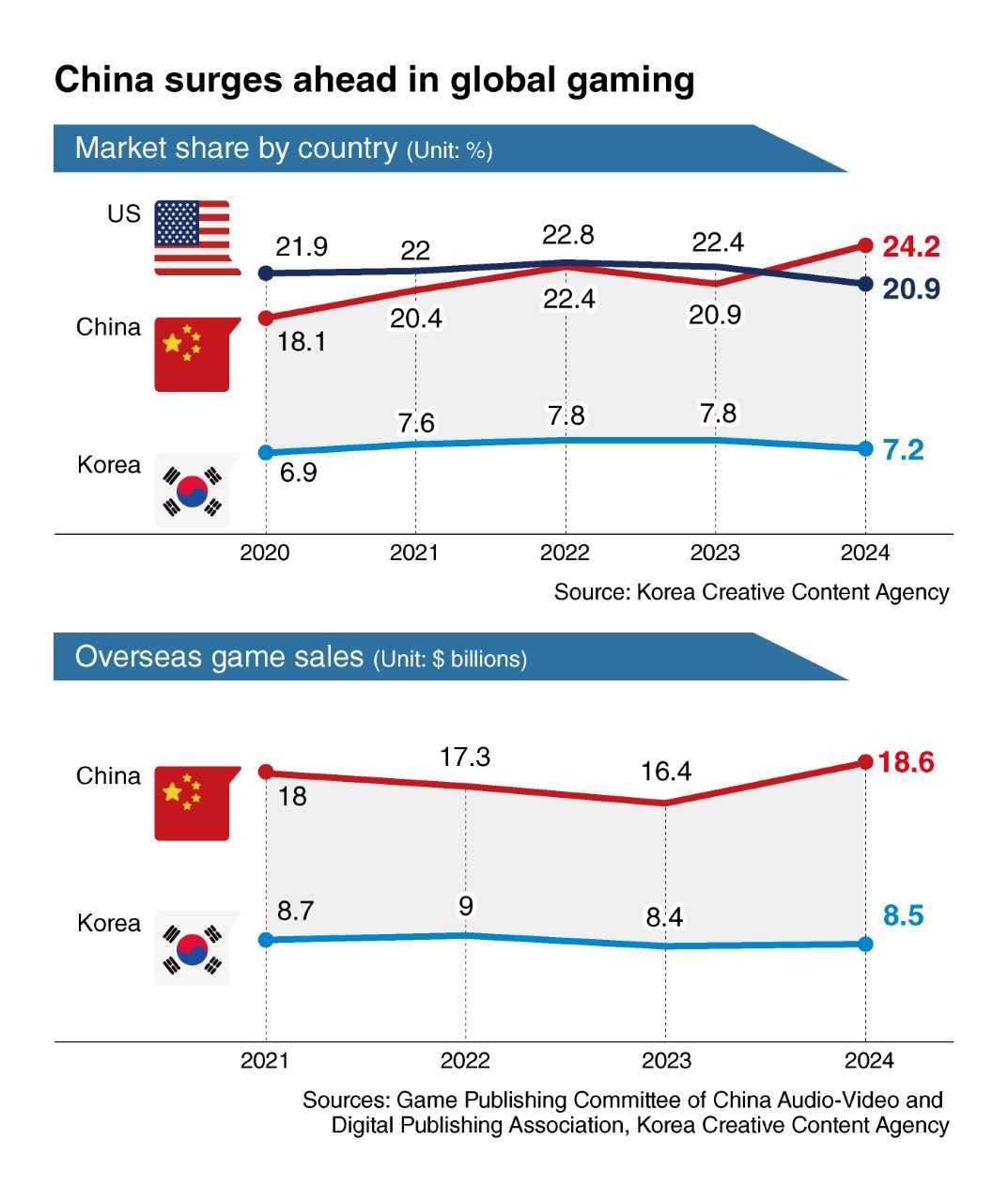
According to the Korea Creative Content Agency’s (KCCA) 2025 Game Industry White Paper, China secured the top position in the global game sector in 2024 with a dominant 24.2 percent market share, surpassing the United States for the first time. The US market share declined to 20.9 percent, a 1.5 percentage point decrease from the previous year, while China’s presence grew by 3.3 percentage points during the same period.
Conversely, Korea experienced a decline, with its share of the global game market in 2024 falling to 7.2 percent, down 0.6 percentage points from 2023. This marks the lowest figure for Korea since 2020.
Industry experts and key stakeholders highlight that the Chinese government’s comprehensive efforts to nurture its game industry have created an uneven playing field. In stark contrast, Korean game companies have consistently faced impediments due to stringent regulatory constraints.
Kim Jong-il, who heads the Game Center at law firm Yoon & Yang, recalled a time in the early 2000s when Korean-made games commanded nearly 70 percent of the game market in China. However, he noted that the landscape has drastically changed since then.
“China strategically began focusing on developing web games around 2009,” he explained. “These web games garnered immense popularity in China, attracting substantial foreign capital. This influx allowed China to reinvest significantly in developing mobile games as their popularity surged globally.”
During the same period, Korea implemented a controversial shutdown law in 2011. This regulation prohibited children under 16 from playing online games between midnight and 6 a.m., effectively discouraging local game developers from investing in web game creation. Korea eventually repealed the shutdown law on January 1, 2022.
An official from a Korean game company stated, “We understand that compliance requirements related to monetization and content approval are aimed at user protection, especially for minors.”
The official further elaborated, “The government currently provides tax credits for production costs to TV and film creators, as well as webtoon artists, but game makers have been noticeably excluded. Our plea to the government is for robust support for the game industry rather than continued regulation.”
The disparity between Korea and China in the overseas game market has significantly expanded in recent years.
According to the China Audio-Video and Digital Publishing Association, China’s overseas game sales reached an impressive $20.4 billion last year, marking approximately a 10 percent increase from 2024 and sustaining upward momentum since 2023. In contrast, Korea’s overseas game sales have seen a dip since 2022, reporting $8.4 billion in 2023 and $8.5 billion in 2024, with the latest figure for last year not yet available in the KCCA’s report.
Korea appeared to take a positive step towards bolstering its game industry, a crucial component of the nation’s overall exports and cultural sector, when President Lee Jae Myung publicly rescinded the ‘addiction-risk’ label from games during a meeting with prominent Korean game developers in October of the previous year. Gaming accounts for nearly half of Korea’s total content exports.
However, another official from a Korean game firm emphasized that games are conspicuously absent from the government’s list of 15 designated priority products for export. To illustrate, two products on this list – home appliances and secondary batteries – recorded $7.98 billion and $8.21 billion in exports respectively in 2024, both figures less than the game industry’s $8.5 billion in exports for the same year.
“As global competition intensifies, with China now leading in game market share, Korean game makers will undoubtedly face even greater challenges unless the current environment undergoes significant changes,” the official cautioned.
“While the private sector has historically demonstrated resilience in overcoming adversity, we now critically need the public sector’s strategic assistance and support.”
hwkan


