
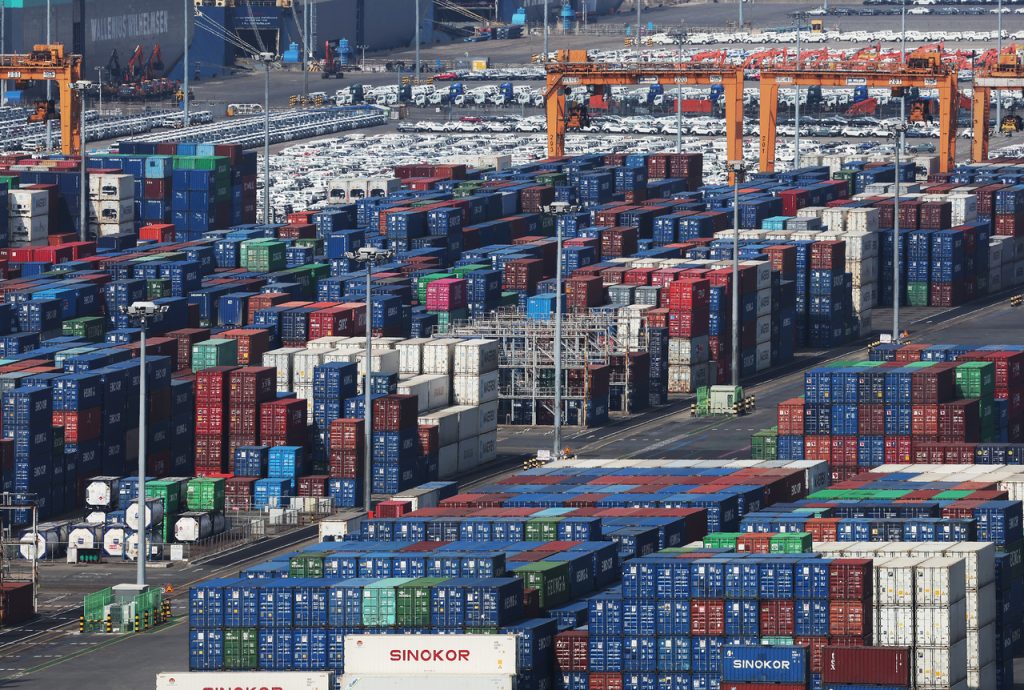
South Korea’s current account saw a significant boost in January, achieving its fifth-largest monthly surplus ever. This positive trend is largely attributed to a resurgence in the semiconductor industry and robust export performance, according to recent data released by the central bank on Friday.
The Bank of Korea reported a current account surplus of $13.26 billion for January. While this figure represents a decrease from the $18.7 billion surplus recorded in December, the year-over-year comparison reveals a remarkable surge.
Compared to January of the previous year, the surplus increased by an impressive 397.4 percent, securing its position as the fifth-largest monthly surplus on record for the nation.
South Korea has consistently maintained a current account surplus every month since May 2023, extending its streak to 33 consecutive months. This remarkable achievement marks the second-longest continuous surplus period in the country’s history.
In 2025, South Korea achieved its largest annual surplus to date, reaching $123.05 billion. This figure surpassed the previous record of $105.1 billion, set in 2015.
The goods account posted a surplus of $15.17 billion in January, marking the third-largest monthly figure on record. This was fueled by a 30 percent year-on-year increase in exports, reaching $65.51 billion, while imports rose by 7 percent to $50.34 billion.
Specifically, chip exports experienced a dramatic surge of 102.5 percent compared to the previous year, while vehicle shipments also saw a substantial increase of 19 percent.
The services account recorded a deficit of $3.8 billion in January, primarily driven by a notable increase in overseas travel demand.
The primary income account, which includes earnings from foreign workers, dividends, and interest income from abroad, posted a surplus of $2.72 billion, mainly due to strong dividend earnings.
The secondary income account, however, recorded a deficit of $830 million.
In the financial account, South Korea’s net assets increased by $5.63 billion in January, a significant slowdown from the $23.77 billion increase recorded in the previous month.
Overseas direct investment by South Korean residents amounted to $7.04 billion, while foreign direct investment in South Korea increased to $5.34 billion.


