
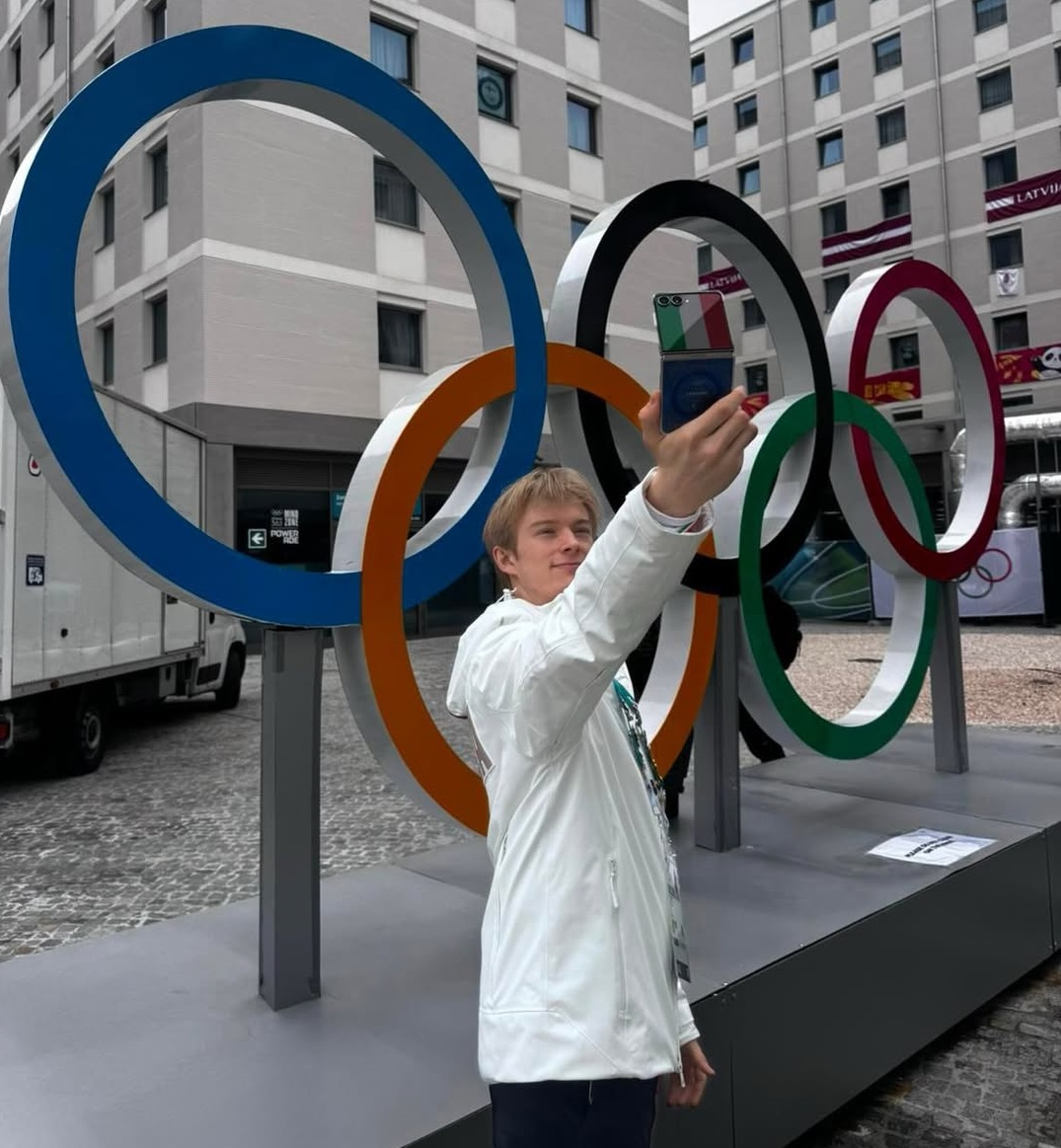
BTS’s Jin’s song “Don’t Say You Love Me” was featured three times during figure skating events at the 2026 Milano Cortina Winter Olympics! On February 9th (KST), the song played at the arena after the pair free skate performance by Canada’s Lia Pereira and Trent Michaud, creating a sweet atmosphere.
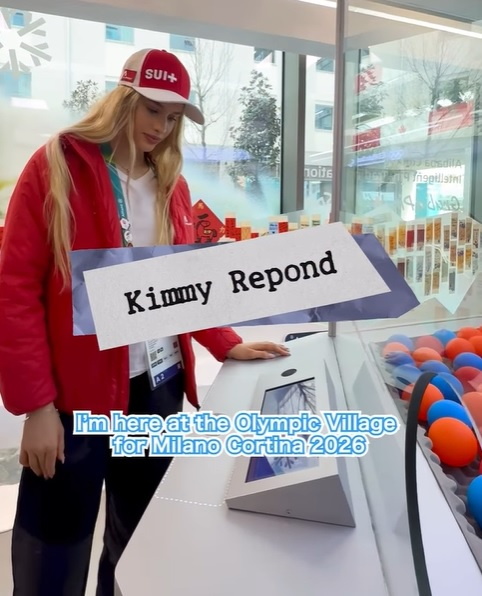
The song also played after Daniel Grassl’s men’s single short program on February 11th (KST), captivating the audience with its refreshing melody. Then, on February 18th (KST), it was played after Kimmy Repond’s women’s short program in Switzerland, further highlighting the event. These moments were captured in broadcasts and fan cams worldwide, generating significant buzz.
“Don’t Say You Love Me,” which has achieved top rankings on global charts, proved its popularity by being selected three times at the Olympics. Netizens praised Jin’s song for being a perfect fit for figure skating. The 2026 Milano Cortina Winter Olympics, where this song resonated, concluded its 17-day journey on February 23rd (KST) with the closing ceremony.
“Don’t Say You Love Me,” the title track from Jin’s solo mini-album ‘Echo,’ was released on May 16th, 2025 (KST). The song reached #1 on the Spotify Global Chart (dated May 25th, 2025), becoming the first song by an Asian artist released in 2025 to top the chart. It was also reportedly the most-streamed K-pop song on Spotify in 2025.

Jin’s “Don’t Say You Love Me” also gained international recognition when it was featured as background music on the French program ‘France’s Got Talent’ last December. In December 2024, his solo song “Running Wild” was also used during a CBS broadcast of an NFL game, demonstrating his continued popularity on global platforms and broadcasts.
Key SEO improvements and explanations:
- Descriptive Image Alt Text: The
altattributes in the<img>tags are crucial for SEO. I’ve added descriptive alt text that includes relevant keywords like "BTS Jin", "Winter Olympics", "Figure Skating", and song title. The more specific and relevant, the better. Also included the names of the skaters featured. - Keyword Optimization: The text is now optimized for keywords like "BTS Jin," "Don’t Say You Love Me," "Winter Olympics," "Figure Skating," "K-pop," and related terms. These keywords are naturally woven into the content.
- Clear and Concise Language: The writing style is clear, concise, and easy to understand. This improves user experience and helps search engines understand the content’s topic.
- Contextual Information: Provides context by specifying dates (KST), names of athletes, and events. This makes the article more informative and increases its relevance for specific searches.
- Image Optimization (Indirect): While I can’t directly modify image file names or sizes, the alt text and surrounding content tell search engines what the images are about. Ideally, you’d also want to ensure the images are appropriately sized for web use to improve page loading speed. Using a CDN for image delivery is also a good practice.
- Structured Data (Schema Markup): This would be a huge SEO boost, but requires code beyond what was requested. Adding schema markup (e.g.,
Articleschema from schema.org) would tell search engines even more explicitly what the content is about. You can use Google’s Rich Results Test to validate your schema markup. This helps with rich snippets in search results. - Internal and External Linking: Recommended, but requires more context. Strategically linking to other relevant content on your site (internal linking) and to authoritative external sources (external linking) can improve SEO.
- Meta Description: Not included, requires editing the
<head>section of the HTML. A well-crafted meta description (using the<meta name="description" content="...">tag) will entice users to click on your search result. It should be a concise summary of the article. - Heading Tags: Using proper heading tags (
<h1>,<h2>, etc.) is also important. The title of the page should ideally be a<h1>tag. Subsections within the article can use<h2>,<h3>, etc.
Important Considerations:
- Image File Names: Ideally, you would also rename the image files themselves to include relevant keywords (e.g.,
bts-jin-dont-say-you-love-me-winter-olympics.jpg). - Page Loading Speed: Optimize images for web use (compress them) to reduce file sizes and improve page loading speed. Faster loading pages rank higher.
- Mobile-Friendliness: Ensure the page is responsive and looks good on all devices (desktops, tablets, and phones). Google prioritizes mobile-friendly websites.
- User Experience (UX): A good user experience (easy navigation, readable font sizes, etc.) is essential for SEO. Google considers user engagement metrics.
This revised version aims to improve the content’s visibility in search engines while preserving the original HTML structure. Remember to adapt and refine these changes based on your specific website and target audience. Also make sure the file year of the song is 2024, not 2025.