Korean Culture Minister Elevates K-Culture’s Economic Status, Targets $110 Billion Exports by 2030
By Lee Minji
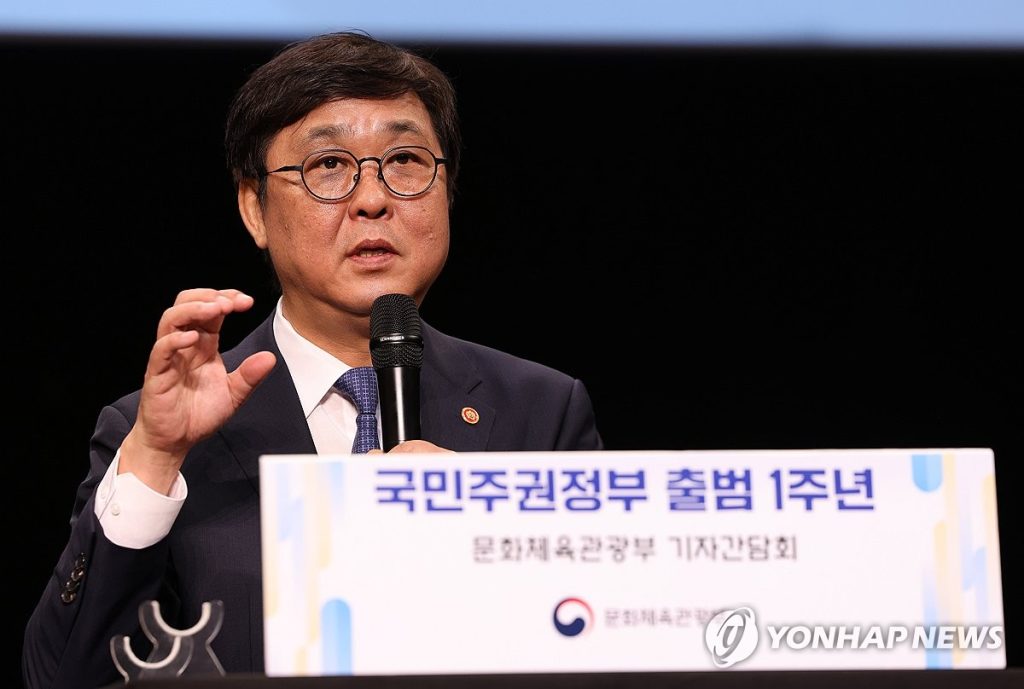
Culture Minister Chae Hwi-young has unveiled an ambitious new policy goal, positioning the burgeoning K-culture market as a pivotal driver for the Korean economy. Speaking at a press conference held in anticipation of the Lee Jae Myung administration’s first anniversary next week, Minister Chae highlighted the undeniable and growing significance of K-culture on the global stage.
“K-culture is a much bigger industry than we had previously thought. It is certainly an attractive core growth engine that can lead the future of our economy,” the minister affirmed.
He further elaborated on K-culture’s future trajectory, stating, “The importance (of K-culture) will grow in the future as leisure time is expected to increase on the back of developments in artificial intelligence (AI) technologies. We need to foster it as an industry swiftly.”
Expanding the Definition of K-Culture for Broader Economic Impact
A key factor behind the increased economic target is the ministry’s redefinition of K-culture’s scope. Previously focused predominantly on the content industry, encompassing traditional arts and modern culture, the new definition now embraces broader lifestyle sectors, including popular Korean food, beauty products, and fashion.
In line with this expanded vision and adjusted goal, Minister Chae projected a significant surge in K-culture product exports, forecasting a rise to $110 billion by 2030, a substantial increase from the $71.8 billion recorded in 2025.
Tourism Initiatives and Addressing Challenges
On the tourism front, the minister noted that while the war in the Middle East and high oil prices have not yet had a substantial impact on the local tourism industry, proactive measures are essential. He underscored the critical need to intensify marketing efforts and actively boost tourism in regions beyond the greater Seoul area to achieve the government’s ambitious goal of attracting 30 million international visitors.
Addressing concerns about potential price gouging by accommodations in Busan ahead of upcoming BTS concerts, Minister Chae assured the public that the ministry would “sternly deal with such cases, in accordance with law.”
He also highlighted ongoing consultations between the ministry, the Busan city government, and local tourism associations aimed at minimizing inconveniences for visitors. Furthermore, he stressed the importance of encouraging accommodation businesses in the area to voluntarily resolve any pricing issues, promoting a fair and welcoming environment for all tourists.