
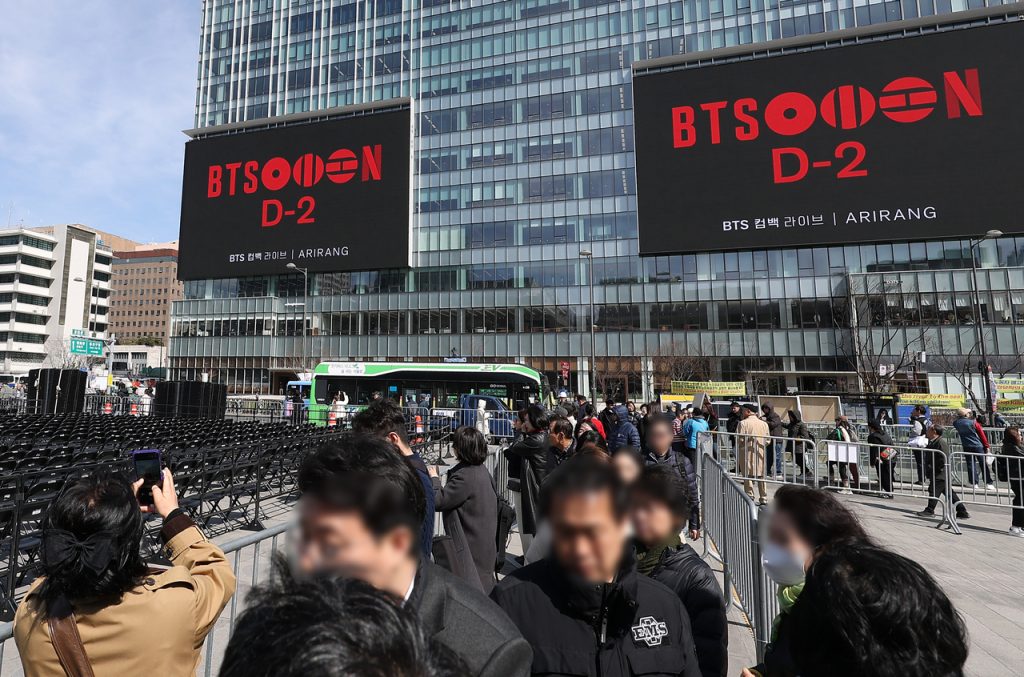
As the highly anticipated BTS concert approaches on Saturday, Gwanghwamun in central Seoul is experiencing a vibrant transformation, illuminated by dazzling lights and a surge of advertising activity.
Fan-organized billboards, captivating brand campaigns, and exciting album teasers are dominating the district’s large-scale digital displays, effectively turning this historic square into a powerful showcase for K-pop culture and commercial influence.
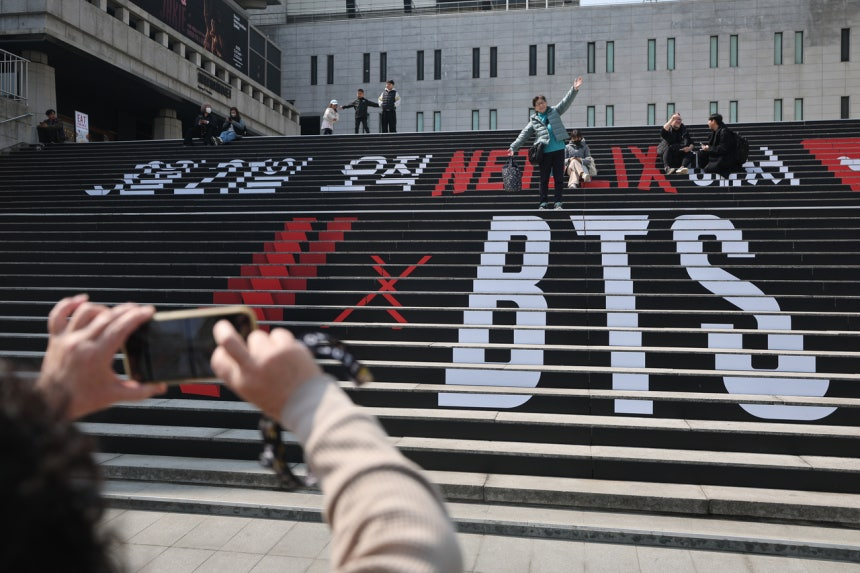
This heightened demand is driving up advertising costs. Securing the iconic outdoor staircase of the Sejong Center for the Performing Arts for a two-week period now commands approximately 120 million won ($80,000), representing a near doubling of the usual rate, according to sources within the advertising industry.
“Leading up to ‘BTS month,’ we’ve definitely witnessed a significant increase in advertising,” stated an industry representative. “The Sejong Center didn’t previously consider this a major source of revenue, but the ‘BTS effect’ has clearly brought about a change.”
The Sejong Center’s staircase was recently adorned with visuals promoting BTS’s forthcoming album, prominently featuring the group’s logo, album title, and release date, before transitioning to concert-related promotional content from Netflix.
However, pricing in other locations has remained comparatively stable. The majority of large-format digital billboards throughout the Gwanghwamun area maintain a standard monthly package price range of between 60 million won and 120 million won.
Despite this, the overall atmosphere has notably shifted.
With an estimated daily foot traffic of around 1 million people, Gwanghwamun is increasingly becoming a prominent venue, not only for political and historical events, but also as a vibrant hub for culture, dedicated fandom, and high-value advertising campaigns.
Throughout the duration of the concert period, screens situated on key buildings, including the Koreana Hotel, KT Gwanghwamun Building West, the Sejong Center, Dajung Building, and the Dong-A Media Center, are scheduled to showcase BTS-themed content. Netflix, which possesses the broadcasting rights, has secured advertising slots to screen related documentary footage, although the concert itself will not be broadcasted live.
This moment also highlights the broader transformation of the area. In 2024, Gwanghwamun was officially designated as a special outdoor advertising zone, leading to the relaxation of regulations pertaining to billboard dimensions, formats, and installation procedures.
Building on this momentum, the Seoul Metropolitan Government initiated the “Gwanghwamun Square” project last year, with the objective of installing large-scale digital displays across nine buildings that face the square.
The Koreana Hotel, KT building, Dong-A Ilbo headquarters, and Ilmin Museum of Art are among the locations that have already incorporated new digital screens as part of this initiative.


