Korean Air Soars to Record Q1 Revenue Amid Strong Passenger and Cargo Demand
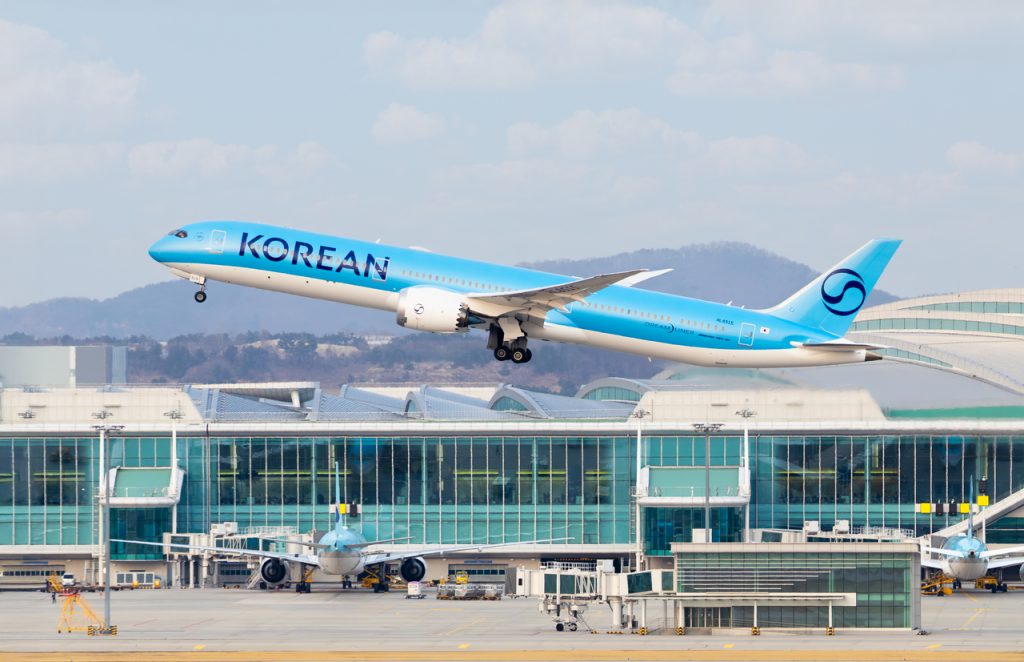
Korean Air has announced a groundbreaking first quarter, achieving a **record quarterly revenue of 4.52 trillion won ($3.04 billion)**. This impressive figure marks a significant **14 percent increase** compared to the same period last year, highlighting the airline’s robust financial performance and market strength.
The airline’s profitability saw substantial growth, with **operating profit surging 47 percent year-on-year to 516.9 billion won**. **Net profit also climbed 26 percent, reaching 242.7 billion won**, further solidifying Korean Air’s strong financial standing in a dynamic global market.
Driving this success, **passenger revenue increased by 7.3 percent, totaling 2.61 trillion won**. This growth was primarily fueled by strong **travel demand during the February Lunar New Year holiday** and exceptional sales performance across popular **European and vital transit routes**, attracting a growing number of international travelers.
The cargo division also contributed positively, with **cargo revenue rising 3.5 percent to 1.09 trillion won**. This was largely due to an expansion of **long-term freight contracts** and highly **flexible operational strategies**, including the deployment of additional charter and irregular flights to meet robust demand on key **US routes**.
However, looking ahead to the second quarter, Korean Air anticipates potential headwinds from **external uncertainties**. The airline specifically points to elevated **global oil prices** and a **weakening Korean won**, exacerbated by ongoing **Middle East instability**, as factors that could impact performance.
To counteract any potential slowdown in outbound demand from Korea, Korean Air is strategically shifting its focus. The airline plans to vigorously **attract overseas-origin and transit passengers**, a crucial move to sustain and enhance its **profitability** in the coming months.
For its cargo operations, the company’s strategy involves securing essential **seasonal shipments** and actively tapping into burgeoning demand from **growth sectors** such as **artificial intelligence (AI) and cosmetics**. This will be complemented by a continued emphasis on highly **flexible route operations** to maximize efficiency.
In response to escalating **fuel costs**, Korean Air has proactively initiated an **emergency management mode** starting April. This comprehensive approach involves implementing **companywide cost-efficiency measures** designed to fortify its **financial structure** and ensure robust **long-term growth** across all segments of its operations.
jwjeon7625