
Kencoa Aerospace: Pioneering Global Aircraft and Space Component Manufacturing with Skilled Technicians and Advanced Robotics
SACHEON, South Gyeongsang Province — At Plant 1 of leading South Korean aerospace manufacturer Kencoa Aerospace, massive metal jigs precisely position aircraft parts. These components undergo meticulous drilling, riveting, and assembly, forming critical structures destined for the global aerospace supply chain. The factory floor buzzes with the intricate preparatory work essential long before any aircraft takes flight, showcasing Kencoa’s pivotal role in advanced aerospace manufacturing.
Kencoa recently provided an exclusive glimpse into its operations during a media tour, highlighting its contribution to the Embraer C-390 military transport aircraft program. This aircraft, chosen by the South Korean Air Force under the Large Transport Aircraft II initiative, benefits from Kencoa’s production of substantial internal structural components, facilitated by an offset agreement related to Korea’s acquisition. Officials emphasized the critical function of assembly jigs, which precisely hold parts for drilling and riveting before integration into final structures.
Visitors were advised against touching any components, underscoring the extreme precision required in aerospace manufacturing. Even a minor disruption can compromise the meticulous work. Beyond merely fitting parts, aerospace structures must adhere to stringent safety standards and maintain operational integrity for decades, a testament to Kencoa’s commitment to quality.
Kencoa Aerospace thrives on meticulous manufacturing, encompassing a broad spectrum of services including aircraft structures, precision machining, composite assembly, defense aircraft maintenance, repair and overhaul (MRO), urban air mobility (UAM) development, and space components production.
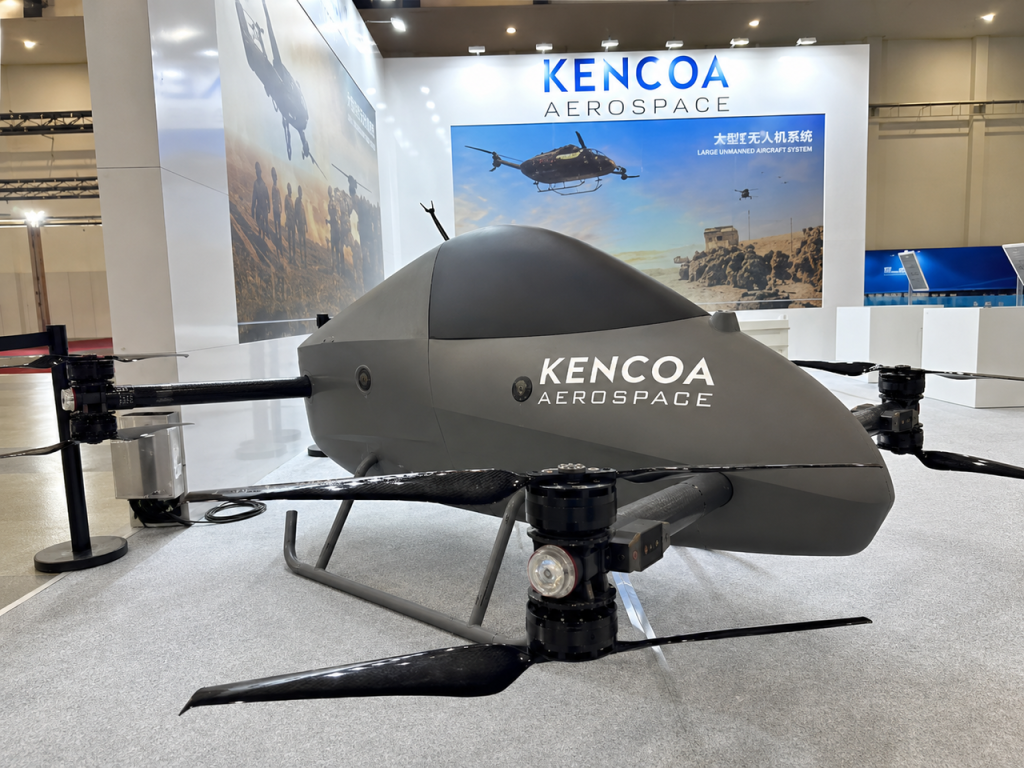
A dedicated section of the facility proudly displays a flyable urban air mobility (UAM) prototype, developed predominantly in-house. Kencoa’s comprehensive involvement spans its design, parts production, assembly jig creation, and intricate wiring. While not yet certified for commercial passenger transport, this advanced UAM model serves as a crucial prototype for extensive flight testing and manufacturing process verification.
Unlike highly automated semiconductor fabrication plants, aircraft manufacturing remains profoundly reliant on skilled human expertise. Kencoa officials confirmed that extensive automation in aircraft assembly remains challenging, making it a sector where highly skilled technicians meticulously build components piece by piece. This labor-intensive approach is, however, balanced by remarkably long production cycles; once secured, contracts often extend for 20 to 30 years.
The company also showcased its sophisticated production line dedicated to Boeing 737 structures. Here, Kencoa expertly fabricates, assembles, and paints components for the aircraft’s horizontal stabilizer, preparing them for shipment to major integrators.
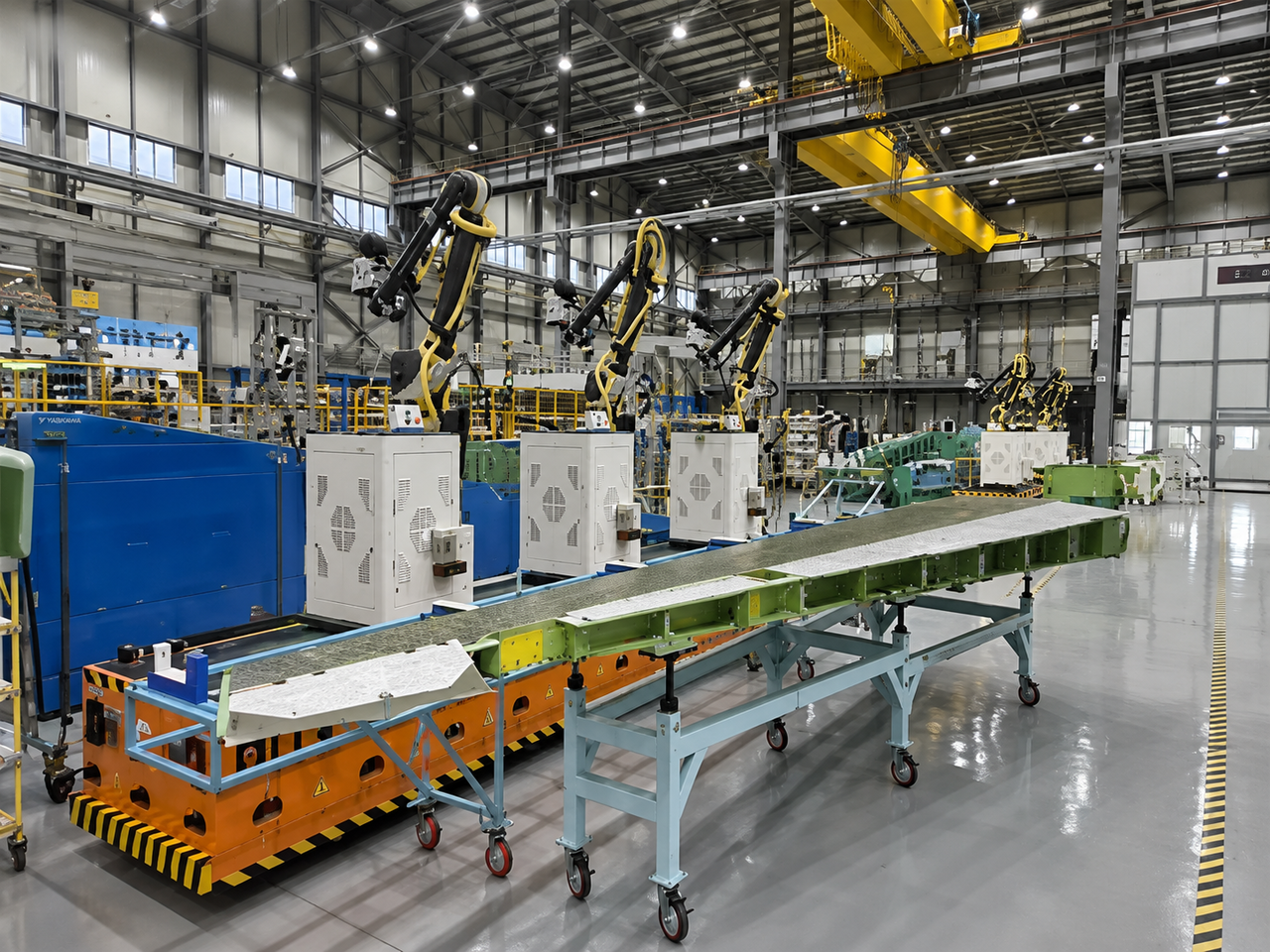
Despite the reliance on skilled labor, automation is progressively being integrated into Kencoa’s factory operations. A cutting-edge collaborative robot drilling system, developed in partnership with Korea Aerospace Industries’ (KAI) robotics team, now handles some of the most repetitive tasks in aircraft assembly. This system features an advanced vision system capable of identifying drilling points with an astonishing accuracy of 0.01 millimeter, performing approximately 3,000 of the 12,000 drilling operations required for each aircraft set.
KAI robotics officials clarified that while most aircraft manufacturing is still manual, traditional industrial robots often necessitate segregated work zones, limiting flexibility for fluctuating production volumes and demanding significant upfront investment. In contrast, Kencoa’s collaborative robot is specifically designed to operate safely alongside human technicians. While its speed may be comparable or slightly faster than a person, its primary advantages lie in delivering more consistent quality and fostering a safer working environment.
The goal, however, isn’t simply maximum speed. Kencoa’s approach is not to create a “dark factory.” Instead, it fosters an environment where people and robots seamlessly collaborate. Imbalance in production speed across different processes could disrupt the entire production line’s efficiency.
Beyond atmospheric flight, Kencoa is making significant strides in the burgeoning space industry. The company is a key supplier of specialized aerospace materials, including titanium, to SpaceX. It also manufactures crucial components for Blue Origin’s BE-4 rocket engine, which powers both the New Glenn and United Launch Alliance’s Vulcan rockets. Kencoa has further contributed structural components to NASA’s Space Launch System, the formidable heavy-lift rocket underpinning the Artemis lunar exploration program.
Kencoa attributes its strong foothold in major U.S. space supply chains to decades of reliable partnership with NASA. Company officials explain that their long-standing relationship and consistent supply of parts to NASA naturally paved the way for collaborations with entities like SpaceX. This trust has been meticulously built over time through unwavering adherence to strict quality control and consistent on-time delivery.
The unfinished aircraft structures observed during the tour represent just one critical stage in an extended global journey. After undergoing painting and further processing, these meticulously crafted components move through additional expert suppliers, including Korea Aerospace Industries. Ultimately, they reach major manufacturers like Boeing, where they are integrated with countless other parts to become the aircraft that connect the world.
yeeun


