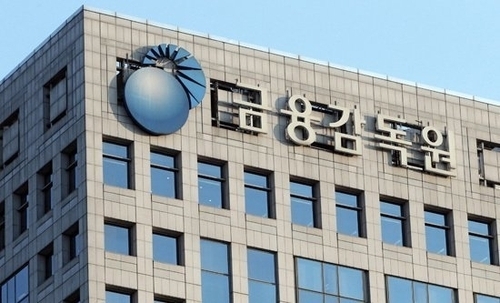
South Korean Securities Firms Achieve Record Q1 Net Profit as Trading Boom Fuels Brokerage Commissions.
South Korea’s securities industry reported an unprecedented quarterly net profit of 4.33 trillion won ($2.63 billion) in the first quarter of this year, a significant surge driven by booming stock market activity, according to data released Friday by the Financial Supervisory Service (FSS).
The FSS’s preliminary operating results indicate that the combined net profit for 61 brokerage firms soared by 77.1 percent year-on-year, reaching 4.33 trillion won in the January-March period, up from 2.44 trillion won recorded in the same quarter last year.
This impressive performance also marks a substantial quarter-on-quarter increase, with profits more than doubling from 1.86 trillion won in the preceding quarter, representing a 132.6 percent rise over the three-month period.
Notably, the first-quarter net profit alone constituted 44.9 percent of the industry’s record annual net profit of 9.65 trillion won achieved in 2025. This underscores the extraordinary pace at which brokerages accumulated earnings, effectively securing nearly half of last year’s total profit in just one quarter.
A primary catalyst for this record profitability was a substantial increase in commission income, which nearly doubled to 6.69 trillion won from 3.36 trillion won a year earlier.
Brokerage commissions, in particular, witnessed a colossal 165.8 percent year-on-year surge to 4.3 trillion won. This growth was predominantly fueled by a dramatic jump in domestic stock trading activity across the market.
The total quarterly trading value across the stock market, encompassing alternative trading systems, skyrocketed by 333.1 percent year-on-year, reaching an astounding 2,775 trillion won, a sharp rise from 641 trillion won in the previous year.
Furthermore, wealth management fees also saw robust growth, increasing by 89.4 percent year-on-year to 672.1 billion won, propelled by strong fund sales and expanding discretionary investment services.
In contrast, investment banking fees remained relatively stable, registering 944.5 billion won, a marginal change from 943.7 billion won reported a year prior.Proprietary trading income also contributed positively, climbing 30.8 percent year-on-year to 4.1 trillion won from 3.14 trillion won.
Gains from equity and fund investments, including those from exchange-traded funds (ETFs), rose significantly by 7.2 trillion won, primarily benefiting from the upward trajectory of domestic stock indexes.
However, not all segments experienced growth. Derivatives-related income saw a decline of 3.94 trillion won, while bond-related income fell by 2.3 trillion won, attributed to a rise in market interest rates.
Net gains from other assets also decreased, falling 15.6 percent year-on-year to 1.04 trillion won.
Loan-related income demonstrated growth, increasing by 574.9 billion won due to higher interest income from margin lending. Conversely, foreign exchange-related income declined by 767.8 billion won, impacted by the significant weakening of the Korean won against the US dollar.
The total assets held by South Korean securities firms expanded considerably, rising 16.3 percent from the end of 2025 to reach 1,098.4 trillion won, successfully surpassing the critical 1,000 trillion won threshold.
Indicators of financial health remained strong. The average net capital ratio, a crucial measure of financial soundness, improved by 84.9 percentage points from the close of last year, reaching 999.5 percent. All securities firms comfortably maintained levels above the regulatory minimum of 100 percent.
Similarly, the average leverage ratio increased by 24.6 percentage points to 718.3 percent, with all firms operating well within the regulatory ceiling of 1,100 percent.
The nation’s three futures companies also capitalized on favorable market conditions, reporting a combined net profit of 32.7 billion won in the first quarter, marking a 45.6 percent increase from 22.4 billion won in the previous quarter.
“The financial market continues to face uncertainties amidst heightened volatility in the domestic stock market, persistent instability in the Middle East, and ongoing increases in exchange rates and market interest rates,” cautioned the FSS.
In response to these challenges, the FSS affirmed its commitment to reinforcing oversight of real estate project financing exposures and enhancing liquidity regulations alongside broader risk management frameworks.
ch0221