Government’s Regional Growth Initiatives Spark Chip Giant Investment Rumors in Honam
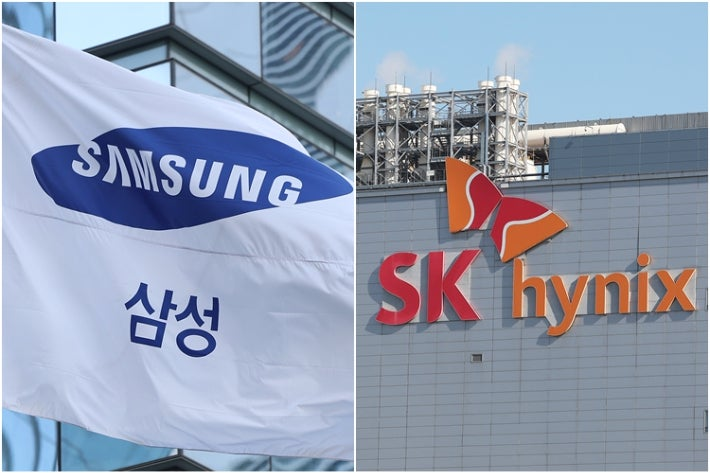
Leading semiconductor manufacturers, Samsung Electronics and SK hynix, are currently the subject of intense speculation regarding potential investments in new chip facilities within Korea’s southwest region. These discussions are fueling optimism that the Honam area could soon host its inaugural major semiconductor production hub, despite both companies affirming that no such investment plans have been finalized.
This heightened speculation among local government officials and political figures is largely driven by the Lee Jae Myung administration’s vigorous push for major conglomerates to broaden their investment portfolios beyond the congested Seoul metropolitan area. The government is actively encouraging large-scale industrial projects to foster more balanced national economic growth across various regions.
According to insights from political and government sources, Samsung Electronics has been frequently mentioned as a prospective investor for a advanced chip packaging facility in Gwangju. Concurrently, SK hynix is reportedly being considered as a potential candidate for establishing back-end semiconductor operations elsewhere in the Honam region. Chip packaging, a crucial post-fabrication process that integrates and safeguards chips for electronic devices, has become strategically vital, particularly with the escalating global demand for high-bandwidth memory (HBM) and other sophisticated chips essential for artificial intelligence (AI) systems.
However, both chipmaking giants, already deeply committed to significant semiconductor cluster developments in Yongin, Gyeonggi Province, have publicly distanced themselves from these regional investment rumors. They state they have “no knowledge” of such specific discussions and reiterate that “nothing has been decided regarding regional investments.”
SK Group Chairman Chey Tae-won has acknowledged the imperative need for securing additional production sites to meet surging global demand. He emphasized that the group’s semiconductor division would meticulously evaluate all available options, including potential overseas locations, based on critical factors such as existing infrastructure, specific customer requirements, and prevailing market conditions.
“Presently, our foremost priority is the successful development and operation of the Yongin cluster,” Chey informed reporters during a forum in Japan recently. “Nonetheless, demand is escalating at such an unprecedented pace that our expansion plans have accelerated significantly. We are now also compelled to identify the next strategic location beyond Yongin.”
Chey further elaborated that any new advanced chip plant would necessitate a comprehensive suite of robust infrastructure, including reliable power supply, substantial water resources, ample land, and a skilled workforce.
“If these fundamental conditions are met and firmly established, we are certainly prepared to construct a new fabrication plant,” Chey affirmed.
When questioned about investment strategies post-completion of the four planned fabs at the Yongin cluster, Chey underscored the company’s need for proactive preparation for its subsequent expansion site.
“Once these four fabrication plants are operational, it is inevitable that we will require another location, isn’t it?” he posed rhetorically. “We cannot avoid this future need. This is precisely why early preparation is crucial; it is a fundamental part of our strategic task.”
Chey did not dismiss the possibility of international investment, suggesting that SK might be compelled to establish facilities outside South Korea if domestic conditions prove insufficient or less favorable.
“It is essential that all stakeholders are satisfied,” Chey explained. “If our global customers or other countries perceive that they have significantly contributed to our profitability, they may also present their own demands. Our ability to effectively respond to these diverse demands is an integral aspect of our corporate capability.”
Currently, Samsung operates its primary semiconductor packaging lines in Onyang and Cheonan, both situated in South Chungcheong Province. Should an investment in Gwangju materialize, it would represent a historic milestone: the company’s first new domestic back-end production base since the establishment of its Onyang campus in 1991.
SK hynix is also actively advancing its P&T7 advanced packaging plant in Cheongju, North Chungcheong Province, a substantial investment project valued at approximately 19 trillion won.
Despite the official denials, expectations continue to mount within Gwangju and South Jeolla Province. President Lee, during a press conference commemorating his first year in office earlier this week, announced that the government would soon unveil significant large-scale investment projects designed to fundamentally reshape Korea’s national growth strategy.
“When I engage with companies regarding corporate or industrial policy, I consistently urge them to ‘please invest in the regions if at all possible. We will provide you with full support.’ I also apply a degree of persuasive pressure, always within the appropriate bounds of authority,” President Lee stated during the conference, highlighting the government’s proactive stance.
On the same day, Min Hyung-bae, the mayor-elect for the proposed Gwangju-South Jeolla integrated special city, publicly hinted that semiconductor-related investments could indeed be directed towards the region, further fueling local hopes.
Nevertheless, pertinent questions persist regarding whether potential new chip plants in the Honam region could truly replicate the extensive clustering benefits enjoyed by Korea’s long-established semiconductor hubs.
The intricate chip industry fundamentally relies on dense, interconnected ecosystems comprising numerous suppliers, specialized equipment manufacturers, diverse materials providers, and a highly skilled workforce. Hundreds of manufacturing steps are meticulously linked in sequence, with each critically dependent on the others. Therefore, geographical proximity is an indispensable element and a major determinant of competitive advantage within this sector.
Both chipmakers are reportedly coordinating closely with the government to determine the opportune moment for potentially disclosing any regional investment plans, possibly at a presidential roundtable event scheduled for later in June.