By Raymond Cheng
As the global technology sector experiences an unprecedented **AI-driven supercycle**, pushing valuations to historic highs, the **Hang Seng Technology Index (HSTECH)** presents a contrasting narrative of underperformance. While the MSCI World IT Index has soared over 20 percent year-to-date, fueled by burgeoning **AI capital expenditure**, HSTECH has seen negative returns. This significant divergence necessitates a deeper understanding of the structural and macroeconomic factors at play, crucial for assessing if **China’s technology sector** offers a compelling **catch-up investment opportunity** for the rest of the year.
Global Tech Investments Favor Upstream AI Infrastructure
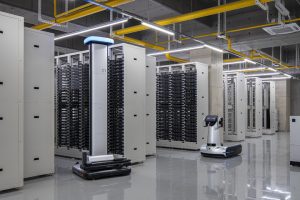
A primary catalyst for the superior performance of global equities this year, particularly in technology, has been surging **AI capital expenditure**. We recently made an upward revision to our **AI capex growth forecast** for 2026 from 54 percent to 65 percent. This significant increase in spending has directly translated into enhanced earnings prospects for firms specializing in **AI compute hardware** and **AI infrastructure**. Consequently, this upstream segment has emerged as the leading performer within **global technology equities**. In contrast, the performance of hyperscalers, the major investors driving this rapid AI capex growth, has been more varied, depending on their success in monetizing these investments. Software stocks, too, have faced concerns over potential AI disruption. This internal divergence within the tech sector explains why the Nasdaq Composite’s ~15% year-to-date return pales in comparison to the semiconductor-driven surges in South Korea and Taiwan, which have seen gains exceeding 100% and 50% respectively. Amidst this global focus on **upstream AI compute hardware and infrastructure**, the **Hang Seng Technology Index (HSTECH)** occupies a distinctly different structural landscape.
HSTECH’s Limited Exposure to Upstream AI Compute
**HSTECH** is predominantly weighted towards **AI adopters** rather than **upstream AI infrastructure**. Less than 20 percent of the index is allocated to **AI compute hardware, semiconductors, and server infrastructure**. In stark contrast, over 50 percent of the index consists of application-focused **internet giants** spanning social media, **e-commerce**, and food delivery platforms. Additionally, **electric vehicle (EV) manufacturers** represent another 15 percent. These consumer-facing sectors have faced headwinds from subdued domestic consumption, dwindling subsidies, and fierce price competition within **China**. The significant presence of these underperforming segments overshadows the robust 50%+ average returns achieved by the index’s limited number of **upstream hardware constituents**.
Accessing China’s Upstream AI Compute Market
The disproportionate index structure naturally prompts the question: ‘Where are the prominent **listed Chinese AI compute stocks**?’ Many of these companies are listed on the **A-share market**, particularly on Shenzhen’s ChiNext (often dubbed **China’s Nasdaq**) or the Shanghai Stock Exchange’s Star Market. This listing preference is often due to regulatory considerations and the strategic significance of the industry. The impressive year-to-date returns of over 30 percent for the Star 50 and 26 percent for ChiNext demonstrate that **China’s domestic AI compute segment** has achieved gains comparable to those in other global markets. However, direct access to these **A-shares** for non-mainland Chinese individual investors remains restricted. Encouragingly, these geographical barriers are gradually diminishing. Hong Kong witnessed its first **IPO of a Chinese AI GPU chipmaker** in January, with its share price more than tripling within months, underscoring the significant returns for direct beneficiaries of **China’s AI capital expenditure** and push for **chip self-sufficiency**. Despite this stellar performance, the stock has not yet met the stringent inclusion criteria for **HSTECH**, such as trading history and market capitalization thresholds. Nevertheless, a pivotal shift is approaching: starting in June 2026, two pure-play **Chinese AI stocks** are slated for inclusion in **HSTECH** under fast-track criteria, expected to initially constitute 5-7 percent of the index weight, potentially rising to nearly 10 percent.
Unlocking Growth: Catalysts for HSTECH to Catch Up
The forthcoming inclusion of the first wave of pure-play **AI constituents** on June 8th signifies a crucial **structural pivot for HSTECH**. This strategic shift is set to diversify the index beyond its current focus on **e-commerce and EVs**, moving towards a more comprehensive **AI ecosystem**. We anticipate that **AI-related constituents** could comprise up to 40 percent of the index weight within the next 12 months. Should sustained risk-on sentiment prevail, potentially buoyed by a gradual reopening of the Strait of Hormuz, this evolving market landscape would further accelerate **Hong Kong’s AI IPO pipeline**, which already accounts for over 40 percent of its upcoming initial public offerings. Notably, many of these promising **IPO candidates** are high-profile spin-offs from established **internet platform giants**. Their successful listings will not only unlock significant value within their parent companies, which are already key **HSTECH constituents**, but also catalyze a broader **index re-rating**. From a **valuation perspective**, HSTECH remains attractive, trading at 18 times forward 12-month earnings amidst an anticipated **earnings growth rate** exceeding 30 percent. Integrating higher-growth **AI exposures** is expected to bolster forward **earnings visibility** and stimulate multiple expansion. Moreover, we project the **semiconductor-driven tech rally** to expand as downstream sectors increasingly adopt and effectively monetize **AI technologies**, generating new revenue streams and accelerating earnings growth. With regulatory support to mitigate destructive price wars in **China**, the **EV and e-commerce sectors** likely have their worst behind them. The index’s heavyweights that adeptly navigate these dynamics are poised to drive a robust **earnings recovery** from their recent lows.
Chinese Consumer Caution: A Remaining Risk for HSTECH
A lingering concern, however, stems from recent economic data indicating persistent caution among **Chinese consumers**, with April retail sales rising only 0.2 percent year-on-year. While this domestic softness presents a broad challenge for **consumer-reliant equities**, robust export volumes for significant items like **EVs** could provide an upside surprise, driven by elevated global oil prices and expanded production capacity from previous years. This strong **external demand** is well-positioned to counterbalance weaker **domestic consumption**, serving as a bridge while these consumption-related constituents gradually reduce their index weight, paving the way for higher-growth, pure-play **AI stocks**. In conclusion, **HSTECH’s impending structural transformation** positions its current **valuation gap** not as a permanent discount, but rather as an intriguing **catch-up investment opportunity**.
Raymond Cheng is chief investment officer for North Asia at Standard Chartered Bank’s Wealth Solutions unit. Views in this column are his own. — Ed.
jwc