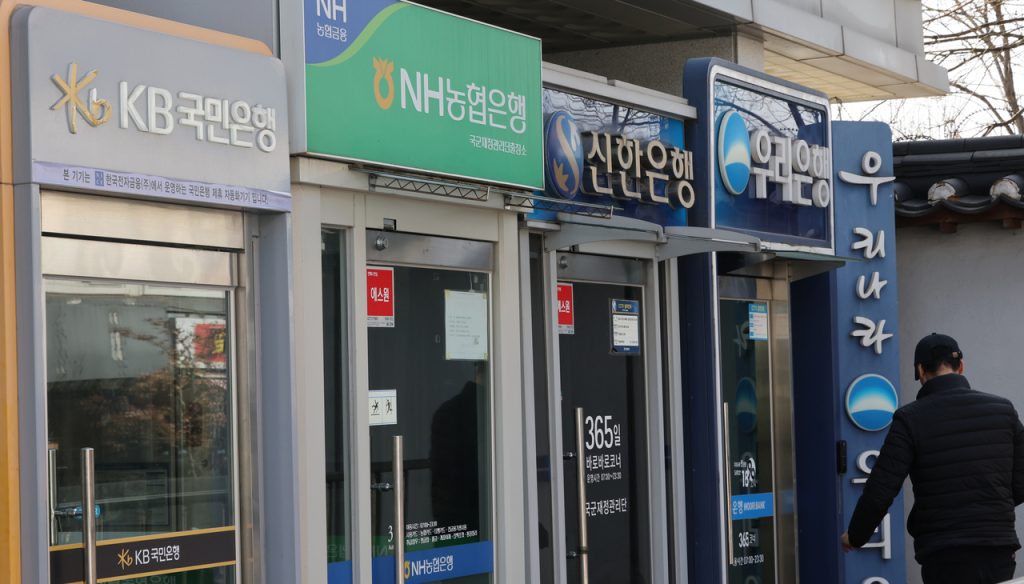
South Korea’s leading financial holding companies recently clarified their US regulatory submissions, asserting that their dedication to the government’s “productive and inclusive finance” agenda remains steadfast. This reassurance comes despite their recent listing of the policy initiative as a potential risk factor in reports filed with US authorities, drawing significant attention.
A unique joint statement was issued by KB Financial Group, Shinhan Financial Group, and Woori Financial Group. Its purpose was to explain why their annual reports submitted to the US Securities and Exchange Commission (SEC) included references to potential risks associated with inclusive finance policies.
This explanation followed reports filed with the New York Stock Exchange in late April, where these three major financial groups indicated that such policy measures could potentially increase delinquency rates and negatively impact asset quality.
The specific risk disclosure within their US filings garnered considerable notice in South Korea, primarily because similar language was not present in their domestic business reports.
In their coordinated statement, the financial firms emphasized that these US filings were not intended to provide foreign investors with exclusive information or disadvantage domestic investors.
They clarified that this difference stems from the distinct preparation standards for US securities filings. Under stringent US disclosure rules, companies are expected to outline a comprehensive array of possible risk scenarios. This practice serves both to protect investors and to mitigate against potential legal actions.
The groups further highlighted that their US reports also detailed other broad uncertainties. These included geopolitical risks, particularly in the Middle East, potential shifts in household lending regulations, and the evolving impact of artificial intelligence across various industries.
They added that the inclusion of policy-related risks is not new, citing previous filings that mentioned the expansion of technology finance in 2015, tighter household debt management in 2020, and potential political uncertainty in Korea in 2024.
This comprehensive explanation appears designed to counteract any interpretations suggesting that the latest disclosures specifically targeted the current administration’s policy agenda.
The three prominent financial groups unequivocally stressed their ongoing commitment to enhancing financial access for vulnerable segments, including low-income households, small business owners, and small and medium-sized enterprises (SMEs). They also affirmed their continued efforts to supply crucial funds to venture firms, foster emerging industries, and support the broader national economy.
The companies underscored that their participation in these policy initiatives is voluntary. Crucially, all lending decisions continue to be governed by each group’s rigorous credit standards, internal risk reviews, and robust risk management systems.
They further affirmed that maintaining the soundness and stability of the financial system remains a paramount consideration in the execution of these policies.
In conclusion, the groups stated their dedication to continuously reviewing their disclosures, ensuring compliance with both domestic and international regulatory requirements, and upholding the highest standards of investor protection.