Samsung Electronics Faces Shareholder Backlash Amid Looming Strike Over Bonus Demands
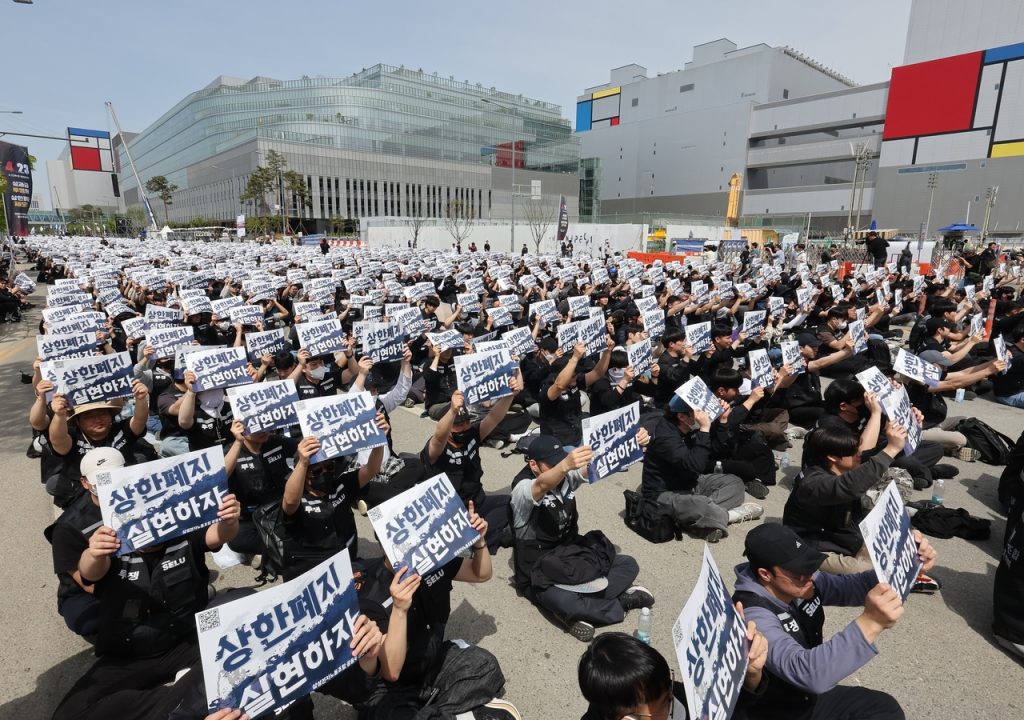
Samsung Electronics’ labor union staged its largest demonstration yet, gathering an estimated 37,000 workers at the company’s crucial semiconductor campus in Pyeongtaek, Gyeonggi Province, on Thursday. This significant show of force precedes a threatened general strike scheduled for next month, intensifying the ongoing dispute over employee compensation and profit sharing.
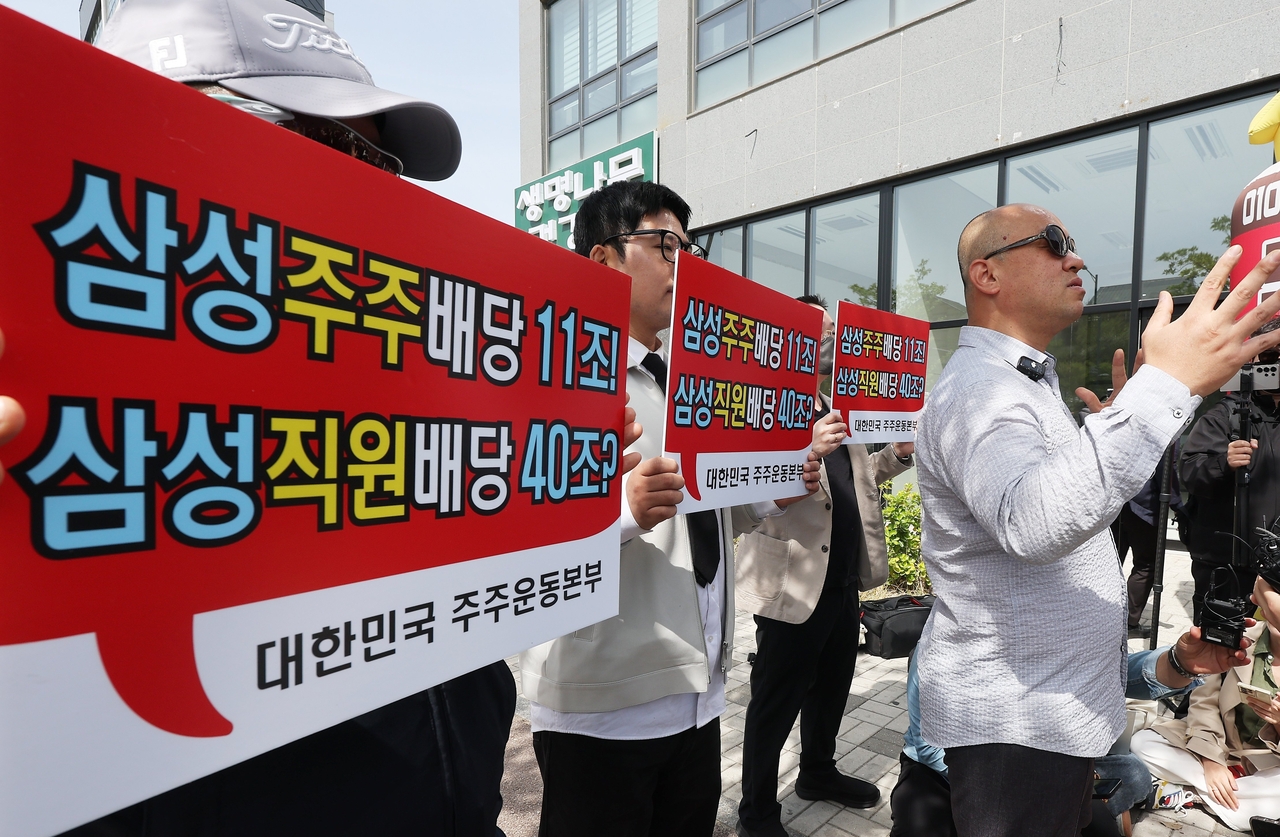
Hours prior to the union’s mass rally, a smaller contingent of retail shareholders organized a counter-protest at the campus gates. Min Gyeong-kwon, 47, who spearheaded the shareholder demonstration, sharply criticized the union’s bonus demands. He equated them to “a predatory creditor’s” and warned that threatening to halt Samsung’s production “holds the assets of millions of shareholders hostage.”
Police reported approximately 20 shareholders registered for the event, which concluded peacefully before the union gathering commenced at 1 p.m. No conflicts were reported.
These clashing protests underscore a fundamental disagreement over the allocation of the largest profits ever recorded in Korean corporate history. The union is demanding 15 percent of Samsung’s annual operating profit as performance bonuses, crucially without a cap. Based on analyst consensus compiled by FnGuide, Samsung’s projected full-year operating profit is around 306 trillion won ($207 billion). This would imply an approximate payout of 45 trillion won, a sum nearly four times the 11.1 trillion won Samsung distributed in shareholder dividends last year, and even surpassing its record 37.7 trillion won in research and development (R&D) spending.
Union Chair Choi Seung-ho has defended the demand as reasonable, citing to reporters that “engineers are leaving for competitors or moving overseas for better pay.” The union initially sought a 10 percent share, but subsequently increased this figure after Samsung reported an impressive 57.2 trillion won in first-quarter operating profit on April 7. This marked an eightfold year-on-year surge and represents the largest quarterly result in Korean corporate history.
The 10 percent baseline demand by Samsung’s union mirrors the profit-sharing agreement SK Hynix reached with its employees last year. The comparison was further reinforced by SK Hynix’s first-quarter results, released Thursday morning, which reported 37.6 trillion won in operating profit and a 71.5 percent operating margin—both company records.
However, an industry official, who requested anonymity, cautioned against a direct comparison between the two semiconductor giants. “SK Hynix is primarily a single memory business. Samsung, in contrast, manages memory, foundry, system LSI (large-scale integration), mobile, and consumer electronics divisions under one corporate umbrella,” the official explained. “Applying the same formula would immediately create equity issues across Samsung’s diverse divisions.”
Samsung management has firmly rejected a fixed percentage ratio for bonuses, instead offering what it describes as “the industry’s best compensation relative to competitors,” without codifying a specific percentage. Negotiations between the union and management collapsed in late March. In response, the company filed for a court injunction on April 16, seeking to prevent any occupation of production lines. Meanwhile, the union has refused to acknowledge management’s designation of essential workers who would be mandated to remain on duty during a strike.
Should an agreement not be reached, the union plans to initiate a walkout from May 21 through June 7. Industry estimates project potential financial losses ranging from 5 trillion to 10 trillion won over the 18-day period. The union’s own forecast is even higher, running up to 30 trillion won. It’s important to note that manufacturing and technical staff are legally prohibited from joining the walkout, which is expected to contain direct production disruption, though the full extent of the overall impact remains uncertain.
Lee Chan-hee, chair of Samsung’s compliance committee, urged both parties on Tuesday to “reach agreement through dialogue,” emphasizing that the union should “consider the impact on shareholders, investors, and the public.”
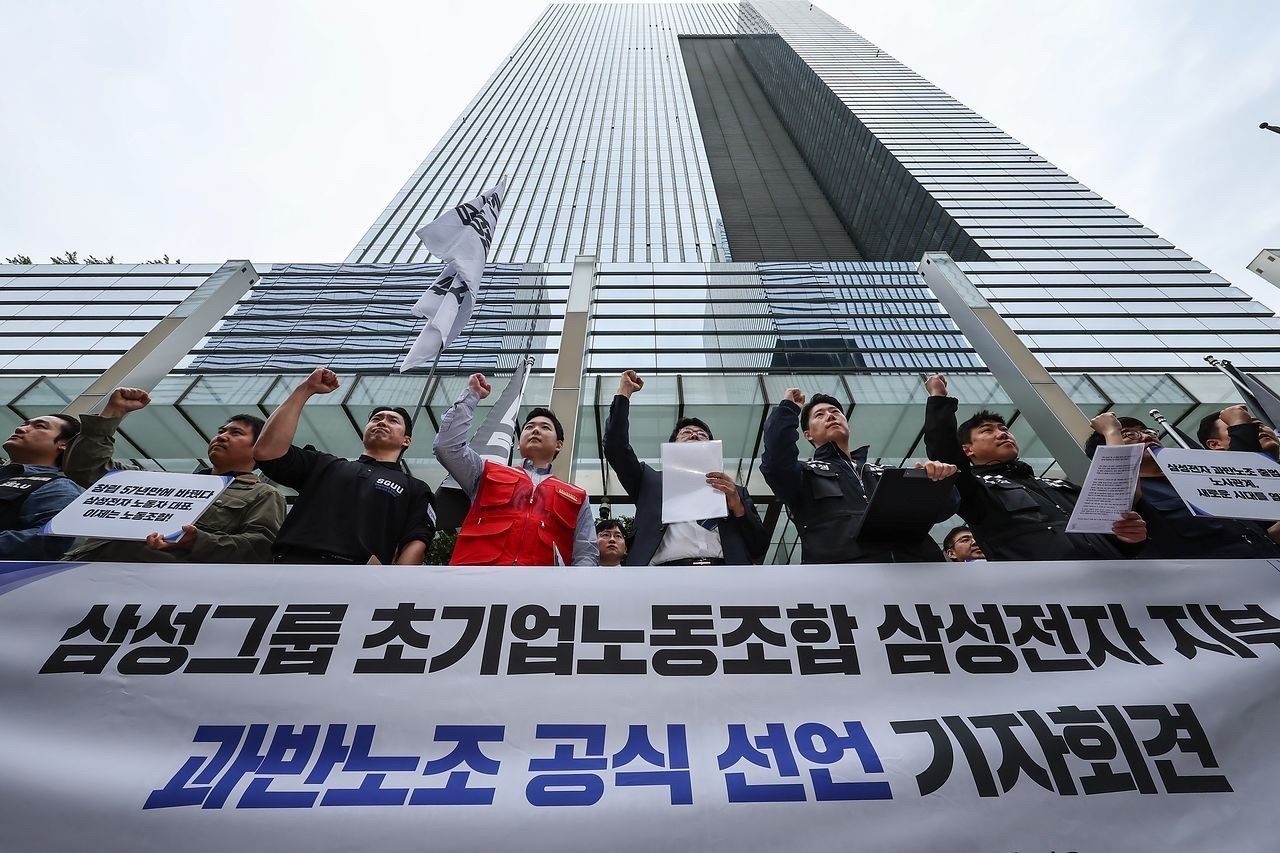
Thursday’s substantial turnout underscored the expanding influence and reach of Samsung’s first-ever majority union, which officially secured legal recognition on April 15 with over 74,000 members. On an anonymous internal online community, one Samsung employee described the internal atmosphere as “worse than it looks from the outside.” Another worker posed a rhetorical question: “Competitors get this and we don’t. Why not?”
Among the shareholder demonstrators, a 60-year-old retiree, identified only by his surname, Noh, articulated their frustration: “Shutting down factories and causing tens of trillions in damage just because business is booming makes ordinary people feel left behind.”
The critical importance of semiconductors to the national economy was highlighted by recent data. According to the Ministry of Trade, Industry and Energy, semiconductors constituted 38.1 percent of South Korea’s total exports in March, a month when chip shipments reached a record $32.8 billion.
mjh