South Korea’s Economy Achieves 1.7% Q1 Growth Driven by Chip Exports Amid Middle East Risks
South Korea’s economy experienced robust growth in the first quarter, expanding by an impressive 1.7 percent. This marks its fastest pace in over five years, largely propelled by a surging AI-driven semiconductor industry, according to data released by the Bank of Korea on Thursday.
The nation’s real gross domestic product (GDP), a key indicator of economic health, showed its strongest performance in five and a half years, last seen in Q3 2020 when exports rebounded post-COVID-19 restrictions. Year-on-year, the economy grew by a significant 3.6 percent.
This strong Q1 performance dramatically surpassed the BOK’s earlier February projection of 0.9 percent, nearly doubling the central bank’s initial forecast.
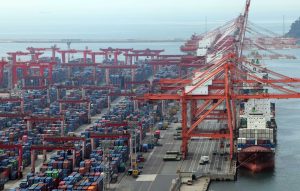
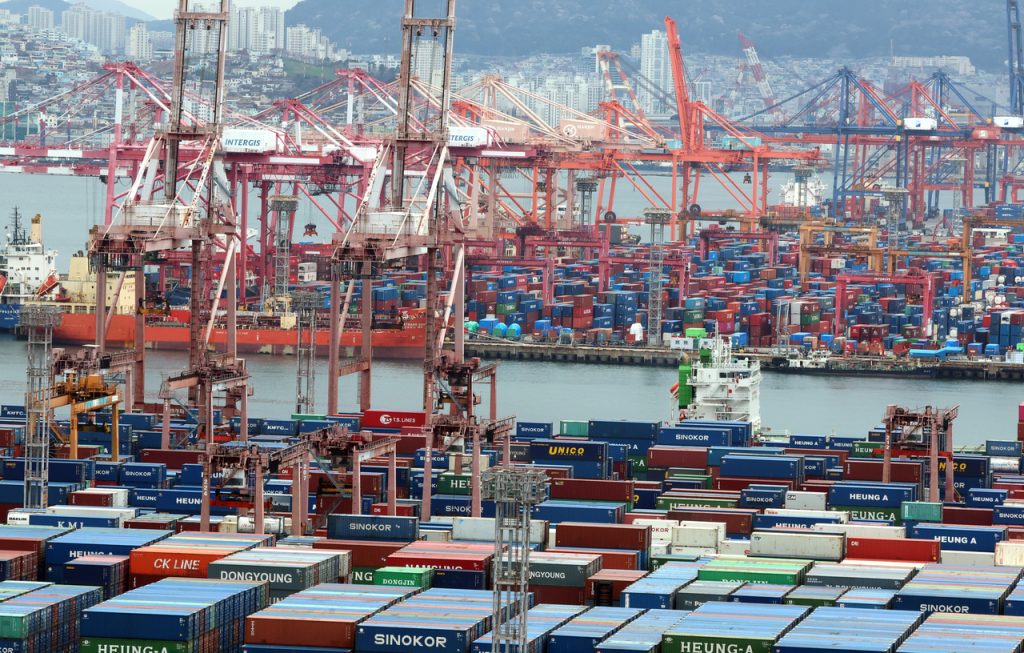
Exports emerged as the primary growth engine, soaring by 5.1 percent, with high-demand IT products, especially advanced semiconductors, leading the charge. Furthermore, investment in critical facilities, including essential chip manufacturing equipment, saw a substantial increase of 4.8 percent.
Lee Dong-won, a senior official of economic statistics at the Bank of Korea, confirmed during a press briefing that “the stronger-than-expected semiconductor cycle was the main reason for the upside surprise in the outlook.”
This surge was clearly reflected in the record-breaking first-quarter earnings reported by South Korea’s two leading chip manufacturers. Samsung Electronics announced Q1 revenue of 133 trillion won and an operating profit of 57.2 trillion won ($38.6 billion), while SK Hynix reported a significant rise in operating profit to 37.61 trillion won, with both companies achieving historic highs.
Lee highlighted the profound impact of the chip sector, stating, “Semiconductor manufacturing’s contribution to growth stands at around 55 percent,” and cautioned that excluding it would more than halve the overall growth rate.
This strong first-quarter showing signals a significant rebound in economic momentum for Asia’s fourth-largest economy, which had experienced volatile quarterly swings, including contractions in Q1 and Q4 of the previous year.
Middle East Geopolitical Risks: South Korea’s Economic Outlook Faces Q2 Uncertainty
While South Korea celebrates its strong Q1 performance, the nation’s future economic growth outlook remains sensitive to the evolving risks from the Middle East conflict. The full impact of these geopolitical tensions is largely anticipated to manifest from the second quarter onwards.
Lee confirmed that the Middle East conflict had only a “limited impact on first-quarter GDP,” explaining that “vessels continued to arrive via the Strait of Hormuz through late March, affecting only about 10 days out of the 90-day quarter.” However, he indicated that the economic repercussions are expected to become more noticeable starting in April.
The Bank of Korea’s February outlook had projected a more modest 0.3 percent growth for the second quarter.
Despite the potential headwinds, Lee advised against excessive pessimism, pointing out the continued strength of South Korean exports – particularly semiconductors – even after the conflict began, and that domestic private consumption has not yet shown significant signs of impact.
He concluded with a note of uncertainty, stating, “It is difficult to predict how the Middle East conflict will ultimately unfold on the economy.”
silverstar