In a proactive move to stabilize market prices and alleviate the cost of living burden on its citizens, the South Korean government announced Thursday significant policy changes. Starting next month, **fuel tax cuts** on **liquefied petroleum gas (LPG) butane products** will more than double. Concurrently, the government is committed to implementing stronger penalties to combat market **collusion**, aiming to directly support **people’s livelihoods** across the nation.
This latest measure, designed to provide crucial support for **people’s livelihoods**, will see the existing 10 percent **tax cut on butane** significantly expanded to 25 percent. This enhanced **LPG butane tax relief** will remain in effect until the end of June, as confirmed by the Ministry of Economy and Finance.
The Ministry elaborated that this decision directly responds to anticipated domestic impacts from recent **international LPG price hikes**, largely stemming from the ongoing **Middle Eastern crisis**. These price increases are expected to affect the local market significantly starting in May. By implementing these **fuel tax adjustments**, the government aims to substantially lower the **financial burden** for **butane users**, a demographic that primarily includes **low-income households**.
Indeed, **international butane prices** have seen a dramatic surge, increasing by nearly 50 percent. This month, the average price reached $800 per ton, a sharp rise from $540 per ton recorded just in March, underscoring the urgency of these governmental interventions.
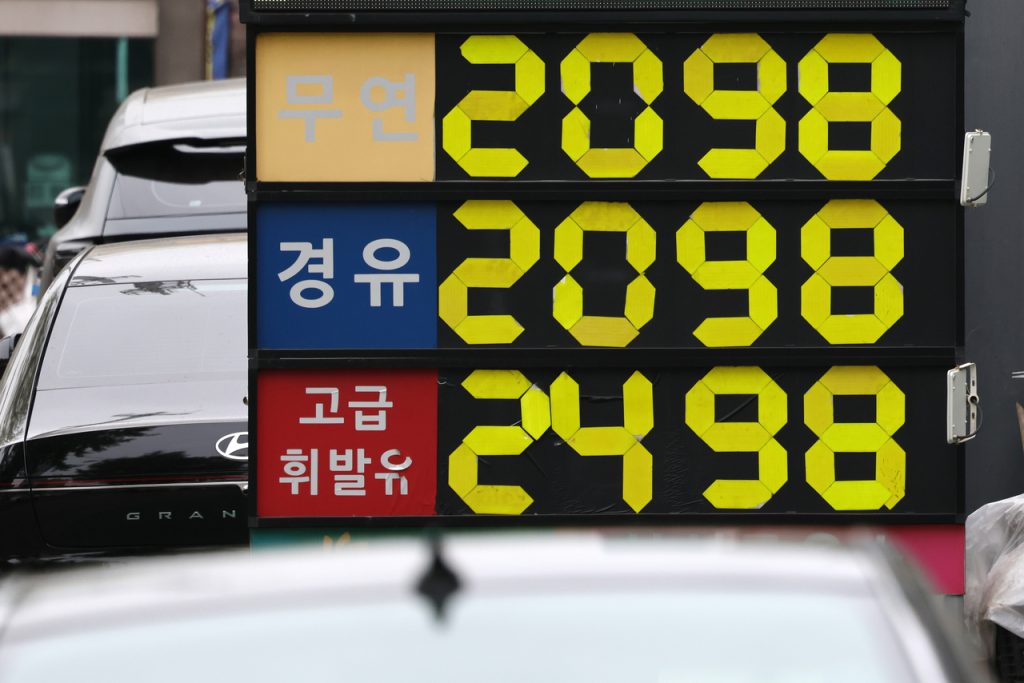
These new **LPG butane tax cuts** follow similar decisive actions taken late last month. At that time, the government significantly expanded **tax cuts on gasoline and diesel**, more than doubling them from 7 percent and 10 percent to 15 percent and 25 percent, respectively. Those specific measures are set to continue through the end of May, demonstrating a comprehensive strategy to manage **fuel costs**.
Beyond tax relief, the Ministry of Economy and Finance has been actively enforcing market integrity. Its intergovernmental inspection team has identified 99 instances of **petroleum business law violations** following intensive nationwide crackdowns on over 5,700 **gas stations**. These violations included serious issues such as **false reporting** and **hoarding**, practices that disrupt fair market competition and increase consumer prices.
The government reiterates its unwavering commitment to **lower the financial burden on people’s livelihoods**. While South Korea experienced a modest **consumer price inflation** rate of 2.2 percent in March, officials anticipate a rise to the mid-2 percent range or higher for April, primarily driven by increasing **fuel prices**. These proactive measures are therefore crucial to mitigate future inflationary pressures.
Furthermore, the Ministry confirmed its continued efforts to **stabilize supplies of key industrial materials**, including critical resources like **naphtha and urea**. This strategic focus aims to minimize the broader economic impact of the **Middle East crisis** on vital **domestic industries** and ensure supply chain resilience.
In a significant parallel effort to ensure fair market practices and stabilize prices for **people’s livelihoods**, the **Fair Trade Commission (FTC)** announced its intention to pursue stronger **punitive measures** against companies found repeatedly engaging in **collusion cases**. These stringent penalties could include the **revocation of business registrations and licenses**, alongside **business suspension**.
FTC officials revealed that the commission is actively reviewing and proposing amendments to existing laws. These legislative changes would enable the enforcement of such severe measures across various sectors, particularly targeting industries requiring specific **business registration or approval**, such as **construction and real estate**, where fair competition is paramount.
As part of its comprehensive reforms, the **antitrust regulator** is also exploring the introduction of a new system. This system would grant the **FTC** the authority to order the **dismissal or suspension of executives** directly involved in **collusion schemes**. Additionally, plans are underway to reform the current **litigation system**, aiming to significantly simplify the process for **victims of collusion** to effectively pursue and obtain **compensation for damages**.