South Korea’s economy demonstrated robust performance in the first quarter, expanding by a stronger-than-expected 1.7 percent compared to the previous three months, according to the Bank of Korea. This significant growth was primarily propelled by strong semiconductor exports and a notable rebound in investment.
This impressive Q1 economic expansion considerably surpassed the central bank’s initial projection of 0.9 percent. It also marks the fastest quarterly growth observed in five and a half years, signifying a strong recovery from the 0.2 percent contraction experienced in the final quarter of the preceding year.
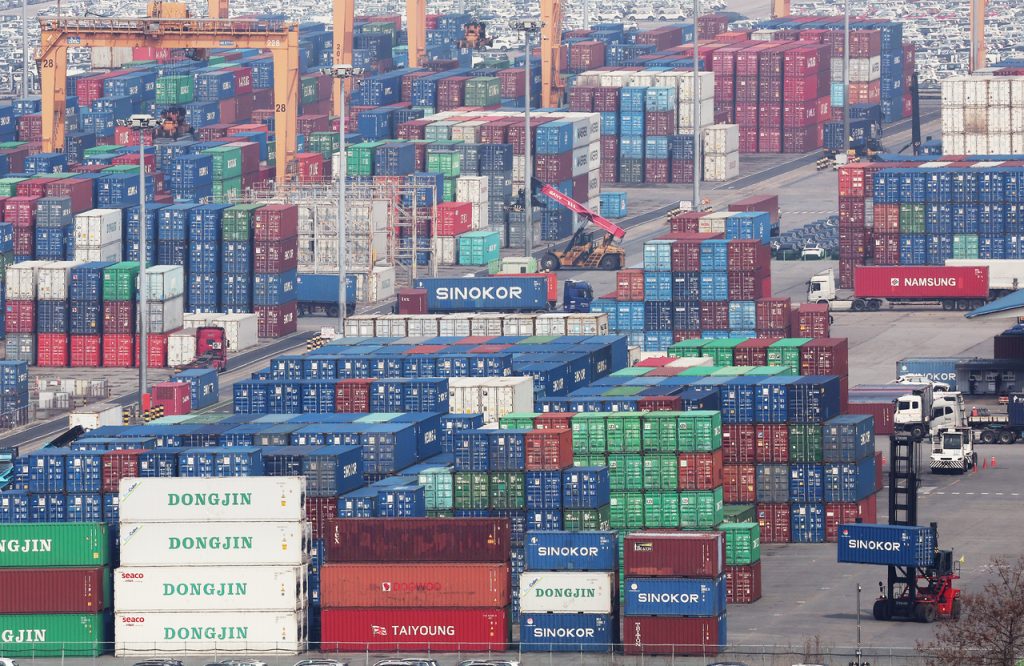
Driving this economic surge, exports saw a 5.1 percent increase quarter-on-quarter, largely fueled by robust chip shipments, while imports also grew by 3 percent. Crucially, investment, which had previously hindered economic momentum, made a strong comeback, with construction investment rising 2.8 percent and facility investment increasing by 4.8 percent.
The semiconductor sector’s strength was further highlighted by SK Hynix, a major chipmaker, which announced record quarterly earnings on Thursday. The company reported an astounding 405 percent surge in operating profit for the first quarter, attributed to surging demand for advanced artificial intelligence memory chips. Sales also reached an all-time high, extending a series of record-breaking financial performances for the firm.
Domestically, private consumption experienced a modest uplift of 0.5 percent in the first quarter, complemented by a 0.1 percent rise in government spending. These figures indicate a gradual but positive improvement in South Korea’s domestic demand.
Quantifying the contributions to overall growth, net exports were a significant driver, contributing 1.1 percentage points, while domestic demand added 0.6 percentage points.
Real gross domestic income (GDI), a key measure reflecting the nation’s broader purchasing power, saw a substantial 7.5 percent jump from the previous quarter. This marks the fastest increase since 1988 and significantly outpaced the rate of output growth, suggesting an improved economic welfare for the population.
While these economic data suggest a strong near-term rebound, the sustained outlook for the South Korean economy remains closely tied to the dynamics of the global technology cycle and ongoing external demand conditions.
Looking ahead, the Bank of Korea in February projected a 2.0 percent economic growth for this year. The International Monetary Fund (IMF) recently provided its estimate at 1.9 percent, while the Organization for Economic Cooperation and Development (OECD) forecasted a slightly higher 2.1 percent.
milaya