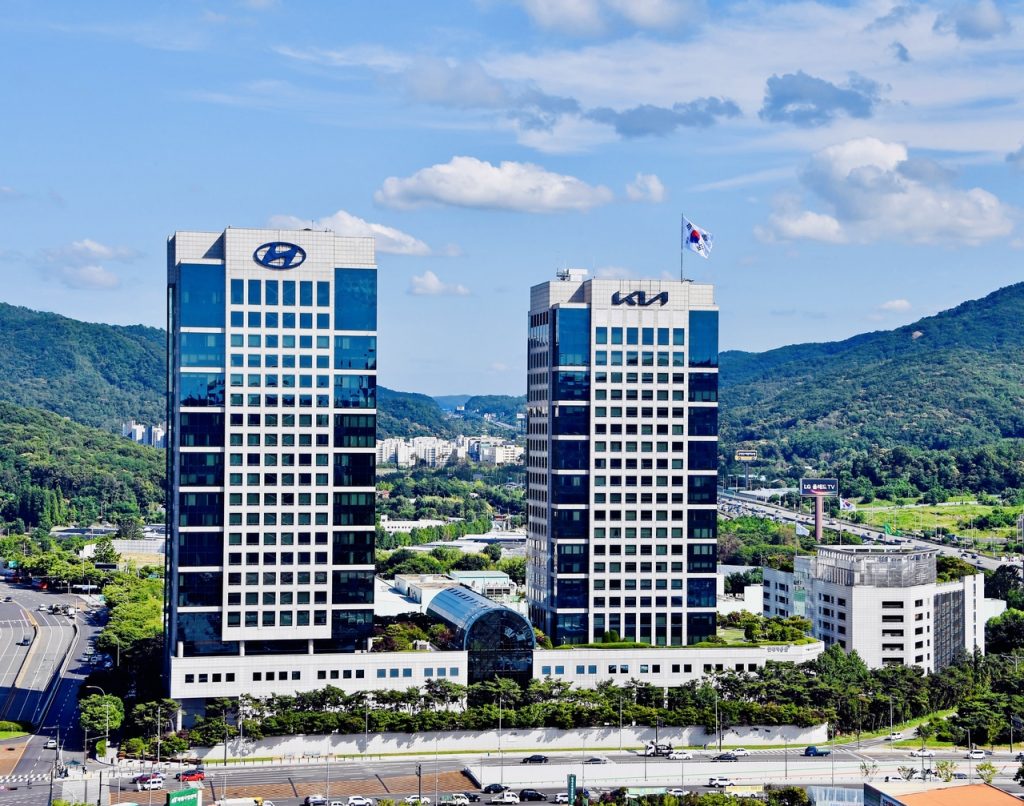
Hyundai Motor Co. has announced a landmark first-quarter revenue, propelled by robust global hybrid vehicle sales, particularly in key markets like the United States. This impressive financial performance was achieved despite a backdrop of escalating global uncertainties, including increasing tariffs and geopolitical tensions in the Middle East.
For the period spanning January to March, Hyundai’s revenue saw a 3.4 percent year-on-year increase, reaching an impressive 45.9 trillion won (approximately $31 billion). Hybrid models were a significant driver, accounting for a record 17.8 percent of total vehicle sales. The automotive giant also expanded its market presence, with its share in global markets rising to 4.9 percent and its footprint in the crucial U.S. market reaching 6 percent.
However, the quarter presented challenges for profitability, as operating profit experienced a 30.8 percent decline, settling at 2.5 trillion won, with an operating margin of 5.5 percent. This reduction was primarily attributed to substantial U.S. auto tariffs, which resulted in an 860 billion won loss, alongside increased incentive spending, costs related to Middle East operations, and a temporary suspension in sales for the popular Palisade SUV model.
Global vehicle sales also saw a slight decrease of 2.5 percent, totaling 976,219 units. Regional sales figures showed declines in North America and Europe, with sales falling by 4.4 percent and 7.4 percent respectively, equating to approximately 150,000 units in North America and 140,000 units in Europe.
Despite these headwinds in operating profit and sales volume, Hyundai Motor Co. remains confident in its financial outlook, reaffirming its full-year operating margin guidance in the range of 6.3-7.3 percent.
To fuel future growth, Chief Financial Officer Lee Seung-jo outlined strategic plans, including the launch of Hyundai’s innovative Ioniq electric vehicle (EV) lineup in the vast Chinese market during the second half of this year, in collaboration with BAIC Group.
Lee further elaborated on this initiative, stating, “By leveraging strong local partnerships, our inaugural model for China will integrate cost-efficient lithium iron phosphate batteries sourced from CATL and cutting-edge autonomous driving technology developed in conjunction with Momenta.” He also highlighted joint sourcing efforts with BAIC Group aimed at bolstering cost competitiveness in the region.
Hyundai is also rapidly advancing its software-defined vehicle (SDV) strategy. This involves synergizing the company’s robust hardware engineering capabilities with the advanced software expertise of its autonomous driving unit, 42dot, under the leadership of CEO Park Min-woo.
Regarding external collaborations, Lee clarified that Hyundai’s partnership with Nvidia would not detract from its internal efforts to develop its proprietary autonomous-driving model. Instead, he emphasized that this collaboration would accelerate progress by providing access to invaluable data from the chipmaker’s extensive network of partners. He also revealed plans to deploy an SDV pace car on public roads in the latter half of this year for rigorous validation and testing.
At Boston Dynamics, Hyundai Motor Co.’s U.S. robotics subsidiary, the board is currently in the process of selecting a new CEO. Concurrently, plans for establishing a new 30,000-unit production facility by 2028 are proceeding on schedule.
Addressing a recent supply chain disruption caused by a fire at a key C-engine valve component supplier in Korea, Lee confirmed that alternative parts are expected to be deployed as early as April. He assured stakeholders that any lost output from this incident would be fully recovered in the second half of this year through strategic additional global production.
hyejin2