South Korea is poised for a significant surge in its supply of highly skilled **corporate-sponsored semiconductor engineers**, with an estimated sixfold expansion expected as early as next year. This boost comes as the inaugural full cohorts from a network of recently established university programs prepare for graduation, addressing a critical national need.
The annual output from these specialized “contract departments” – a unique model where leading **chipmakers co-design curricula and guarantee employment** upon graduation – is projected to soar. From approximately 70 graduates currently, the figure is expected to reach between 400 and 480 by 2027, according to recent industry projections.
Further bolstering the talent pipeline, three additional **science and technology institutes** are set to begin producing graduates from 2028. This expansion is anticipated to push annual output to between 450 and 520, a robust figure even after accounting for a typical 5 to 15 percent dropout rate in these demanding programs.
This ambitious expansion directly addresses South Korea’s critical **semiconductor workforce gap**. The Korea Semiconductor Industry Association forecasts the sector will require 304,000 skilled professionals by 2031, with a significant projected shortfall of up to 54,000 in vital **design and specialized semiconductor roles**.
For many years, Sungkyunkwan University’s pioneering **semiconductor systems engineering department**, launched in 2006 in collaboration with **Samsung Electronics**, stood as the sole program of its kind. This successful partnership has nurtured over 1,000 graduates over two decades, with most advancing into Samsung’s esteemed chip division. Leveraging this proven track record, Samsung strategically expanded the model in the early 2020s to include prestigious institutions like Yonsei University, KAIST, Postech, and more recently, UNIST, DGIST, and GIST. Not to be outdone, **SK hynix** also established robust programs at Korea University, Hanyang University, and Sogang University, further solidifying the industry’s commitment to talent development.
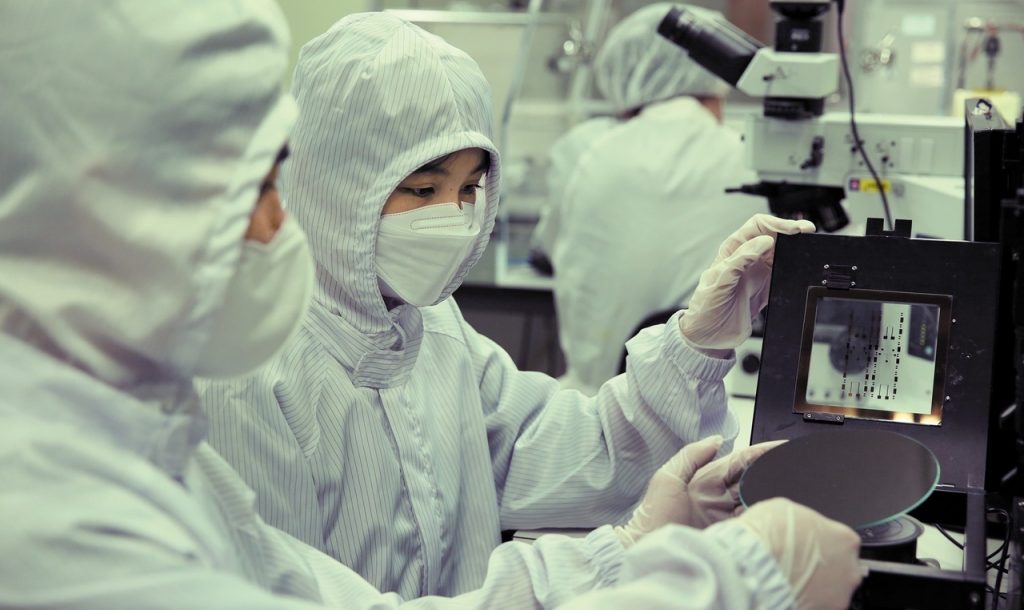
The distinctiveness of the **contract department model** lies in its unparalleled depth of corporate involvement. Partnering firms actively shape and refine coursework from the moment students enroll, providing invaluable **hands-on access to cutting-edge electronic design automation tools** and practical **multiproject wafer fabrication** experience. Curricula are continuously updated through joint efforts to mirror rapid industry advancements, including innovations in **AI chips**, **high-bandwidth memory (HBM)**, and **3D packaging technologies**. Consequently, graduates from these programs often enter the workforce with comprehensive **design portfolios** already developed, making them immediately valuable assets.
According to leading **industry experts**, demand is particularly strong for roles in **semiconductor verification** and **digital layout work**. However, more advanced specializations such as **analog design** and **high-end architecture design** continue to typically require postgraduate credentials, highlighting pathways for further academic pursuit within the **semiconductor sector**.
Beyond addressing skill shortages, these programs also serve as a clear indicator of the **semiconductor industry’s growing appeal** among top-tier students. Data from Jongno Academy reveals that **semiconductor contract departments** recorded an impressive average competition ratio of 7.16-to-1 in the regular admissions track for the 2026 cycle, notably surpassing the national medical school average of 6.61-to-1. Furthermore, admission cutoffs for prestigious **semiconductor programs** at Yonsei University and Hanyang University even exceeded those of most medical schools, underscoring the intense competition and high regard for these specialized fields.
Interestingly, neither major **semiconductor hub** like Taiwan nor the United States has adopted a directly comparable structure that explicitly ties undergraduate enrollment to guaranteed hiring. While **TSMC** in Taiwan actively partners with universities through robust research centers and internship programs, and US firms leverage apprenticeship-style training initiatives under the **CHIPS Act**, South Korea’s **contract department model** remains distinct in its comprehensive integration of education and guaranteed employment within the **semiconductor talent pipeline**.
mjh