
iPhone demand, BOE setback shift orders to Korean panel suppliers
Leading Korean display manufacturers, Samsung Display and LG Display, are poised to report robust first-quarter earnings. Despite the typical seasonal slowdown, analysts suggest that a global memory chip shortage, initially feared to impact panel makers, has instead undermined their Chinese competitors, solidifying the market position of these premium suppliers.
Samsung Display, the prominent display division of Samsung Electronics, is anticipated to achieve an operating profit of up to 500 billion won ($340 million) for the January-March period. This steady year-on-year performance defies earlier concerns regarding memory cost pressures and seasonal market softness, showcasing remarkable resilience in the display sector.
Meanwhile, LG Display’s consensus forecast, as compiled by financial data provider FnGuide, projects a significant operating profit of 149.5 billion won on revenues of 5.83 trillion won. Although top-line revenue may see a slight 3.9 percent decrease, the operating profit is forecast to surge by an impressive 346 percent, indicating a strong rebound from a previously challenging period.
These impressive financial results unveil a compelling supply chain paradox. The sharp escalation in DRAM and NAND prices since late 2025, fueled by robust AI server demand, initially sparked fears that smartphone brands would exert pressure on component suppliers to safeguard their profit margins. However, this burden primarily shifted to China’s budget-oriented handset manufacturers, who lack the robust vertical integration and formidable pricing power commanded by industry giants like Samsung Electronics and Apple.
Consequently, Chinese brands such as Xiaomi, Oppo, and Vivo experienced market share declines in the first quarter. In stark contrast, Samsung and Apple collectively captured 42 percent of global smartphone shipments, marking a notable 3 percentage point increase year-on-year, as reported by industry research firm Omdia. This highlights the growing dominance of the premium smartphone segment.
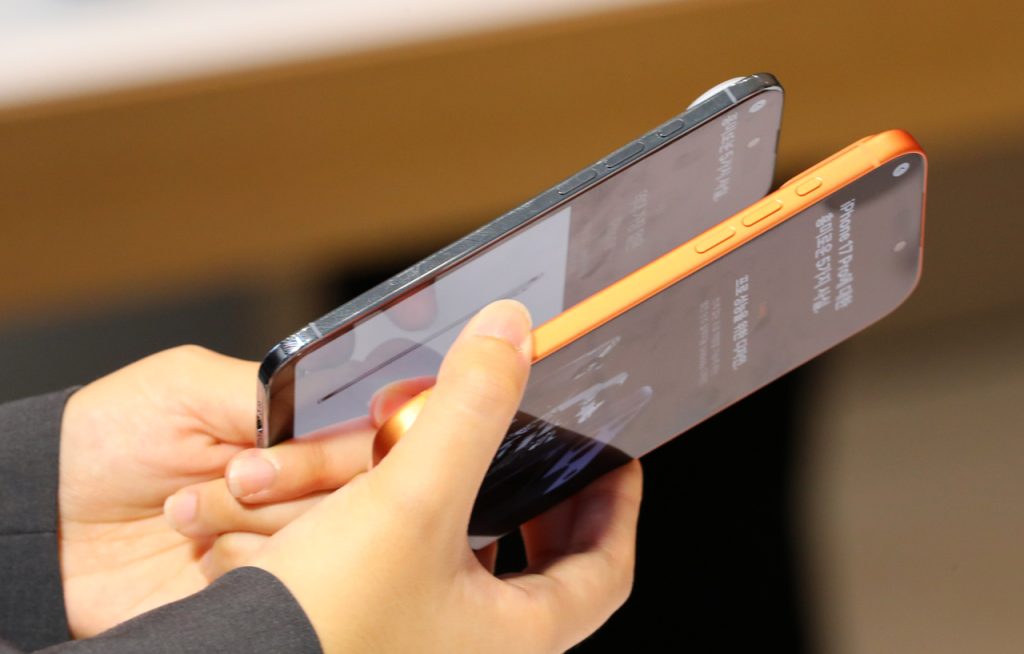
This heightened concentration in the premium smartphone tier has directly bolstered the performance of Korea’s two leading OLED panel suppliers. Samsung Display, for instance, has significantly benefited from sustained demand for Apple’s iPhone 17 alongside the highly anticipated Galaxy S26 series. The latter notably garnered a record 1.35 million domestic preorders within just seven days of its March launch, underscoring strong consumer interest.
LG Display’s impressive turnaround stems from a strategic, multi-year pivot away from large-sized LCD panels towards advanced OLED technology. This transition was notably solidified by last year’s sale of its Guangzhou fab to China’s CSOT for approximately 2 trillion won. As a result, OLED now constitutes a record 61 percent of LG Display’s revenue, a significant achievement following three consecutive years of operating losses through 2024, signaling a strong financial recovery.
Adding to this momentum, Apple’s strategic supplier reshuffle has further widened the competitive gap. Persistent quality issues encountered by China’s BOE with iPhone 17 OLED panels led to a significant redirection of order volumes to both Korean suppliers throughout the second half of 2025. Consequently, BOE’s projected share of iPhone panel supply is anticipated to decline to approximately 10 percent this year, consolidating the position of Korean manufacturers.
Optimism for further growth is high for the second half of the year. Samsung Display is reportedly poised to commence mass production of panels for Apple’s highly anticipated first foldable iPhone by late June, with ambitious targets of 8 million to 9 million units by year-end, according to recent supply chain insights. These innovative foldable panels command a unit price roughly twice that of conventional smartphone OLED displays, promising substantial revenue streams.
A display industry official emphasized, “Chinese competitors are still struggling to bridge the technology gap in the premium small and medium-sized OLED segment. The strategic imperative for Korean firms will be to further extend and deepen this technological lead.”
mjh


