Advisory Firm Eco&Partners Links Stringent Carbon Rules, Circular Economy to Profitable Cross-Border Deals

As global climate policies evolve into undeniable market realities, the upcoming H.EcoTech Festa 2026, themed around the principle that ‘the environment is money,’ is set to highlight how environmental challenges can be transformed into significant economic opportunities.
Kim Kyeong-yeon, Director of Global Strategy at Eco&Partners, emphasizes this proactive mindset as crucial for corporate differentiation. Her Seoul-based advisory firm has dedicated the last decade to integrating advanced environmental and sustainability practices directly into successful cross-border business transactions.
“The paradigm is shifting; we are transitioning from merely protecting the environment to actively leveraging it as a catalyst for new business ventures and market expansion,” Kim stated in an interview with The Korea Herald. She added, “With increasingly stringent carbon regulations and supply chain standards, businesses failing to adapt face operational challenges, whereas those prepared early stand to seize lucrative new opportunities.”
Kim noted that circular economy models are rapidly expanding beyond traditional waste management into complex industrial applications, encompassing everything from recycled material integration to advanced battery recovery. This evolution underscores the multidisciplinary nature of the field.
With operations spanning over 20 countries across Asia, Latin America, and the Middle East, Eco&Partners collaborates with governments and key institutions. Their focus is on developing robust climate targets and essential infrastructure to effectively establish carbon markets and circular economy frameworks globally.
“Our mission goes beyond mere network expansion,” Kim explained. “It centers on collaboratively identifying challenges and co-creating scalable solutions that can evolve into viable new markets.”
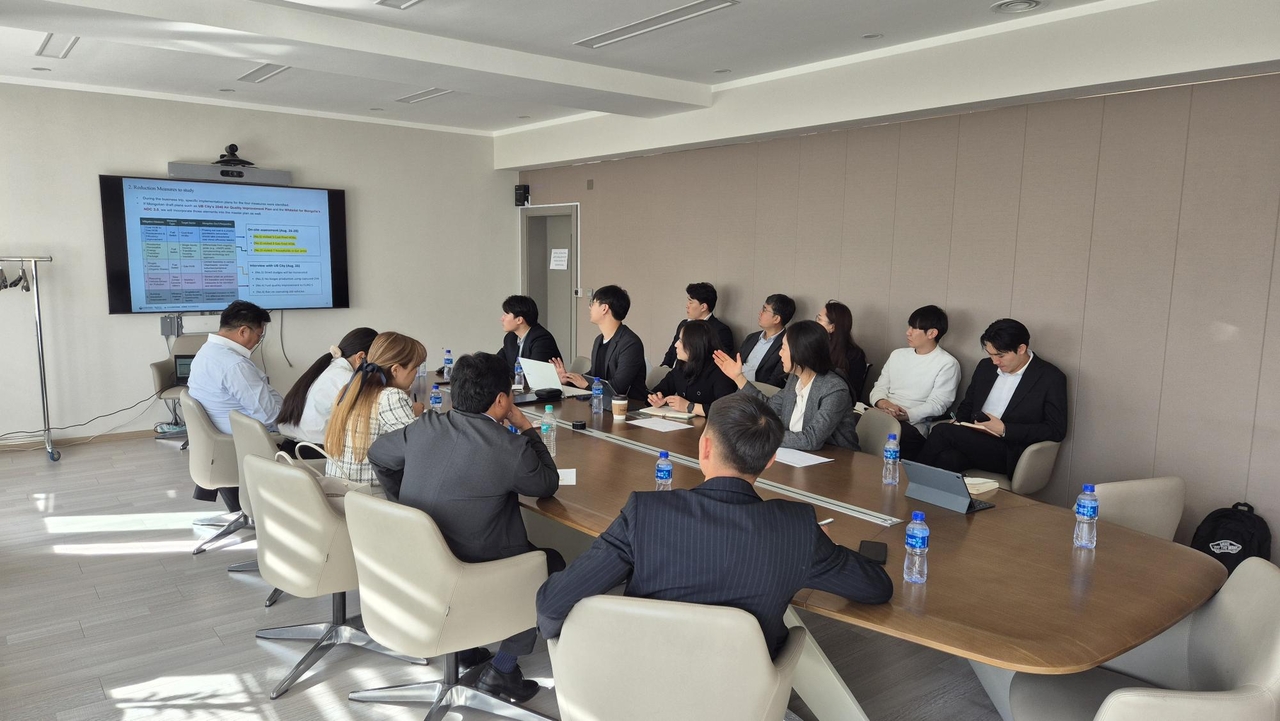
This innovative approach is particularly impactful in developing economies, where ambitious climate goals often surpass implementation capabilities. For example, in Mongolia, Eco&Partners partnered with the government to design comprehensive emissions reduction projects. These initiatives are precisely aligned with national sustainability targets and include embedded structures facilitating the international transfer of outcomes as verified carbon credits.
“Such strategies significantly mitigate entry risks for Korean enterprises, allowing them to simultaneously acquire valuable carbon credits and achieve attractive investment returns,” Kim elaborated. “This also pioneers a novel model for international expansion, integrating strategic investment with crucial emissions reduction projects, rather than simply exporting technology.”
A similar strategic framework guides the firm’s engagement in Medellin, Colombia. Here, Eco&Partners played a key role in redesigning recycling systems for construction and electronic waste. This was achieved by effectively localizing Korea’s highly successful Extended Producer Responsibility (EPR) model, which mandates producers to manage end-of-life product recycling, to suit Medellin’s specific conditions.
She highlighted a common challenge: “While many nations possess environmental regulations, effective enforcement is often lacking. To truly operationalize these systems, it’s imperative to cultivate demand through robust tracking systems, credible certification, and proactive public procurement, ensuring that recycled products are consistently utilized.”
In Southeast Asia, the opportunity for sustainable innovation is even more compelling, given the rapid acceleration of electric vehicle (EV) adoption coupled with currently underdeveloped end-of-life battery management systems. Korea’s distinct advantage extends beyond cutting-edge recycling technology; it encompasses integrated systems that seamlessly connect collection, reuse, and recycling processes within robust regulatory frameworks.
Kim explained, “Through the strategic integration of government-to-government cooperation and targeted pilot projects, we establish a solid foundation enabling Korean companies to evolve from singular exports towards sustainable, long-term business engagements.”
Kim strongly advises Korean companies to cultivate precise emissions measurement capabilities and ensure their systems align rigorously with evolving client demands, especially as comprehensive carbon disclosure becomes an essential prerequisite for international business. For aspiring young professionals, she emphasized the importance of mastering the intersection points of data analytics, policy formulation, sustainable finance, and practical execution.
To further elaborate on the pivotal role of environmental stewardship as a potent source of competitive advantage, Kim Kyeong-yeon is scheduled to participate as a distinguished panelist at the H.EcoTech Festa 2026. This significant event will take place at Yonsei University’s Baekyangnuri Hall on May 7.