

South Korea reported its lowest number of workplace deaths in the first quarter since 2022, despite several recent high-profile industrial accidents claiming multiple lives, data revealed on Tuesday.
A total of 113 workers tragically lost their lives in industrial accidents during the initial three months of 2026. This figure, a significant 17.5 percent reduction from the 137 fatalities reported a year earlier, marks the lowest first-quarter tally since the Ministry of Employment and Labor began compiling these statistics in 2022.
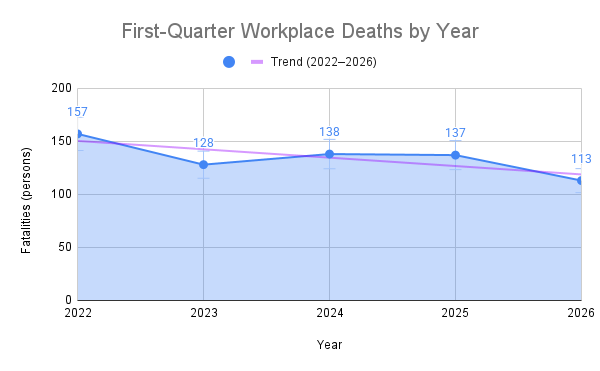
Smaller Workplaces Drive Decline in Occupational Fatalities
This encouraging decrease in overall workplace fatalities was primarily driven by a substantial reduction in deaths at smaller workplaces. In contrast, larger sites saw no change, with 54 fatalities reported, partly due to the impact of major industrial incidents.
Fatalities at businesses with fewer than 50 employees — including construction sites valued under 5 billion won ($3.4 million) — saw a sharp decline of 28.9 percent, dropping from 83 to 59 compared to the previous year. Within this category, 8 deaths occurred at workplaces with fewer than five employees, while 31 fatalities were reported at workplaces employing between five and 49 individuals.
The Ministry of Employment and Labor attributed this positive trend to enhanced inspections and closer cooperation with local governments and other relevant agencies. These efforts, initiated in the latter half of last year, have specifically targeted smaller and higher-risk workplaces to improve safety standards.
Analyzing by industry, the construction sector recorded a notable decrease in deaths, falling to 39 fatalities, a 45.1 percent reduction from the prior year. Similarly, other sectors experienced a 40.5 percent decline, with 22 deaths reported.
However, the manufacturing sector presented a concerning counter-trend, experiencing a sharp increase in industrial deaths.
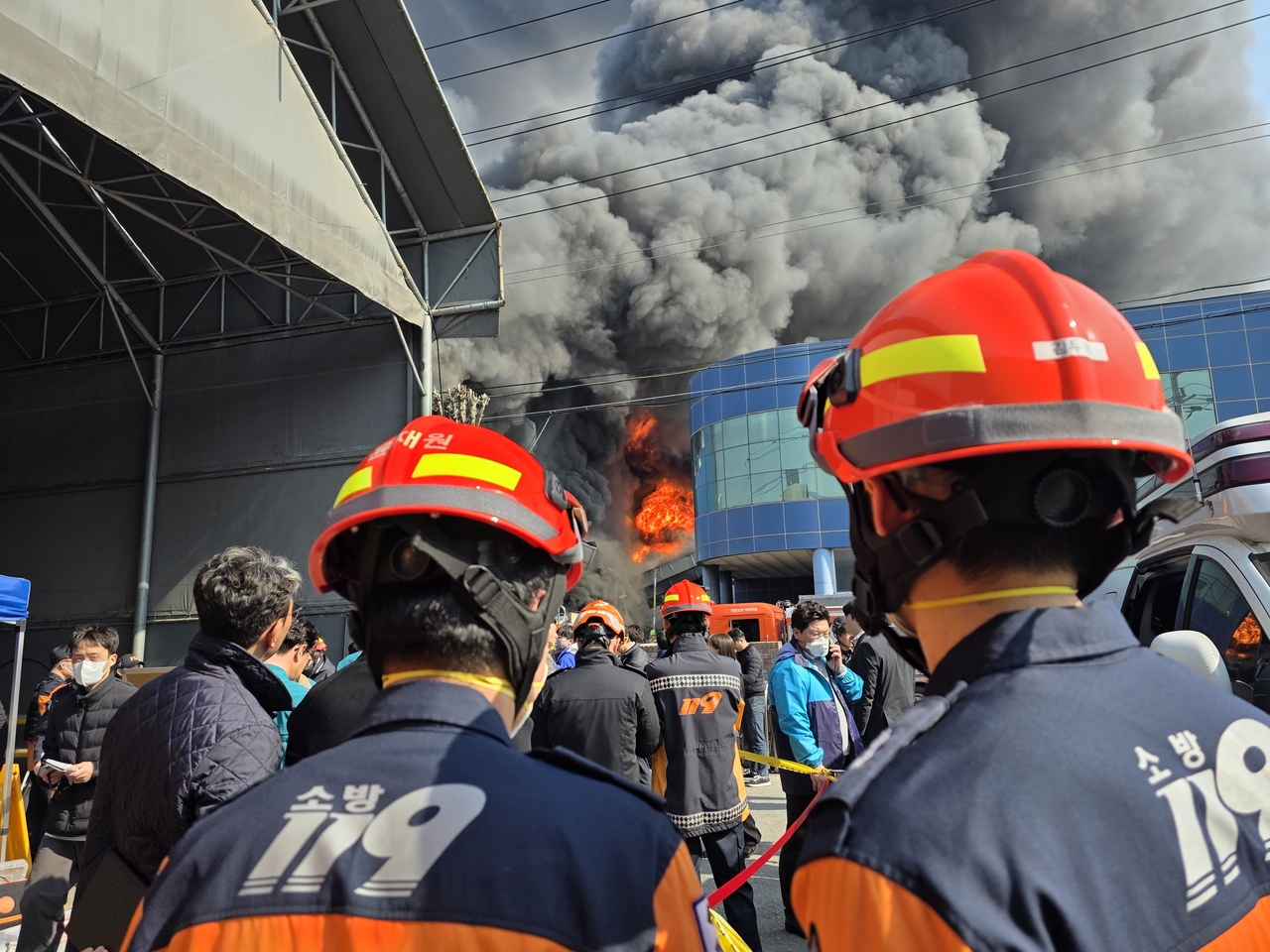
A total of 52 workers tragically died in manufacturing-related accidents during the first quarter, representing a substantial 79.3 percent rise from the previous year. Authorities highlighted a devastating fire in Daejeon that claimed 14 lives, along with persistent incidents involving forklifts and workers being caught in machinery during maintenance and inspection activities, as critical factors behind this surge.
The Daejeon fire, which engulfed an automobile parts factory on March 21, also resulted in injuries to 60 other individuals. Investigators suggested that highly flammable industrial materials and unauthorized internal structures might have significantly contributed to the high number of casualties in this manufacturing incident.
Regarding accident types, deaths from falls, historically the leading cause of workplace fatalities, were halved to 31. Fatalities resulting from being struck by objects, crushing or overturning incidents, and collapses also saw a decline.
Conversely, deaths attributed to fires and explosions doubled to 20, clearly reflecting the severe impact of large-scale incidents, particularly within the manufacturing sector.
South Korea’s Ongoing Battle for Workplace Safety
This latest statistical tally underscores South Korea’s intensified “war on industrial accidents,” with an ambitious national goal to reduce the workplace fatality rate from 0.39 deaths per 10,000 workers in 2023 to 0.29 by the year 2030.
In 2023, South Korea’s workplace fatality rate of 0.39 stood as the second-highest among member countries of the Organization for Economic Co-operation and Development (OECD), surpassed only by Canada (0.50). This rate was considerably higher than that of the United States (0.37), France (0.35), Italy (0.20), Spain (0.17), Australia (0.14), Japan (0.13), Germany (0.07), and the United Kingdom (0.04). The average across these 10 countries was 0.24, making South Korea’s rate approximately 1.6 times higher than the collective average, highlighting significant occupational safety challenges.
The construction sector, in particular, remains a critical area of concern for occupational safety. In 2023, South Korea recorded the highest construction worker fatality rate among major OECD economies, registering 1.59 deaths per 10,000 workers — nearly double the average of other leading economies.
To cultivate a robust safety-first culture across workplaces and corporate environments, South Korea has implemented a series of comprehensive policy measures. These include the landmark Serious Accidents Punishment Act and the far-reaching “Roadmap to Zero Workplace Fatalities,” introduced in 2021 and 2022, respectively.
The strategic roadmap emphasizes a pivotal shift towards company-led risk assessment, expanded worker participation in safety initiatives, and targeted support for high-risk sectors. This focused approach specifically addresses industries such as small businesses, construction, and manufacturing, aiming to significantly enhance occupational safety outcomes.
tammy


