The South Korean won gained significant ground against the US dollar on Tuesday, fueled by optimistic market sentiment surrounding the potential resumption of crucial talks between Washington and Tehran.
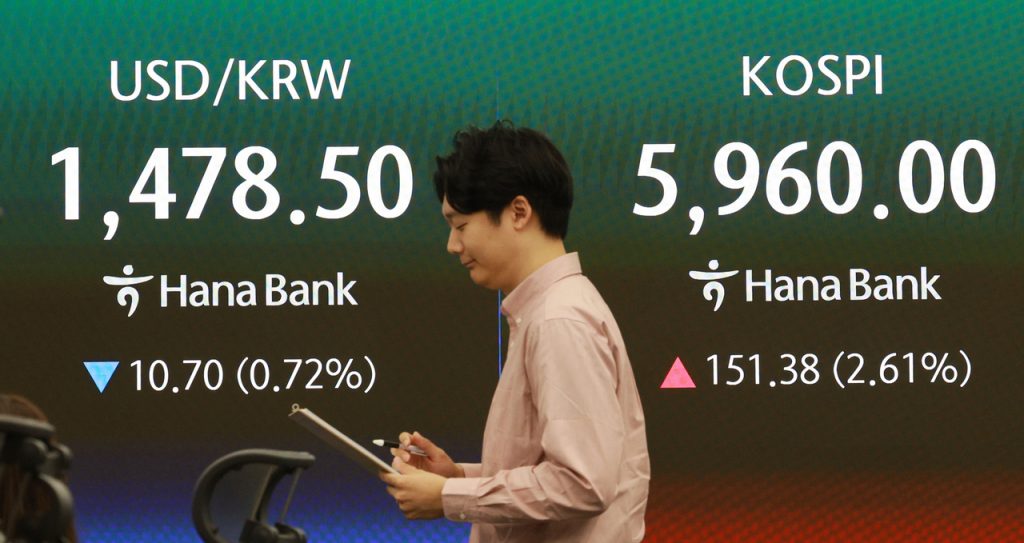
Opening strongly at 1,478.8 per dollar, the Korean won marked a notable increase of 10.5 won compared to the previous trading session’s close, reflecting immediate market confidence.
This positive movement in the South Korean currency followed widespread reports from international media outlets suggesting that the United States and Iran were poised to restart peace negotiations. This comes despite a recent round of talks in Islamabad over the weekend concluding without an immediate breakthrough.
Previously, heightened tensions had escalated after US President Donald Trump ordered a blockade on vessels in the strategically vital Strait of Hormuz, which became effective on Monday, following the initial breakdown in discussions.
Further fueling hopes for de-escalation, President Trump informed reporters that “the right people” within Iran had reportedly contacted his administration, expressing a desire to “work a deal.”
Echoing this sentiment, Iranian President Masoud Pezeshkian confirmed, as per media reports, that Iran is prepared to continue negotiations adhering to the framework of international law and regulations.
The promising indications of a potential return to the negotiating table significantly contributed to pushing global oil prices down, with crude benchmarks falling below the critical $100 per barrel mark.
The South Korean won had experienced considerable volatility in recent trading sessions, primarily driven by ongoing developments in the Middle East conflict, which commenced in late February. Surging global oil prices stemming from the conflict had previously intensified concerns over domestic inflation and a potential economic slowdown in South Korea.
This pressure on the won was exacerbated by elevated crude oil prices, which directly increased the demand for US dollars required for essential energy imports. As a nation heavily reliant on imported energy, South Korea’s currency is particularly susceptible to such commodity price fluctuations.
Reflecting the broader market shift away from safe-haven assets, the dollar index, which tracks the US dollar’s value against six other major currencies, saw a modest decline of 0.03 percent, settling at 98.34.