
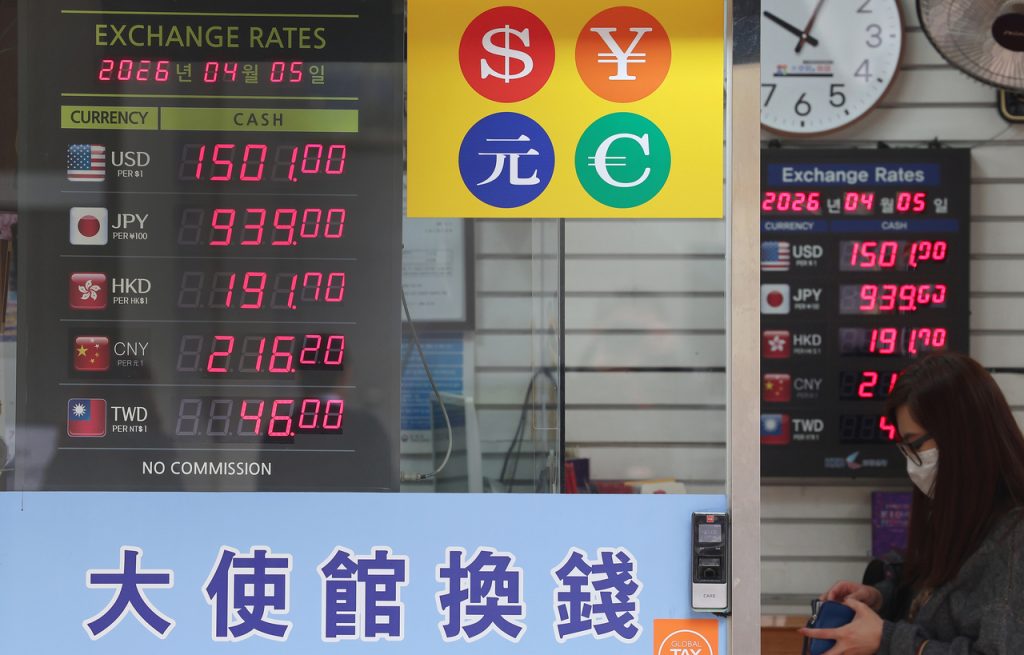
The South Korean won experienced a significant depreciation against the US dollar on Monday, following renewed threats from US President Donald Trump. His warnings regarding potential strikes on Iranian energy facilities and bridges, should the critical Strait of Hormuz remain closed, coupled with a fresh deadline, unsettled global currency markets.
At the start of trading, the won was quoted at 1,510.3 per dollar, marking a decline of 5.1 won from its closing value in the previous session.
This latest downturn highlights the heightened volatility the South Korean currency has exhibited in recent weeks, consistently trading below the psychologically important 1,500 won mark. This instability is largely attributed to the ongoing conflict in the Middle East, which began in late February, driving up global oil prices and fueling widespread concerns over inflation and a potential economic slowdown.
On Sunday, President Trump intensified geopolitical tensions by stating that Iran would “be living in hell” if it failed to ensure the reopening of the crucial waterway. He extended his ultimatum by one day, setting a new deadline for Tuesday at 8 p.m.
These escalating tensions immediately translated into higher crude oil prices, as supply concerns intensified. Both Brent crude and West Texas Intermediate (WTI) futures surged, trading above the significant $110 per barrel level.
The surge in global oil prices puts considerable pressure on the South Korean won. This is primarily due to an increased demand for US dollars required to finance the nation’s substantial crude oil imports, given South Korea’s heavy reliance on foreign energy sources.
Reflecting broader market uncertainty and a flight to safety, the US dollar index, which measures the dollar’s strength against a basket of six major currencies, climbed sharply to an intraday high of 100.275 on Monday.


