
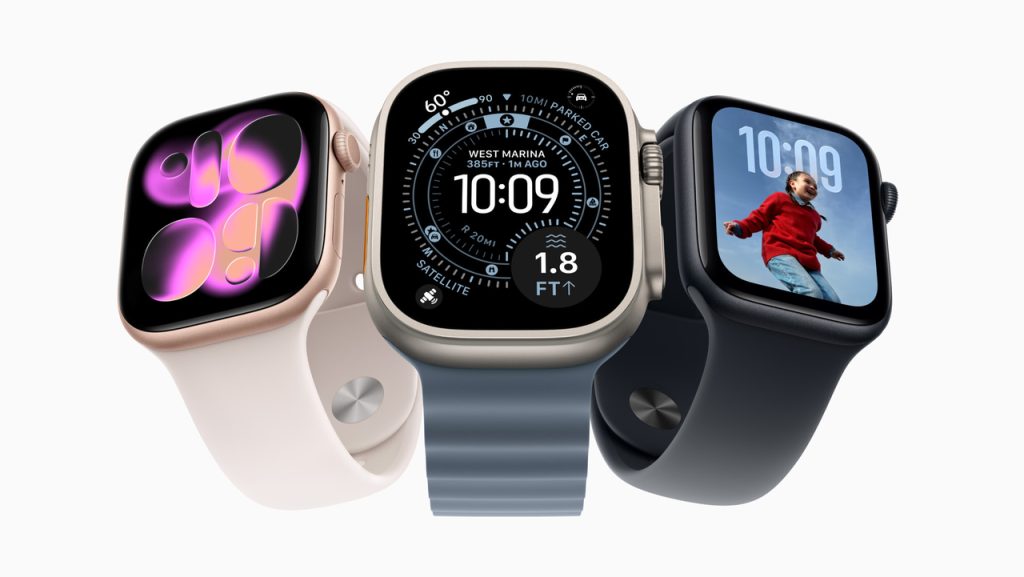
LG Display has emerged as the dominant force in the Apple Watch OLED panel market, following Japan Display Inc.’s (JDI) exit due to financial difficulties and restructuring.
According to market research firm Omdia, LG Display’s share of the global smartwatch OLED panel market reached an all-time high of 43.7 percent last year, a significant increase from 39.7 percent the previous year. Industry insiders attribute this growth to LG Display becoming the sole supplier of OLED displays for the popular Apple Watch.
JDI’s shipments of panels for the Apple Watch plummeted from 850,000 units in the first quarter to a mere 5,000 in the third, before completely ceasing in the fourth quarter, signaling their complete departure from this sector.
LG Display swiftly capitalized on the opportunity, increasing its shipments from 5.8 million units in the first quarter to 7.8 million in the second and 11.2 million in the third. By the fourth quarter, after JDI’s departure, the company shipped 7.1 million units, effectively absorbing the entire displaced volume.
Analysts suggest that LG Display’s near-monopoly is fueled by its leadership in LTPO OLED technology, a crucial component for high-end smartwatches.
“JDI’s withdrawal from the North American client’s smartwatch OLED business and its decision to sell its Mobara facilities have strengthened LG Display’s position,” stated Jung Won-seok, an analyst at IM Securities. “This is also expected to boost profitability.”
LTPO OLED panels allow for variable refresh rates, dropping as low as 1Hz, which dramatically reduces power consumption. This enables always-on display functionality without significantly impacting battery life. The advanced technology and high barriers to entry have allowed LG Display to secure supply contracts for the entire Apple Watch range, from the entry-level SE models to the premium Ultra versions.
This strengthened market position is reflected in positive earnings forecasts. According to FnGuide, consensus estimates project LG Display’s operating profit at 1.3 trillion won ($858 million) this year, a 152 percent increase from 517 billion won the previous year.
The company has stated its commitment to continued investment for growth while maintaining sound financial management. Capital expenditure for this year is planned in the mid-2 trillion won range, focusing on upgrading existing production lines and bolstering research and development in next-generation display technologies, rather than expanding production capacity.
yeeun


