
South Korea’s leading conglomerates are rolling out new energy conservation initiatives, aligning with government policies amidst rising oil prices fueled by the Middle East situation. This surge is putting increased pressure on the nation, the fourth-largest economy in Asia.
Companies like Samsung, SK Group, and other major players announced on Wednesday plans to curtail energy consumption across their domestic operations. These measures include stricter controls on electricity usage and limitations on vehicle usage at company facilities.
Samsung is expanding its “10-day rotation” vehicle restriction system to encompass all its domestic locations. This requires employees to refrain from driving their personal vehicles on days corresponding to the last digit of their license plate. Initially implemented at select sites like the Suwon campus, this policy will now be applied across the entire group, including affiliated companies, starting this Thursday.
Furthermore, Samsung will reduce lighting in non-essential areas, such as hallways and outdoor spaces, by 50%. Internal campaigns will also be launched to promote energy-saving practices, including turning off computer monitors after working hours.
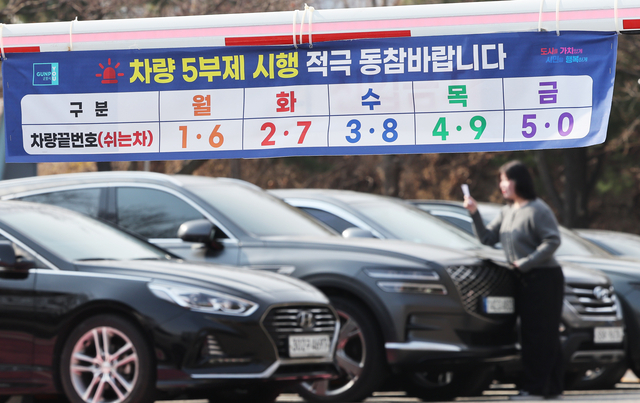
SK Group announced the implementation of a more stringent “five-day rotation” system, effective March 30. This policy will restrict vehicle use based on license plate numbers and will be enforced across all SK Group affiliates. Mandatory lights-out periods during lunch breaks and after working hours will also be implemented.
The SK Group will also enforce temperature regulations, setting cooling systems at 26 degrees Celsius or higher and heating systems at 18 degrees or lower. Additional measures, such as elevator rationing, will be introduced to further reduce power consumption.
LG Group is also joining the energy-saving movement, initiating its 10-day rotation vehicle restriction system at all its Korean workplaces starting this Friday. The company stated it is evaluating further steps while reinforcing existing efficiency systems.
Major office buildings, including the LG Twin Towers in Seoul, already utilize automatic lights-out systems after business hours. LG Electronics actively monitors energy consumption across its operational sites in real-time.
HD Hyundai commenced similar measures starting Monday, including a 10-day vehicle rotation system and reduced usage of petrochemical-based office supplies. This makes them one of the first major conglomerates to respond following the escalated tensions in the Middle East.
Business organizations are also participating in these efforts. The Korea Chamber of Commerce and Industry (KCCI) announced a nationwide campaign across its 74 regional offices, encouraging member companies to adopt energy-saving practices. They will implement a five-day vehicle rotation system for employees and promote measures like maintaining optimal indoor temperatures and increasing the use of virtual meetings.
The Federation of Korean Industries (FKI) will launch a separate campaign this Thursday, promoting the use of public transportation, reducing in-person meetings, and cutting down on energy consumption within office spaces.
This coordinated response follows the South Korean government’s declaration of an energy emergency, which includes plans to introduce a five-day vehicle rotation system for public institutions and a review of naphtha supply controls.


