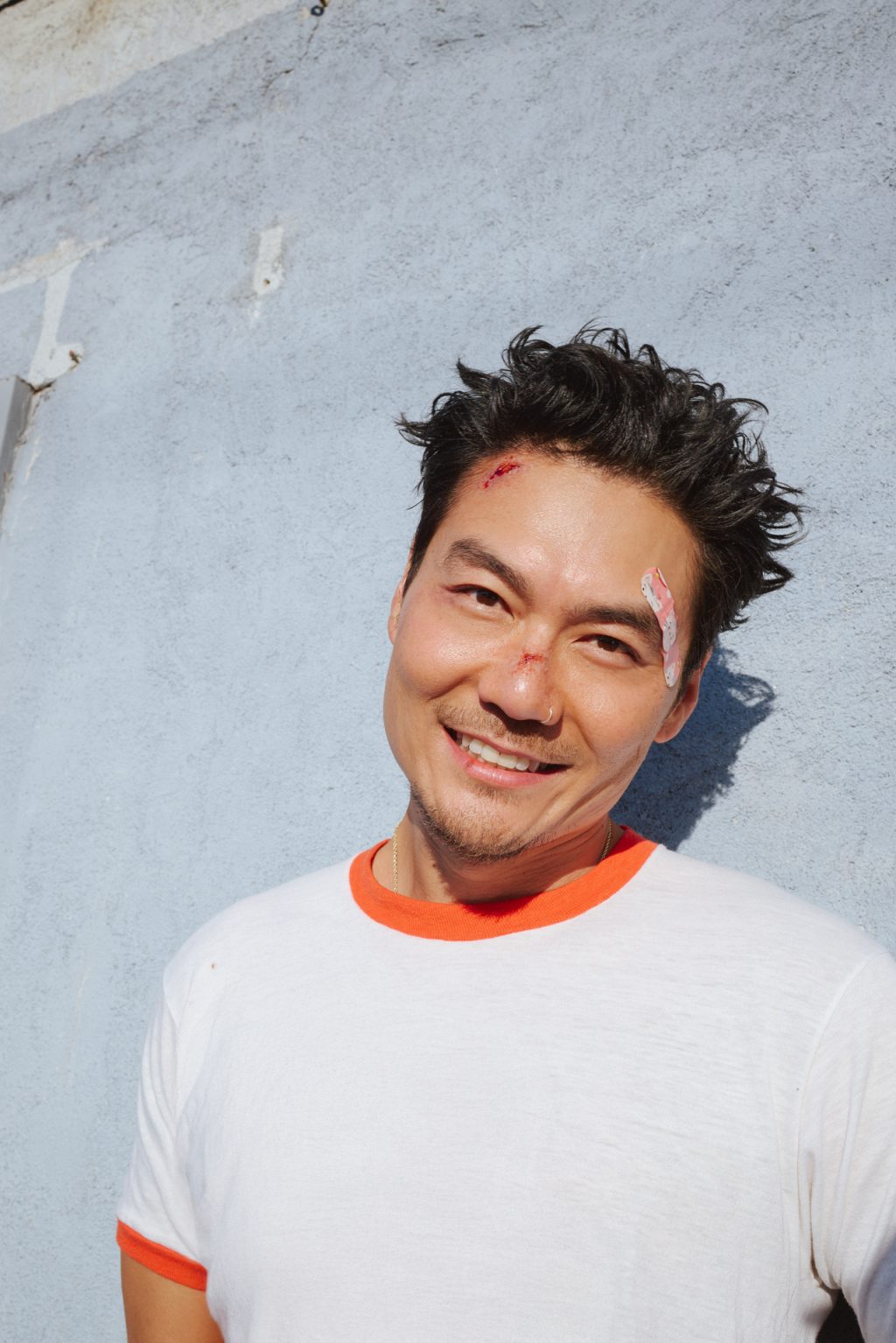
Korean American rapper Dumbfoundead reflects on his childhood, family trauma, and rise to fame ahead of his new memoir ‘Spit’.
Before he became Dumbfoundead, the acclaimed rapper known for his sharp wit and insightful cultural commentary, Jonnie Park was a young boy navigating the complexities of undocumented life in Los Angeles. His story is one deeply intertwined with his parents’ pursuit of the “American Dream” and the challenges that dream presented to their family.
Born in Argentina to Korean parents, Park’s journey to the United States began at the tender age of three, when he crossed the US-Mexico border with the assistance of a “coyote.” Growing up in Los Angeles without legal status, he experienced a childhood marked by both resilience and instability – formative experiences that would profoundly shape his artistic voice and perspective.
While his family’s move to the US was driven by the pursuit of a better life, Park acknowledges that it ultimately strained their family dynamic.
“Growing up as a Korean American in the ’90s in Los Angeles, my experiences were largely seen through the lens of my parents, since I was just a child,” Park shared in an interview with The Korea Herald on March 17. “I believe we were somewhat shielded from the extent of the racism our parents faced as immigrant parents struggling with the language barrier.”
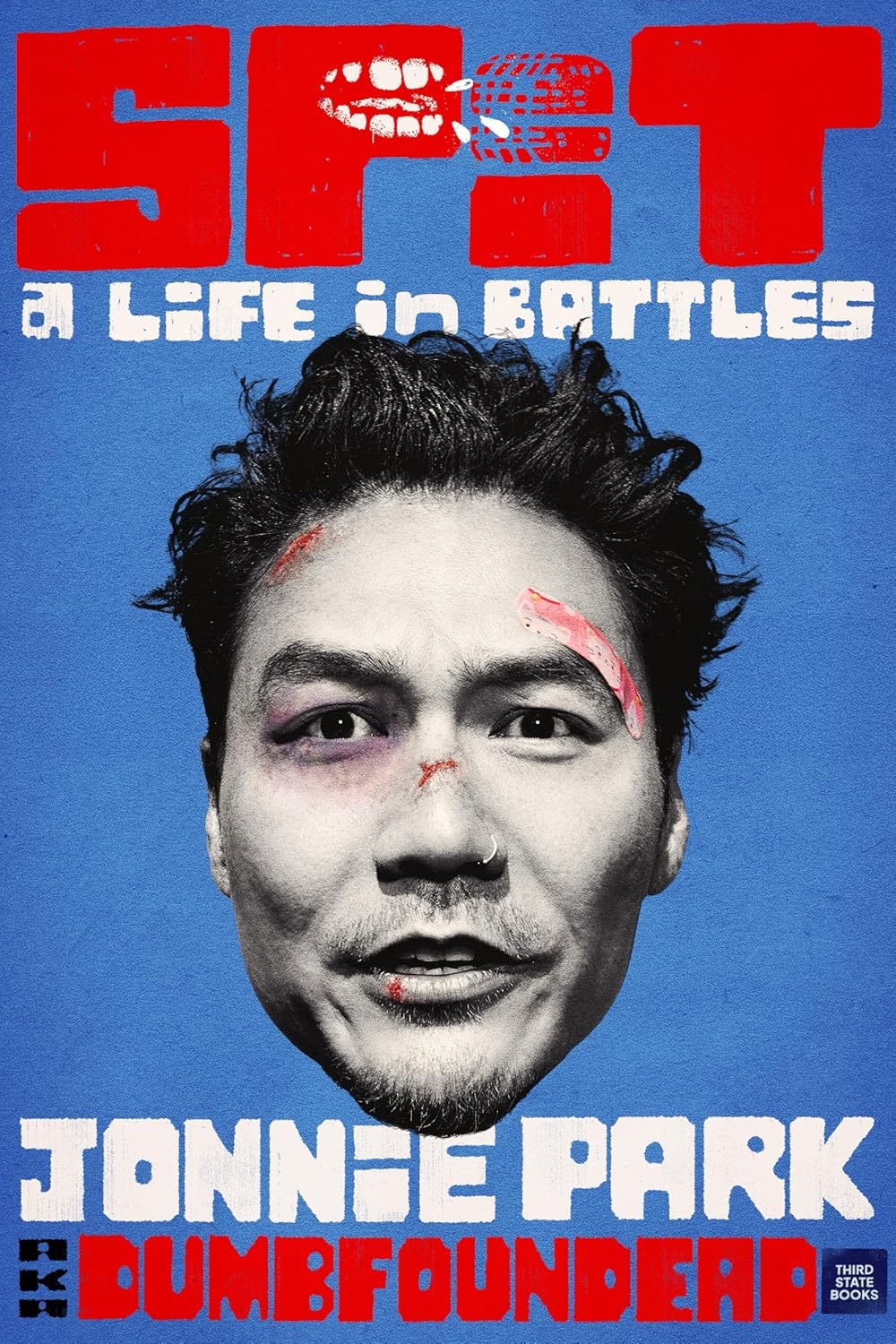
In his highly anticipated memoir, “Spit: A Life in Battles,” Park fearlessly recounts his father’s reliance on alcohol as a coping mechanism while navigating life in a new country and striving to provide for his family.
“I witnessed what my mom endured – both from the external world and within the confines of our home. She faced challenges from all sides, particularly with my dad,” he revealed.
The book opens with an unvarnished portrayal of his father, whom Park describes with raw honesty. However, the narrative evolves beyond mere anger. As the story progresses, it shifts towards understanding, offering a more nuanced perspective shaped by time and personal growth.
“Deep down, I hope he reads it,” Park admitted, despite believing his father won’t due to the language barrier. “Toward the end of that chapter, I express my understanding of why he might have behaved the way he did.”
From Classroom Clowning to Battle Rap Stardom
While his parents grappled with limited English proficiency, Park adapted to social situations with relative ease. Instead of retreating when teased by classmates, he responded with humor – a natural inclination that would eventually become his trademark as a performer.
“I was never the aggressor,” Park explained. “Someone would come at me first, and I’d respond. The reactions of those around me made me realize – I’m actually pretty good at this.”
That instinct developed into a honed skill. Park began fusing humor with rap, initially in classrooms and lunchrooms, and later on the stages of the underground hip-hop scene.
“I always say the classroom was my first stage,” he reflected. “I’d raise my hand, crack a joke, and feel the surge of energy as people wanted more.”
Within Los Angeles’ vibrant underground hip-hop community – particularly at open mic nights at venues like Project Blowed – Park often stood out as the only Asian performer in spaces predominantly filled with Black artists. Rather than viewing this as a disadvantage, he recognized it as an opportunity.
“When you’re the only Asian kid in a room of 300 people, you automatically pique everyone’s curiosity,” he said. “In hip-hop, the primary concern is whether you’re skilled. It transcends racial boundaries – it’s about being ‘wack’ or ‘tight.'”
His ascent in battle rap coincided with the rise of YouTube, where recorded freestyle battles began attracting millions of viewers. This exposure led to paid performances, including appearances at prestigious universities such as Harvard, Yale, and Stanford – a surprising turn of events for a high school dropout.
“These were supposed to be the brightest minds in the country, and they were paying me to perform,” he remarked. “I felt like a genius.”
For Park, battle rap transcended mere competition; it became a platform for negotiating identity in real time. He observed that while people might say offensive things, cleverness was often respected. The battles made him aware that everyone is grappling with their own struggles, fostering a greater sense of empathy, he said.
Beyond Music: Acting, Writing, and the Evolution of Storytelling
After dedicating over two decades to hip-hop, Park has expanded his creative horizons into acting and screenwriting – a transition he describes as both organic and necessary.
“I started rapping when I was 14, and now I’m 40,” he noted. “At some point, you naturally want to explore storytelling through different mediums.”
He recently joined the writers’ room for the second season of Netflix’s critically acclaimed series “Beef,” which explores Korean American experiences. He is also currently developing his own screenplay.
“Every project I’m involved in revolves around the intersection of Asian and American cultures,” he explained.
Park views these transitions not as a departure from hip-hop, but rather as an extension of it.
“Rap is essentially writing. It’s also a form of acting,” he stated. “If I were ever to win an Oscar, I would thank hip-hop first and foremost.”
Even as his roles diversify, Park remains resistant to being defined by a single label.
“I’ll always identify as a rapper first and foremost,” he affirmed. “But ultimately, I see myself as a personality – a little bit of everything.”
“Spit: A Life in Battles” will be released on April 14.
jaaykim