
Joint and Sensor Technology Key to Humanoid Robot Commercialization
LG Electronics and LG Innotek have announced strategic moves to capitalize on the burgeoning humanoid robot market. Both companies revealed plans at their respective annual shareholders meetings on Monday to ramp up production of key components, positioning themselves as vital suppliers to the global robotics industry.
LG Electronics aims to establish mass-production capabilities for robot joints by the end of this year. Simultaneously, LG Innotek anticipates commencing large-scale output of advanced sensing modules designed specifically for humanoid robots by 2027 or 2028.
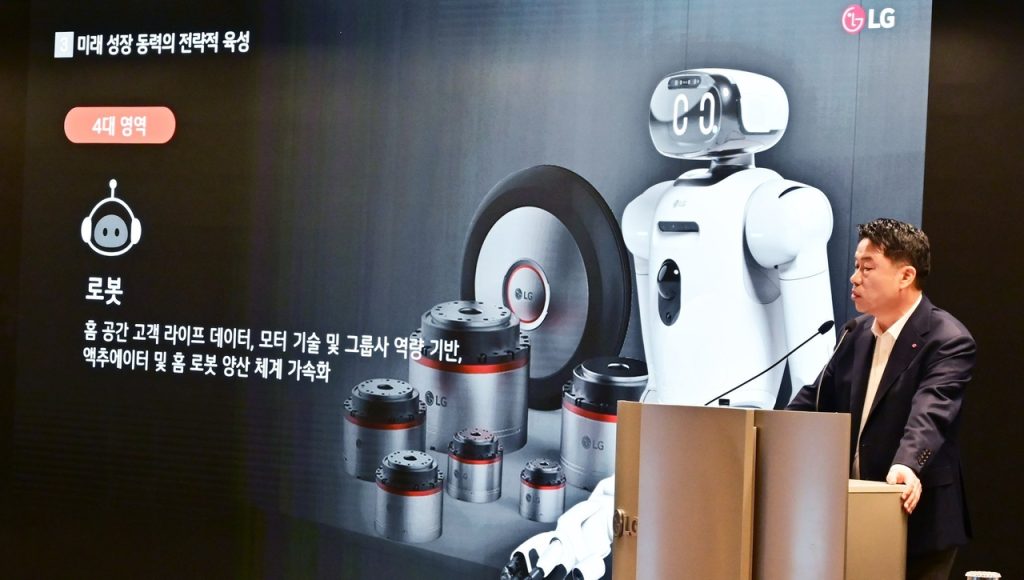
These parallel announcements signify a coordinated supply chain strategy within the LG Group. LG Electronics is focusing on actuators, the “joints” of the robots, while LG Innotek is developing the “eyes,” leveraging their existing manufacturing expertise to penetrate the component market driven by the global humanoid robotics expansion.
LG Electronics CEO Lyu Jae-cheol declared 2026 as the “inaugural year” for the company’s humanoid robotics venture during the meeting held at LG Twin Towers in Yeouido, Seoul. He outlined plans for the company to design, produce, and supply its Axium actuator line, which was initially showcased at CES 2026 in January, to international robot manufacturers as a B2B parts offering.
Actuators, the motorized modules that power a robot’s movements, are estimated to account for 40% to 60% of a humanoid’s total manufacturing cost, making them the most significant individual component expense. Gaining control over this crucial aspect of the supply chain is considered essential for achieving competitiveness in the humanoid robot market.
“We will establish a mass-production system within this year,” Lyu informed shareholders, highlighting LG’s current annual production of 45 million appliance motors as the existing manufacturing foundation for this transition.
He further mentioned that CLOiD, the home robot that debuted at CES, will transition from the laboratory to proof-of-concept deployments by the following year. Nvidia featured LG Electronics’ CLOiD alongside other humanoid platforms at its GTC 2026 conference earlier in March.
Lyu also set ambitious broader growth goals, forecasting that revenue and operating profit from the company’s high-growth portfolio, encompassing B2B, platform, and direct-to-customer businesses, will surpass their 2025 levels by 70% and 140%, respectively, by 2030.
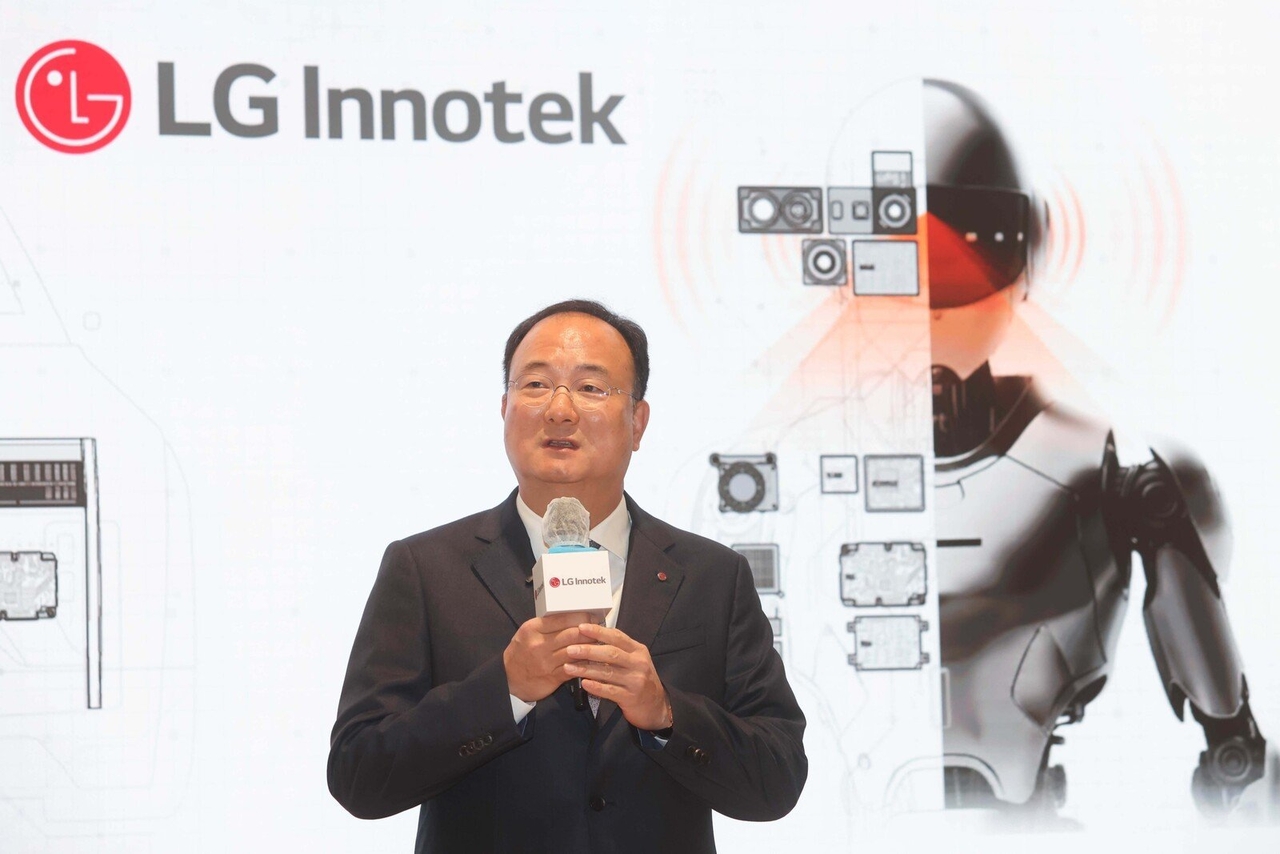
At LG Innotek’s Magok headquarters in western Seoul, CEO Moon Hyuk-soo communicated to reporters that the company is focusing on developing integrated sensing modules for humanoid robots, which will combine cameras, lidar, and radar, rather than providing individual camera units. He indicated that initial production is already underway, with ongoing discussions with major US and European clients.
“Large-scale mass production will commence around 2027 to 2028, contingent on client timelines,” Moon stated. He projected that revenue from robotics-related ventures would reach hundreds of billions of won by approximately 2030.
LG Innotek’s expanding automotive and semiconductor substrate businesses, with the package solutions unit experiencing an 82% increase in operating profit last year, provide the financial resources for this long-term strategy.
LG’s unified robotics initiative is part of a larger movement among Korean conglomerates to establish their positions in the humanoid robot supply chain. Hyundai Motor Group’s Hyundai Mobis supplies actuators for Boston Dynamics’ Atlas robot, while Samsung Electro-Mechanics is also considering entering the actuator market.
mjh


