
AMD and Samsung Forge AI Partnership: Focus on Chips, Memory, and Cloud Infrastructure During Lisa Su’s Korea Visit
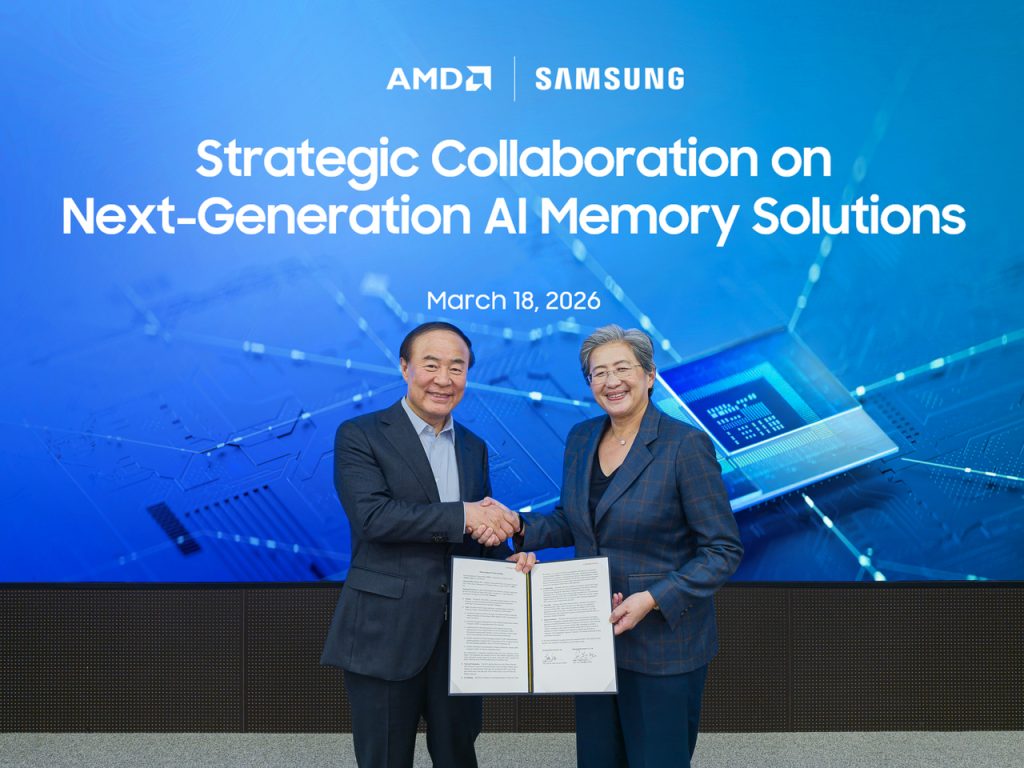
Samsung Electronics announced a memorandum of understanding (MOU) with Advanced Micro Devices (AMD) to enhance strategic collaboration on advanced AI memory and computing solutions. The agreement was formalized during AMD CEO Lisa Su’s visit to Samsung’s Pyeongtaek campus in Gyeonggi Province, marking her first official visit to South Korea since assuming her role in 2014.
“Samsung and AMD are aligned in our dedication to propel advancements in AI computing, and this agreement underscores the increasing depth of our collaborative efforts,” stated Jun Young-hyun, head of the device solutions division at Samsung Electronics.
“With our leadership in HBM4 and innovative memory architectures, alongside cutting-edge foundry services and advanced packaging technologies, Samsung is uniquely positioned to provide comprehensive, unparalleled capabilities that cater to AMD’s evolving AI roadmap,” Jun added.
According to Lisa Su, AMD is enthusiastic about strengthening its partnership with Samsung, combining their advanced memory solutions with AMD’s Instinct GPUs, EPYC CPUs, and comprehensive rack-scale platforms. “A fully integrated approach, from silicon to system to rack, is crucial for accelerating AI innovation and delivering tangible real-world impact at scale.”
The agreement stipulates that Samsung will supply its sixth-generation HBM4 memory for AMD’s next-generation AI accelerator, the AMD Instinct MI455X GPU. Both companies will also collaborate on DRAM solutions for sixth-generation AMD EPYC CPUs, code-named “Venice.”
These technologies will power next-generation AI systems, incorporating AMD Instinct GPUs, EPYC CPUs, and rack-scale architectures, such as the AMD Helios platform, optimizing performance and efficiency.
The collaboration also focuses on developing advanced memory technologies customized for AI and data center applications, addressing the growing need for increased bandwidth and improved power efficiency at the system level.
Samsung’s HBM4, reportedly the first to enter mass production in the industry, is based on their sixth-generation 10nm-class DRAM process and a 4nm logic base die, offering speeds up to 13 Gbps and bandwidth of up to 3.3 TBps.
The MI455X GPU is poised to be a critical component in high-performance systems designed for AI model training and inference.
The GPU will also be a cornerstone of AMD’s rack-scale architecture, engineered to provide the performance and scalability essential for next-generation AI infrastructure.
The partnership includes plans for joint development of high-performance DDR5 memory, optimized for sixth-generation AMD EPYC processors and intended for systems built on the Helios platform.
The MOU also considers potential foundry collaboration, where Samsung could provide manufacturing services for future AMD products.
This agreement emphasizes the deepening relationship between Samsung and AMD amid intensifying competition in the global AI semiconductor market, where advanced memory and integrated system architectures are becoming increasingly crucial differentiators.
Lisa Su was expected to conclude business meetings before attending a dinner with Samsung Chairman Lee Jae-yong at Seungjiwon in Seoul, a venue traditionally used for significant business meetings.
Seungjiwon has been the preferred private meeting location for Samsung’s leadership for decades, initially utilized by the late Chairman Lee Kun-hee and before him, founder Lee Byung-chul.
Lee Jae-yong has previously hosted numerous global leaders at Seungjiwon, including Meta CEO Mark Zuckerberg, Saudi Crown Prince Mohammed bin Salman, and Mercedes-Benz Chairman Ola Kallenius.
Su is also scheduled to meet with Roh Tae-moon, who leads Samsung’s Device eXperience division, encompassing mobile, TV, and home appliance businesses, on Thursday.
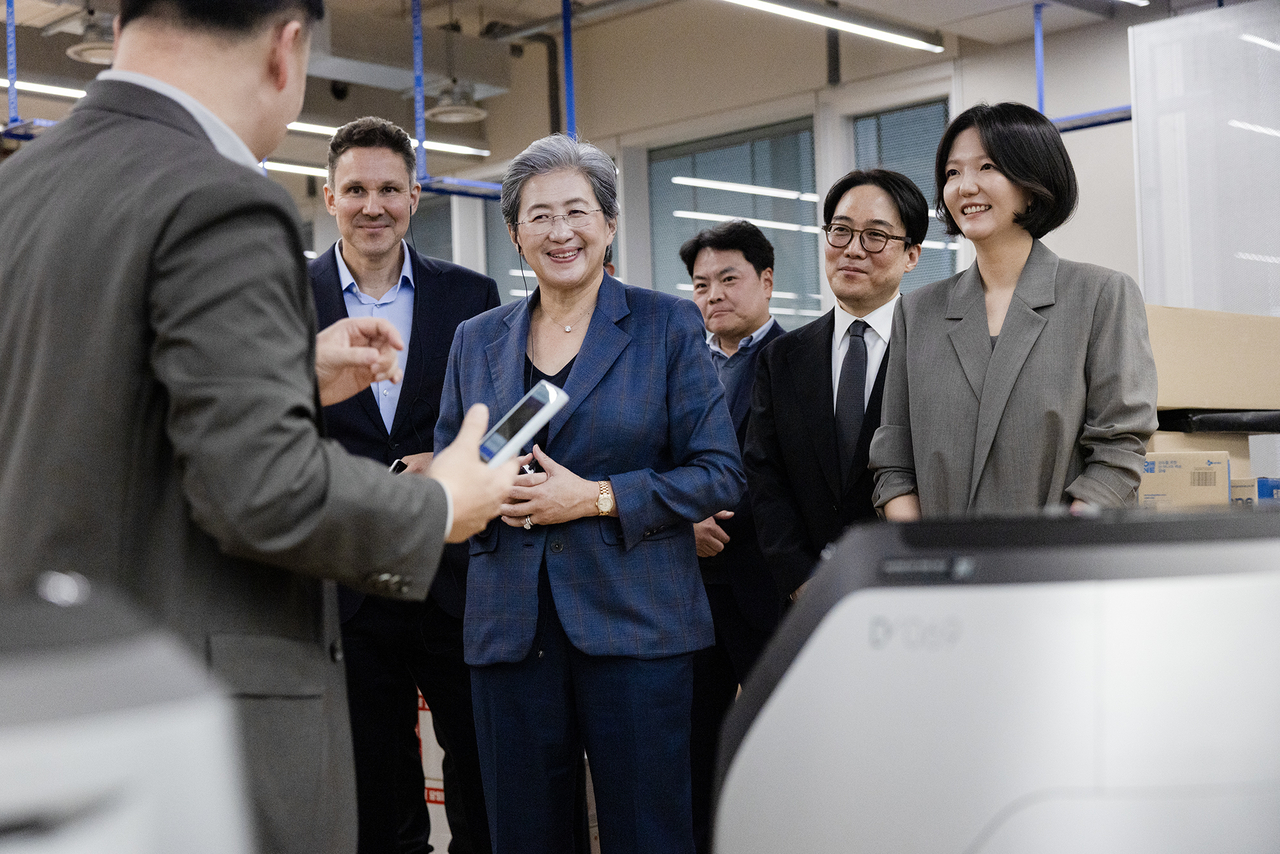
Earlier in the day, Su commenced her Korean visit at Naver’s headquarters, 1784, in Seongnam, Gyeonggi Province, where she met with CEO Choi Soo-yeon.
They signed an MOU to foster a more integrated AI ecosystem that connects technologies across diverse infrastructure environments while improving flexibility in deployment, according to Naver.
As part of this initiative, Naver and AMD will enhance technical collaboration to develop a high-performance GPU computing environment optimized for Naver’s hyperscale AI model HyperClova X, aiming to advance infrastructure capabilities for stable and efficient AI model operation.
Naver is recognized as a pivotal partner in applying AMD’s next-generation infrastructure to practical services. The company has established comprehensive AI capabilities, including proprietary large language models, data centers, cloud infrastructure, and large-scale user services.
Building on this foundation, the two companies also intend to support academic research by providing AI computing resources and initiating joint research projects, with the goal of broadening research outcomes across varied infrastructure environments.
“The partnership with AMD will create a valuable opportunity to reinforce Naver’s technological diversity and enhance our AI infrastructure competitiveness,” said the Naver chief.
“We will continue to expand the use of AMD platforms across Naver Cloud and our broader AI services, while collaborating to develop next-generation technology stacks and services,” she concluded.
yeeun


