Korean Hair Care Exports Soar to Record Highs as K-Beauty Giants Expand Globally; Blackstone Invests in Korean Salons
In January, Vogue highlighted a trend already established in Seoul: “Korean hair care products bring a skin-care-first approach to repairing and hydrating.”
K-beauty has consistently been at the forefront, emphasizing that the scalp, like the face, deserves meticulous care. The rest of the world is increasingly recognizing this approach.
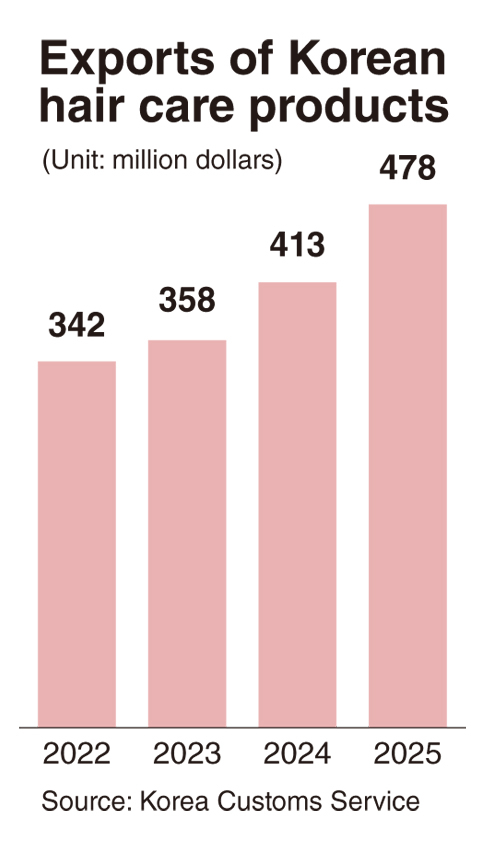
According to data from the Korea Customs Service, hair care product exports reached a record $478 million in 2025, a 15.7 percent increase from the previous year.
Market forecasts project continued growth. Grand View Research predicts the Korean hair care market will expand from $3.8 billion in 2024 to $6.1 billion by 2030, with a compound annual growth rate of 8.4 percent.
Skin Care Formula Applied to Hair Care
Fueled by increasing global demand, Korean manufacturers are well-positioned to thrive, leveraging their expertise in functional skin care, according to industry experts.
“K-beauty companies can leverage their technical and brand expertise from skin care to capitalize on the growth opportunities in hair care,” an industry official stated.
Amorepacific is proactively addressing this trend, renaming a division within its research and innovation unit from “Daily Beauty” to “Hair and Beauty” in November, formally prioritizing hair care.
Amorepacific is making waves internationally with its Ryo and Mise en Scene hair care brands. Ryo’s function-focused lines are driving steady sales in China, while Mise en Scene’s hair serum was a top seller in Amazon’s hairstyling oil category in the US last year. Amazon also serves as a gateway for smaller brands like Grabity and Aromatica, where their problem-solving formulas have gained a significant following.
LG Household & Healthcare promoted its dermatology-inspired hair care brand, Dr. Groot, with a pop-up event in Manhattan in December of last year, building on its presence in over 680 Costco locations across North America.
“Consumers respond when you combine genuine hair care technology with K-beauty appeal,” stated a Dr. Groot official.

Cosmetics manufacturers are also adapting, creating formulations for a diverse range of hair types.
Kolmar Korea, which increased its hair care research staff by 40 percent last year, is developing a research infrastructure to provide real-time solutions for global clients.
“We are strengthening our patent portfolio to maintain competitiveness in hair care,” a Kolmar Korea official said. “We are also developing formulas adapted to different climates and ethnicities.”
Cosmax reported triple-digit export growth in hair care for three consecutive years (2023-2025). Export destinations are rapidly expanding into Europe, the Middle East, and Australia, with client orders arriving from India, Russia, and the United Arab Emirates.
CJ Olive Young’s data provides detailed insights into consumer preferences.
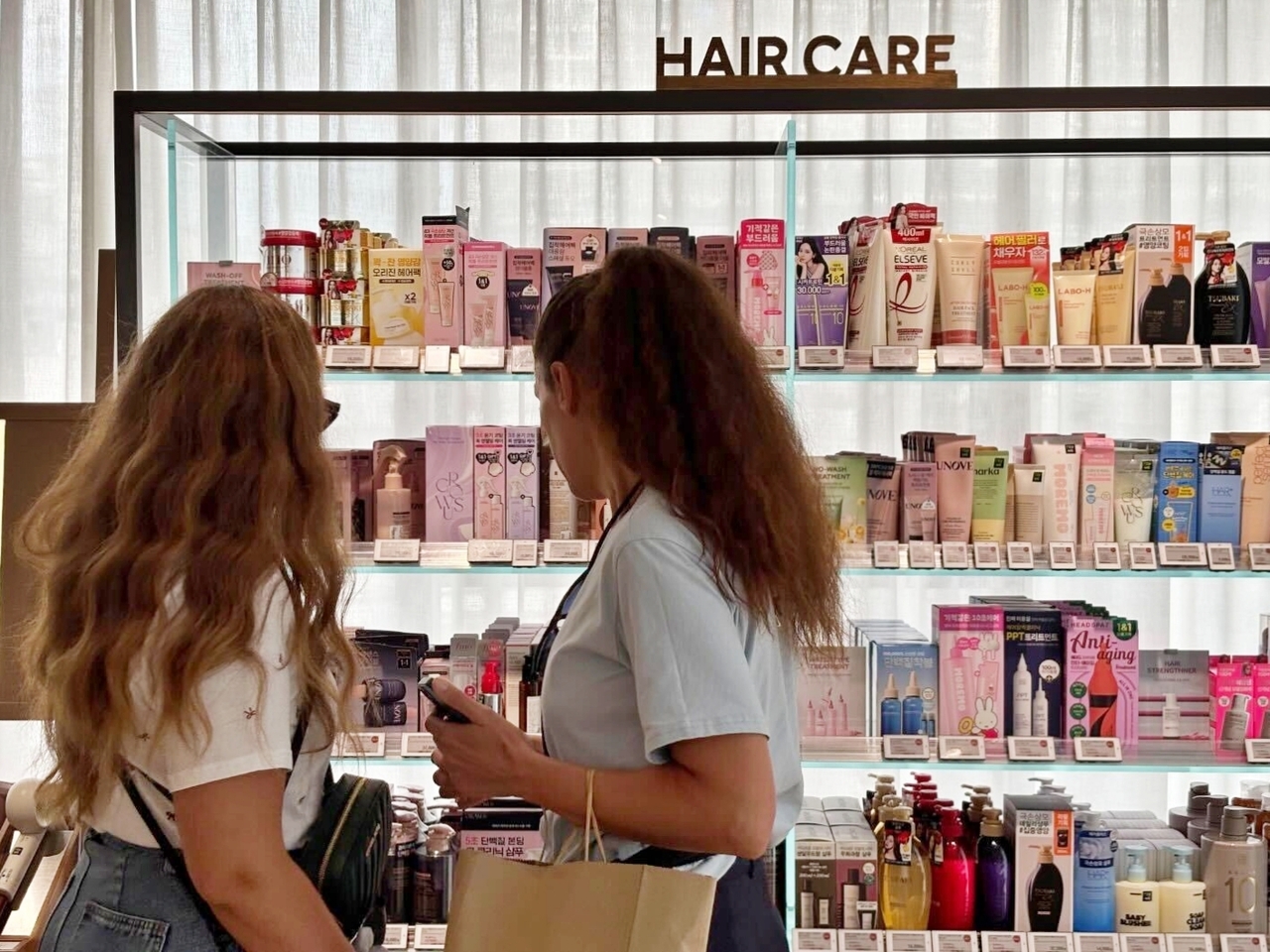
British shoppers favor anti-hair-loss shampoos, while Americans prioritize damage repair. High-performance shampoos are in demand in the Middle East due to the harsh climate, while consumers in humid Latin America prefer oils and repair products.
“Hair care has been our fastest-growing category over the past three years, with annual growth exceeding 70 percent,” said an Olive Young official. In the first two months of this year, hair product and styling sales increased by 48 percent and 90 percent, respectively, the official added.
The Hands-On Art of Korean Hair Care
While products are a crucial component, the full experience is best understood in person.
According to the Seoul Tourism Foundation, 18.5 percent of foreign tourists in Seoul utilized a hair salon or beauty service in 2025, a significant increase from 3.6 percent in 2019.
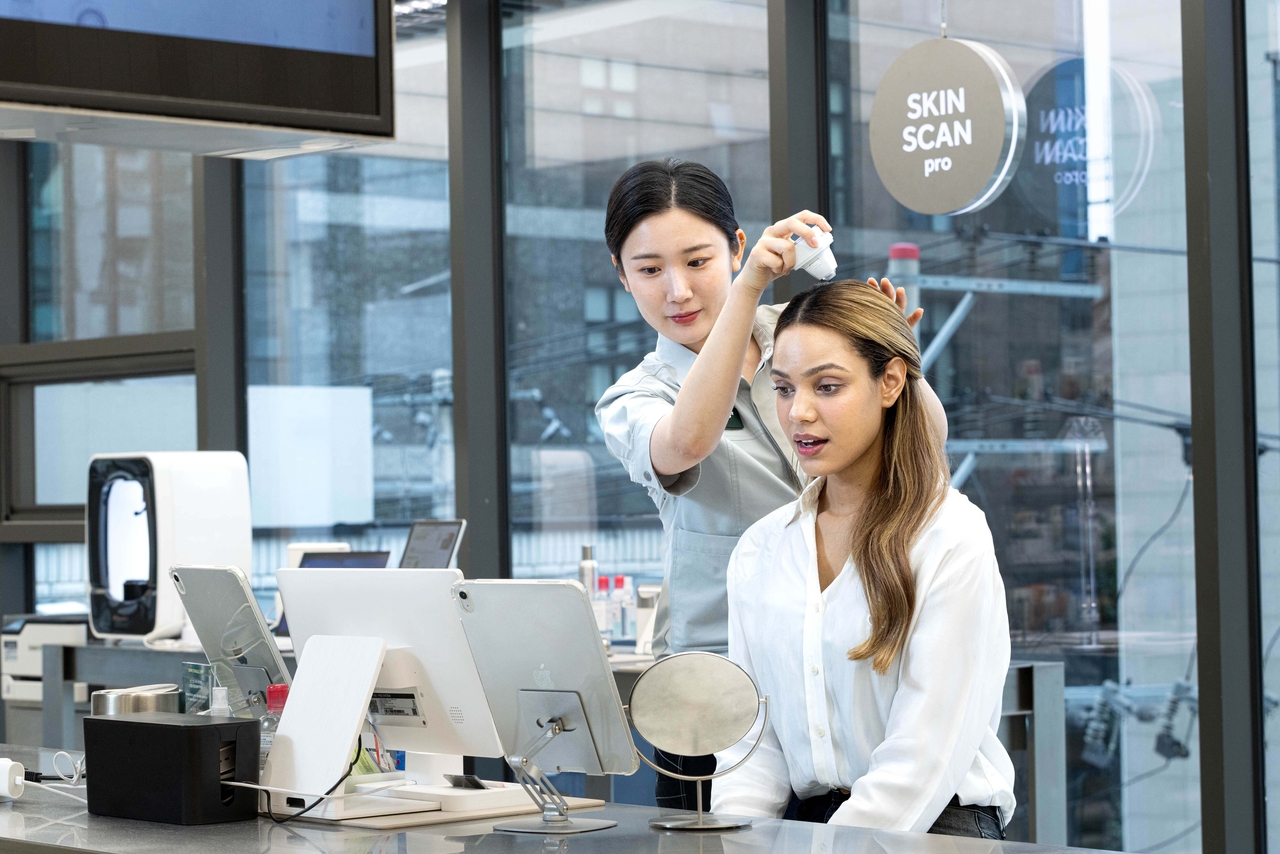
Foreign visitors have been particularly drawn to Olive Young’s scalp diagnostic service, available at its Seongsu-dong and Gangnam locations. Licensed consultants use diagnostic devices to assess scalp condition and recommend personalized routines. The company reports that nine out of ten users are international tourists.
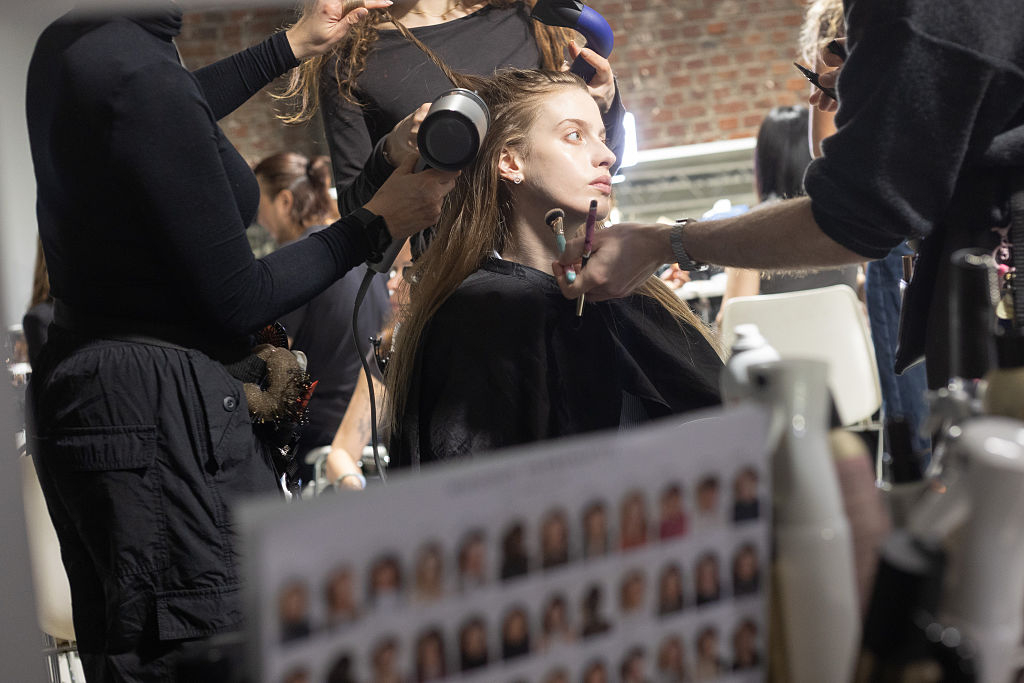
Travel operators are capitalizing on the styling aspect of K-hair’s allure. Packages that combine medical procedures with K-hairstyling sessions are proving popular. For example, Hyundai Department Store has partnered with travel platforms to launch a K-Beauty Pass, providing foreign tourists with discounted access to salon styling, makeup, and photo shoots in a single itinerary.
Industry insiders attribute this trend primarily to Korean culture, particularly K-pop idols. Their flawless skin and hair have driven consumers towards Korean cosmetics and, now, hair care.
“The look of K-pop idols — their skin and hair — has become synonymous with K-beauty globally,” an industry official explained. “This fascination is now expanding into hair care and men’s beauty products.”
A significant deal hinted at larger developments on the horizon.
In September 2025, US asset manager Blackstone acquired a controlling stake of over 70 percent in Juno Hair, Korea’s leading salon chain, for over 500 billion won. This marks the first private equity acquisition of a Korean salon franchise.
The chain, with over 180 salons and a presence in the Philippines, Japan, and Thailand, is opening its first Vietnamese location, a five-story flagship offering a comprehensive range of K-beauty treatments, on Saturday. Blackstone, citing the explosive global demand for Korean beauty services, found its infrastructure and expertise compelling and plans further global expansion.
According to industry sources, this deal has triggered a wave of interest, with private equity firms compiling lists of potential acquisition targets among Korean salon franchises.
Industry officials note the simple logic: a domestic beauty service model validated in Korea can command a higher valuation when exported abroad.