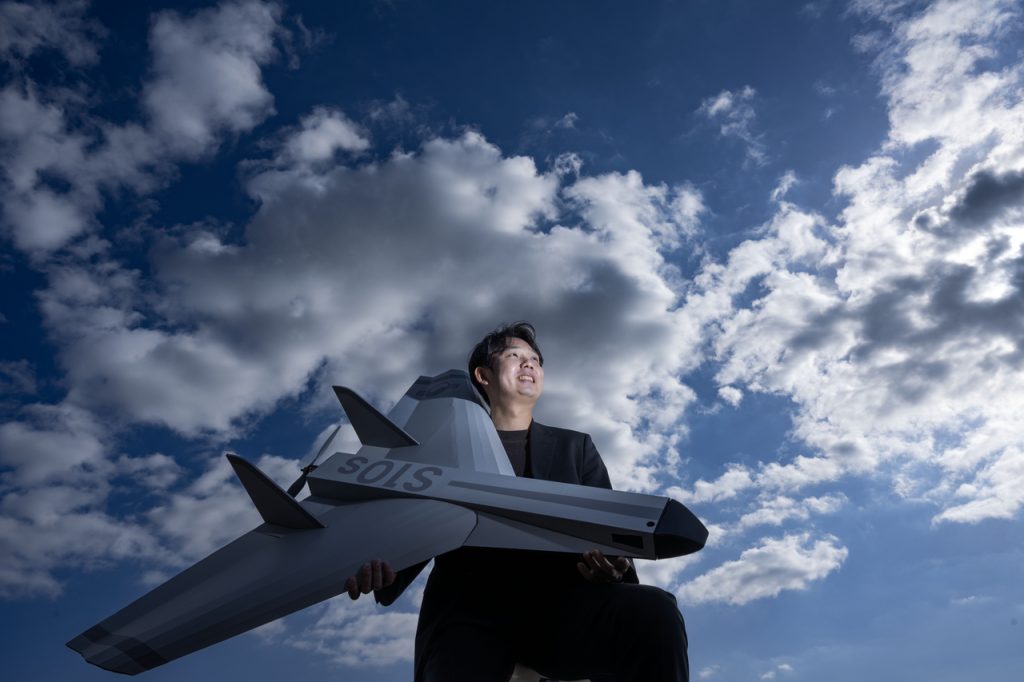
Founder Kim Young-joon targets ₩500b in sales, Nasdaq listing by 2030
For Kim Young-joon, the 36-year-old founder and chair of drone technology company Pablo Air, volunteering for South Korea’s Army special forces was an easy decision.
“I don’t really like doing what others usually do,” Kim said in an interview with The Korea Herald at the company’s office in Incheon last week. While most Korean men complete their mandatory military service through conscription, Kim chose the more demanding route of volunteering as an officer in the special forces.
“I like adventures, so I was looking for a hardcore option,” he said. “I thought being in the special forces would push my limits in terms of perseverance and physical ability.”
Kim served for five years in the Army’s special forces and was deployed to the Akh unit, a South Korean military unit stationed in the United Arab Emirates.
After completing his service, Kim began thinking about how to combine his interests in aviation, computer engineering and security.
The answer, he said, was drones — what he describes as “flying computers.”
While studying software engineering at Korea Advanced Institute of Science and Technology in 2015, Kim arranged his classes between Monday and Wednesday so he could work at a drone startup as a developer from Thursday to Sunday.
After graduating, he founded Pablo Air in 2018.
Kim credits his special forces experience with giving him the stamina to maintain a demanding work schedule.
“That’s what kept me going for over 10 years,” he said with a smile.
As Pablo Air marks its eighth anniversary this year, Kim says the company’s ambition extends far beyond becoming a global leader in artificial intelligence-based drone swarm technology.
“What I’m always trying to do is develop all technologies related to mobility in-house,” he said.
Kim said he has identified around 16 mobility technologies that could eventually be integrated into the company’s ecosystem.
“Once we go public, we plan to invest in startups and smaller firms for potential acquisitions,” he said. “When these technologies come together, we want to be a company like Siemens — an all-in-one mobility firm that provides consulting and develops technologies for customers.”
Pablo Air, which has raised about 107.5 billion won ($71.8 million) in funding, is preparing for an initial public offering (IPO) on Korea’s tech-heavy Kosdaq, targeting a listing in the first half of this year.
The company previously failed to pass a technical review in 2024 during its first IPO attempt.
“Normally, companies go through a preliminary technical review first when applying for a technology-specialized IPO,” Kim said. “But we went straight to the technical review.”
“This time, things are looking very good. The defense sector is upbeat on drones, and we are looking to become the first defense drone company to go public.”
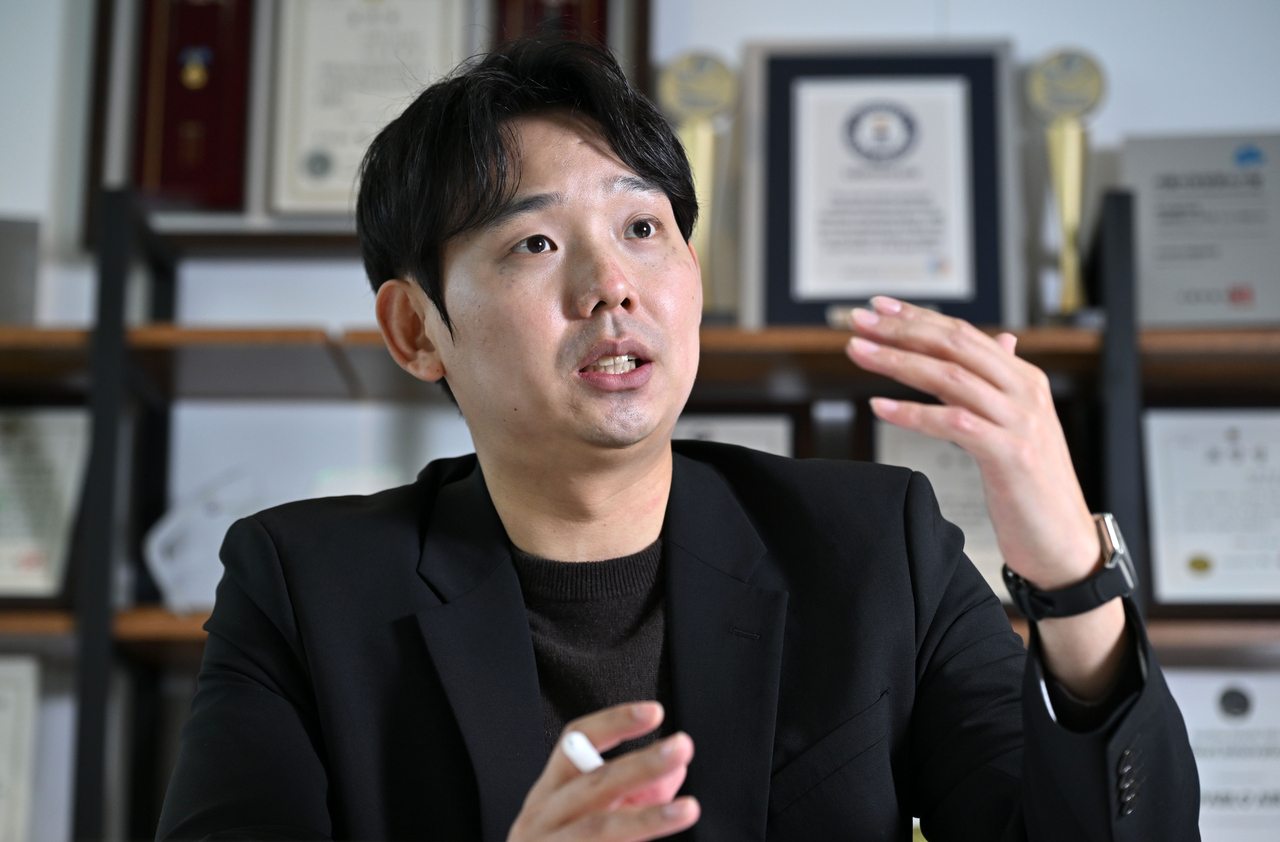
Advancing drone swarm autonomy
Kim expressed strong confidence in Pablo Air’s AI-powered drone swarm technology.
The company is working with KAIST to establish a global standard for drone swarm capability levels — from Level 0 to Level 5 — similar to the autonomous driving classification created by the Society of Automotive Engineers.
“Drone shows are only Level 2,” Kim explained. “That means drones don’t communicate with each other and simply follow preprogrammed routes.”
“In real swarming, drones must communicate with each other,” he said.
According to Kim, Pablo Air has already achieved Level 4 swarm capability, allowing drones to coordinate autonomously with minimal human intervention.
“They fly on their own like a flock of birds,” he said.
The company demonstrated a Level 4 swarm flight of 50 drones last year and plans to expand the demonstration to 300 drones this year.
Kim added that no company in the world has yet achieved Level 5 swarm capability.
Rising demand for defense drones
As global demand for precision drones rises, Kim highlighted the company’s attack drone, the PabloM S10.
“We built the hardware using foam board in a very cost-efficient way,” he said.
While conventional aerial vehicles capable of carrying 1.2 to 1.5 kilograms of explosives typically cost between $20,000 and $100,000 per unit, Kim said Pablo Air can produce its drone for roughly $10,000.
The drone also eliminates the need for a launch pad by using a propeller-based vertical lift system.
Kim said the drone’s 45-degree impact angle makes it particularly effective when targeting objects located within valleys or rugged terrain.
Following the acquisition of defense component manufacturer Volk in September last year, Pablo Air now has the capacity for mass production to meet potential large-scale demand.
Kim said Pablo Air’s current market valuation — estimated at about 200 billion won — significantly undervalues the company compared with global peers.
“American companies below our technological level are being valued at around 700 billion to 800 billion won,” he said. “If we were based in the US, our valuation could be between 1 trillion won and 2 trillion won.”
The company aims to reach 500 billion won in annual sales by 2030 and eventually pursue a listing on the Nasdaq.
Pablo Air opened a US office in Arizona in 2021 before relocating the operation to California in 2024.
While the company is currently focused on aviation applications, Kim said its swarm software could be used across multiple sectors, including maritime and ground mobility.
He cited potential applications ranging from ocean-cleaning robots and unmanned submarines to delivery robots and coordinated truck fleets.
Despite the growing role of drones in global conflicts, Kim emphasized that the ultimate goal of defense technology should be deterrence.
“Wars should never happen,” he said. “But we need the capability to manufacture such defense technologies to show others that we are a strong country.”
Looking ahead, Kim said he hopes Pablo Air will become a model for Korean startups aiming to expand globally.
“I want to be a role model,” he said. “There are so many entrepreneurs in Korea with excellent technologies who could attract large-scale investment overseas. I want to show that it’s possible.”
hwkan