Hyundai’s Re-rating: From Discount to Robotics Darling as Automation Bets Pay Off
The burgeoning humanoid robotics market has pitted Hyundai Motor Group and Toyota, longtime rivals in the global automotive sector, against each other. The two Asian giants present contrasting strategies for leveraging robotics as a future growth driver.
For years, Hyundai’s stock valuation lagged behind Toyota’s, perceived as the more technologically advanced and globally dominant automaker. However, this narrative is evolving. As robotics technologies mature towards commercial viability, investors are reassessing Hyundai’s potential growth and, consequently, its stock value.
The competition, once primarily centered on electrification strategies, is now intensifying into a race for robotics supremacy, a crucial factor for future manufacturing competitiveness.
Hyundai Expands, Toyota Partners
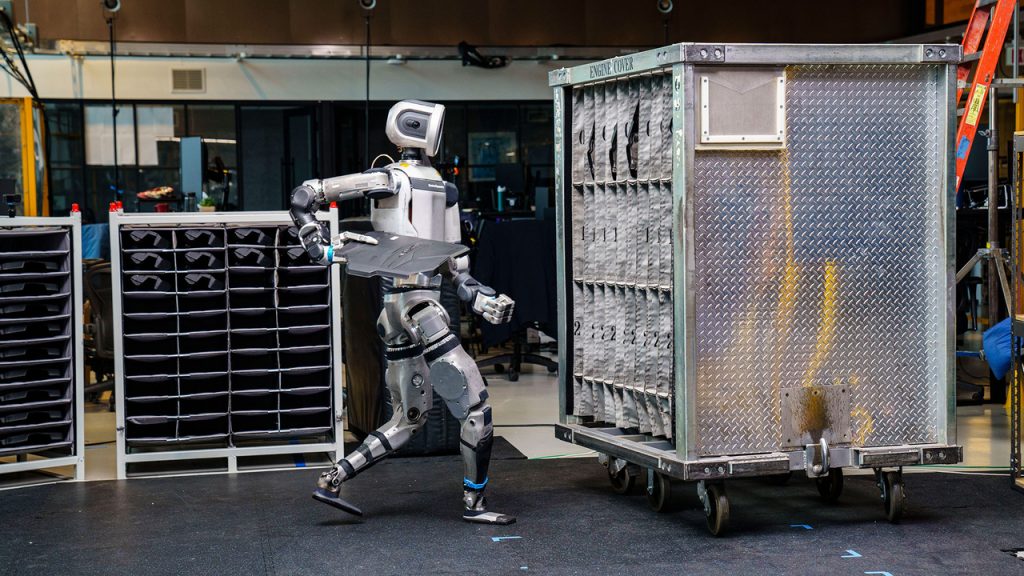
Hyundai’s ambitious strategy was highlighted at CES 2026 in January, showcasing Atlas, the humanoid robot developed by its US-based subsidiary, Boston Dynamics.
During the event, Hyundai announced aggressive plans: a US-based robot manufacturing facility with a production capacity of 30,000 units annually by 2028, with initial deployments at Hyundai Motor Group Metaplant America in Georgia. This announcement arrives only four years after Hyundai’s acquisition of a controlling stake in Boston Dynamics in 2021, a deal initially met with skepticism.
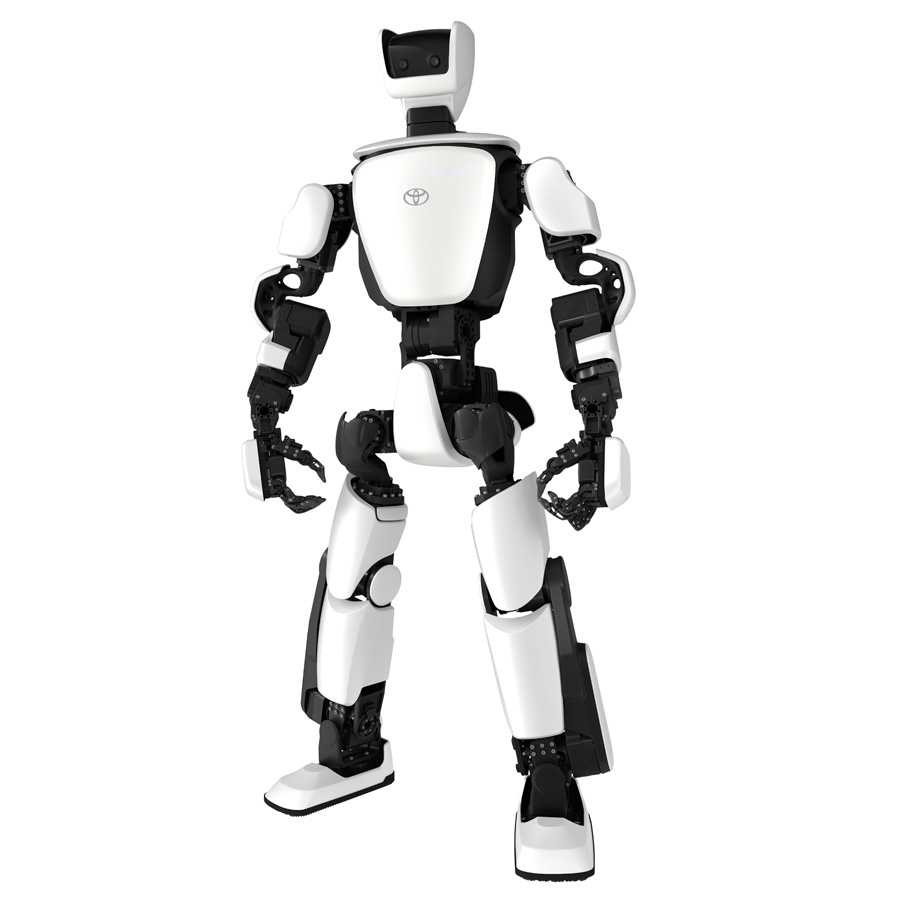
In contrast, Toyota has adopted a more conservative approach. The Japanese manufacturer introduced its T-HR3 humanoid robot in 2017, establishing an early presence in advanced robotics. However, since showcasing applications in elder care, disaster response, and teleoperation in 2019, Toyota has released limited updates on its internal humanoid commercialization efforts.
Instead, Toyota has emphasized partnerships, including collaborating with Hyundai’s Boston Dynamics to enhance Atlas’ AI capabilities using the Toyota Research Institute’s Large Behavior Model technology.
In February, Toyota deployed seven “Digit” humanoid robots from Agility Robotics, a US company, at its Ontario plant, integrating them into the Toyota RAV4 production line. However, this move appeared to be an experimental deployment rather than a full-scale rollout.
Valuation Gap Closes – and Inverts
The market has responded positively to Hyundai’s strategic direction.
Historically, Hyundai’s valuation has been consistently lower than Toyota’s, influenced by factors such as narrower profit margins, corporate governance concerns, and the perception of a weaker technological position. This gap is now shrinking, and in some metrics, even reversing.
Following CES 2026, Hyundai’s price-to-earnings (P/E) ratio exceeded Toyota’s, surpassing the 10 mark. According to Infomax, Hyundai’s P/E ratio climbed above 12 on Feb. 2 – its highest level since the 2021 Apple Car speculation.
Even after Toyota’s robot deployment announcement, Hyundai’s trailing 12-month P/E ratio stood at 10.8, compared to Toyota’s 9.4.
This suggests that investors are now prepared to pay a premium for Hyundai’s earnings compared to Toyota’s, a significant change for a company long perceived as undervalued relative to its Japanese counterpart.
Hyundai’s valuation multiple has increased by approximately 42 percent year-on-year, reflecting growing confidence in its robotics strategy. Toyota, in contrast, has experienced only modest multiple expansion during the same period.
“Hyundai is increasingly being valued more like Tesla or BYD – technology-driven mobility players – rather than a traditional manufacturer like Toyota,” stated a researcher at a state-run Korean institute.
The researcher identified Hyundai’s acquisition of Boston Dynamics, which previously belonged to Google and SoftBank, as a pivotal moment.
“Japan once symbolized humanoid robotics leadership with Honda’s Asimo. Now, the center of gravity is shifting toward Korea, the US, and China.”
Industry analysts suggest that Toyota’s early leadership in humanoid robotics has not translated into accelerated adoption on the factory floor.
In September 2024, Toyota Research Institute unveiled Punyo, a soft robot equipped with air-filled chambers designed for safer interaction in household environments. A year later, Toyota established Woven City near Mount Fuji, a living laboratory to test service robotics in real-world scenarios.
Kim Pil-su, an automotive engineering professor at Daelim University, believes Toyota’s focus on human-safe, small-scale service robots represents a fundamentally different strategic approach.
“Toyota’s humanoids are likely to prioritize safety and domestic applications rather than industrial scale,” Kim said. “Some might argue that this approach secures higher ground—mastering safe interaction before tackling complex factory automation.”
However, as Hyundai, Tesla, and Chinese automakers aggressively pursue industrial robotics, this cautious approach could reshape the competitive landscape.
“Toyota’s conservative management style was already apparent in electrification, where it emphasized hybrids while others raced into full EVs,” Kim concluded. “In robotics, Hyundai is taking the bolder bet.”
hyejin2