
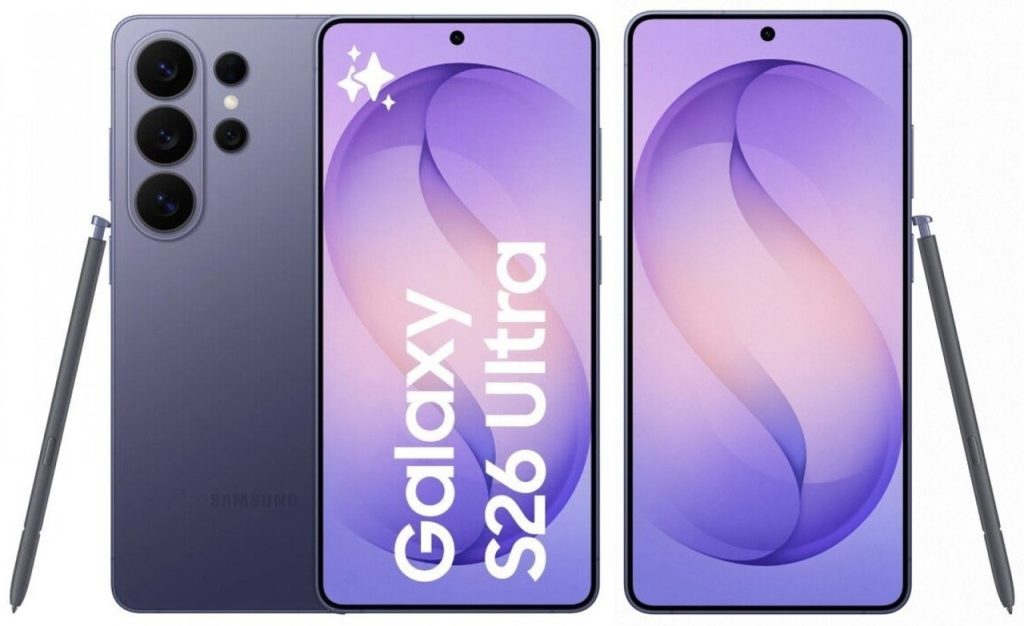
Samsung Electronics is set to unveil the highly anticipated Galaxy S26 in San Francisco next week, with a focus on on-device AI capabilities. The launch event, scheduled for Thursday, is expected to showcase a more intelligent Bixby assistant capable of context-aware setting adjustments, and a brighter main camera for the Ultra model. Notably, this launch also marks the first flagship price increase in three years.
Preorders in South Korea will run from February 27th to March 5th, followed by official sales beginning March 11th. Industry sources indicate the starting prices for the Galaxy S26 will be 1.254 million won (approximately $866) for the 256GB model, 1.452 million won for the S26 Plus, and 1.797 million won for the S26 Ultra. These prices reflect an increase of approximately 99,000 won ($68) compared to their predecessors.
The most significant advancement lies in the implementation of on-device AI processing. Utilizing “EdgeFusion,” a new on-device model, the S26 will be able to generate and edit images without relying on cloud data transmission. Samsung’s press teasers showcased AI-powered features such as filling in missing photo elements, seamlessly blending multiple images, and transforming sketches into stylized backgrounds, all through simple voice commands.
This local processing design enables these AI features to function without an internet connection and with minimal latency.
Complementing this is an upgraded Bixby voice assistant. Samsung launched a beta version of the new Bixby under One UI 8.5 on Thursday, describing it as a more intuitive device agent capable of interpreting natural language contextually. Instead of merely responding to fixed commands, Bixby can now analyze the phone’s current settings and proactively suggest solutions. For example, if a user reports that incoming calls are not ringing, the assistant can identify that “Do Not Disturb” mode is enabled and offer to disable it.
Internally, the Galaxy S26 and S26 Plus will be powered by Samsung’s Exynos 2600 processor. Samsung claims this chip delivers a remarkable 113 percent increase in AI processing performance and a 39 percent boost in CPU performance compared to its predecessor. Built on a cutting-edge 2-nanometer process, the chip’s enhanced neural processing unit (NPU) is the key enabler for running image generation and editing tasks locally, bypassing the need for cloud processing.
Conversely, the S26 Ultra is expected to utilize Qualcomm’s Snapdragon 8 Elite Gen 5 chipset across all markets.
In terms of hardware enhancements, the most prominent upgrade is reserved for the Ultra model. While the 200-megapixel main camera retains the same sensor as last year’s model, it now features a wider f/1.4 aperture, an improvement from f/1.7 on the S25 Ultra. This wider aperture allows approximately 50 percent more light to reach the sensor, resulting in significantly improved low-light photography. A 50-megapixel ultrawide lens completes the camera setup. The standard and Plus models are expected to largely retain the camera systems from the previous year.
The Galaxy S26 launch comes at a time when Samsung’s device business is facing margin pressures. In its January 29th earnings disclosure, Samsung reported record 2025 revenue of 333.6 trillion won, but fourth-quarter operating profit in the mobile division experienced a 10 percent year-on-year decrease.
mjh


