
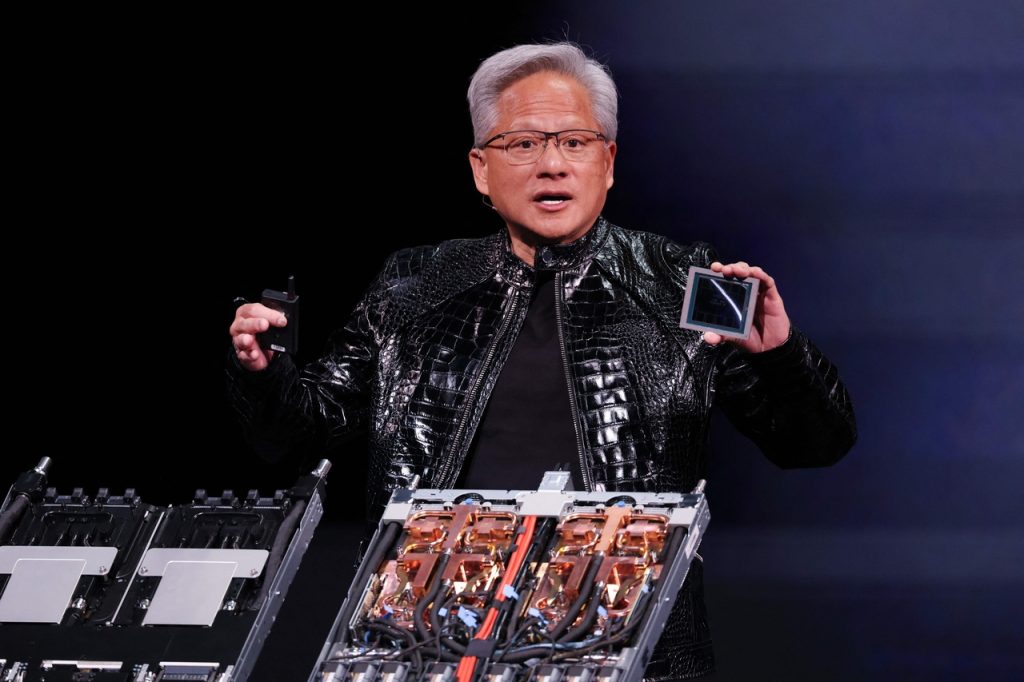
South Korea is distributing the first 10,000 Nvidia GPUs to universities, research institutions, and national AI projects, initiating a plan to supply 260,000 GPUs by 2030.
This deployment follows Nvidia CEO Jensen Huang’s October announcement to enhance AI infrastructure in Korea. The initiative aims to provide approximately 260,000 GPUs by 2030, allocating 52,000 to the government, 50,000 each to Samsung, SK Group, and Hyundai Motor Group, and 60,000 to Naver Cloud.
Having secured 13,000 units last year and anticipating 15,000 more this year, Seoul is releasing the initial 10,000 units to meet the demands of academia, industry, and research organizations.
The first batch includes 2,296 H200 chips and 2,040 B200 chips. Further shipments will follow.
Projects were selected via a public application process that concluded on January 28th. Universities and public research institutes can use the GPUs without charge. Private sector applicants, including SMEs, startups, and private research bodies, will pay 5-10% of the market price. Startups led by young entrepreneurs receive an additional 50% discount.
Of the government’s allocation, the remaining 6,120 B200 units are earmarked for national initiatives, including the sovereign AI foundation model project, and further academic and research programs.
The government also plans to deploy another 15,000 GPUs by 2028 through the National AI Computing Center, expanding the country’s overall AI computing power.
Companies receiving GPU allocations are simultaneously progressing with their plans, forming task forces to align annual supply and deployment schedules with the government.
Naver Cloud intends to utilize its 60,000 GPUs to advance HyperClova X, its upgraded hyperscale AI model, along with on-device AI agents, physical AI, and vertical AI technologies.
However, reliance on Nvidia’s hardware remains a concern. Dependence on a single global provider could leave South Korea vulnerable as countries ramp up efforts to localize core AI technologies.
Deputy Prime Minister and ICT Minister Bae Kyung-hoon has emphasized the role of domestically developed neural processing units in mitigating this reliance, stating that the public sector will prioritize their adoption to accelerate the transition.
yeeun


