(ATTN: UPDATES headline, first 10 paras with opening ceremony; ADDS photos)
By Shim Sun-ah
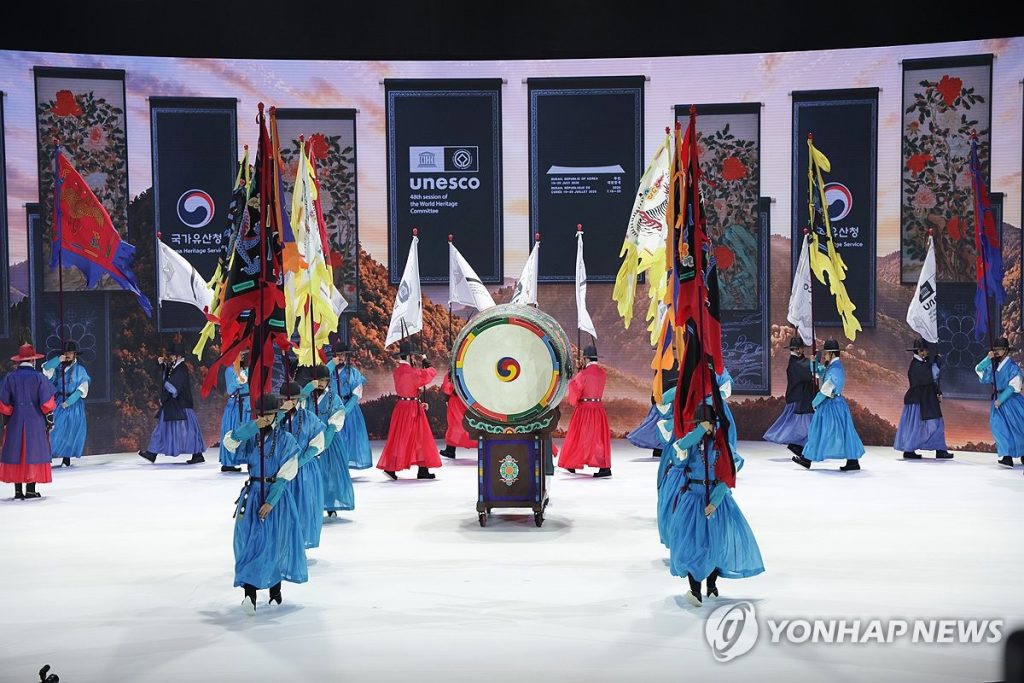
The 48th session of the UNESCO World Heritage Committee has officially commenced in Busan, South Korea. Approximately 3,000 delegates from 196 member states, international organizations, and non-governmental entities are set to participate in the 10-day meeting at the Busan Exhibition and Convention Center. This significant event marks the first time South Korea has hosted the World Heritage Committee meeting since joining the UNESCO World Heritage Convention in 1988.
Dignitaries present at the opening ceremony included UNESCO Director-General Khaled El-Enany, Assistant Director-General for Culture Nayef Al-Fayez, and Lazare Eloundou Assomo, director of the World Heritage Center. President Lee Jae Myung delivered a congratulatory address, emphasizing that world heritage transcends mere historical legacies, serving as a unifying symbol for humanity and a foundation for global peace and cooperation.

“Through the joint preservation and remembrance of world heritage, the global community can foster mutual respect for each other’s history, strengthening trust and solidarity,” stated President Lee. He also highlighted South Korea’s rise as a cultural powerhouse, affirming, “We will collaborate with the international community and UNESCO to forge a more peaceful and prosperous future.”

K-pop sensation G-Dragon, an honorary ambassador for this session, delivered a compelling speech emphasizing the vital role of art in safeguarding heritage. “Protecting heritage is not only about preserving the past but about building peace for the future,” he conveyed to the delegates. “I believe art can play a powerful role in inspiring collective action and changing the world.” Dressed in a distinguished white suit, he reiterated his commitment to global efforts aimed at protecting World Heritage sites, particularly those threatened by conflict and climate change.

As UNESCO’s principal decision-making body for cultural and natural heritage, the committee convenes annually to assess nominations for inscription, review the conservation status of listed properties, and deliberate on broader policy matters concerning the World Heritage Convention. The 48th session, chaired by Lee Byong-hyun, a former South Korean ambassador to UNESCO, adheres to the tradition of the host nation presiding over the meeting.
From July 20-29, the committee will conduct plenary sessions to review 33 proposals, comprising 30 new nominations and three requests for the extension or modification of existing World Heritage listings.

A notable item on the agenda is the proposed extension of South Korea’s “Getbol, Korean Tidal Flats” site, which seeks to add four new coastal wetlands to the property originally inscribed in 2021. The International Union for Conservation of Nature (IUCN), the committee’s advisory body on natural heritage, has recommended approval for this extension, a recommendation typically endorsed by the committee. Additionally, the committee is expected to address a draft decision regarding Japan’s adherence to follow-up measures for the Sado mine World Heritage site.

The draft decision suggests that Japan needs to implement further actions to comprehensively reflect the “whole history” of the Sado mine, particularly concerning the wartime mobilization of Korean laborers. During Japan’s 1910-45 colonial rule of the Korean Peninsula, over 1,500 Koreans were compelled to work at the mine, which transitioned from gold production to manufacturing war supplies for the Japanese imperial army during World War II. While Japan committed to fully conveying the history of forced conscription upon the site’s inscription in 2024, in line with UNESCO’s recommendations, the current draft decision indicates that Tokyo’s efforts in this regard remain insufficient. This draft decision is anticipated to be adopted during the 48th session unless member states raise objections. Although this recommendation is binding within UNESCO’s follow-up framework, its limited enforceability leaves the extent of Japan’s compliance uncertain.

Furthermore, attention is drawn to the potential adoption of a “Busan declaration” during the session. This declaration aims to introduce “collaboration” as an additional strategic objective, complementing the committee’s existing five “C” priorities for effective World Heritage Convention implementation: credibility, conservation, capacity-building, communication, and communities. According to Seoul officials, this proposed addition reflects growing consensus within UNESCO on the need to enhance international cooperation in addressing the increasingly complex global challenges confronting heritage sites, including the impacts of climate change.