By Shim Sun-ah
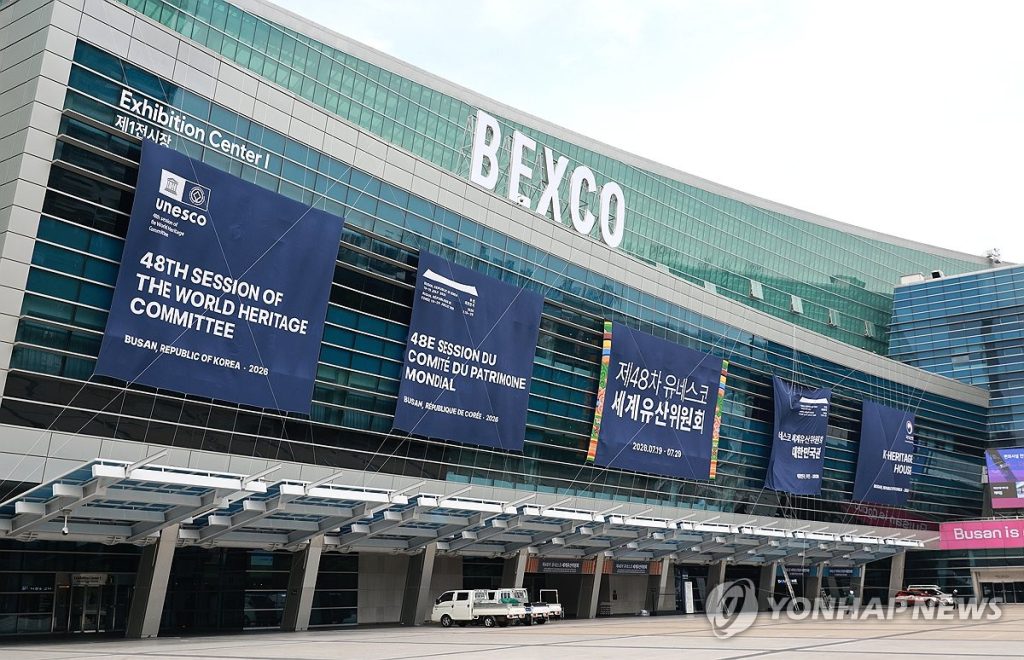
Busan, South Korea, is set to host the highly anticipated 48th session of the UNESCO World Heritage Committee, drawing approximately 3,000 participants. This significant 10-day event, held at the Busan Exhibition and Convention Center, will welcome delegates from 196 member states, international organizations, and non-governmental entities, solidifying Busan’s role on the global stage for heritage conservation.
Esteemed personalities, including UNESCO Director-General Khaled El-Enany, Assistant Director-General for Culture Nayef Al-Fayez, and Lazare Eloundou Assomo, Director of the World Heritage Center, are slated to attend this pivotal meeting. Notably, this marks a historic moment as it’s the first time South Korea has proudly hosted the World Heritage Committee meeting since its accession to the UNESCO World Heritage Convention in 1988.
As UNESCO’s principal decision-making body for both cultural and natural heritage sites, the committee convenes annually to meticulously review new nominations for inscription, assess the critical conservation status of existing listed sites, and deliberate on broader policy challenges pertinent to the convention’s enduring mission.
Presiding over this landmark 48th session will be Lee Byong-hyun, a former South Korean ambassador to UNESCO, in keeping with the established tradition of the host nation chairing the proceedings. The opening ceremony, commencing at 6 p.m. with vibrant cultural performances, will also feature K-pop icon G-Dragon, who is expected to grace the event as the meeting’s honorary ambassador. Plenary sessions are officially scheduled to run from July 20-29, shaping the future of global heritage.
A comprehensive agenda awaits the committee, featuring the review of 33 distinct proposals. This includes 30 compelling new nominations for World Heritage status and three crucial requests aimed at extending or modifying existing World Heritage listings, underscoring the dynamic nature of heritage management.
Of particular interest is a proposed extension for South Korea’s “Getbol, Korean Tidal Flats” site. This addition would incorporate four vital coastal wetlands to the property originally inscribed in 2021. The International Union for Conservation of Nature (IUCN), serving as the committee’s expert advisory body on natural heritage, has favorably recommended the approval of this extension, a recommendation typically endorsed by the committee.

Furthermore, the committee is poised to engage in a significant discussion concerning a draft decision related to Japan’s implementation of follow-up measures for the Sado mine World Heritage site. The draft specifically urges Japan to undertake further, more robust steps to accurately and adequately reflect the mine’s “whole history,” particularly regarding the wartime mobilization of Korean laborers.
Historically, over 1,500 Koreans were compelled to work at the Sado mine during Japan’s 1910-45 colonial rule of the Korean Peninsula. While initially renowned for gold production, this complex was later repurposed to manufacture critical war supplies for the Japanese imperial army during World War II. Japan had previously pledged to transparently convey the history of forced conscription of Koreans, aligning with UNESCO’s recommendations when the site gained World Heritage listing in 2024. However, the current draft decision highlights that Tokyo’s related efforts remain insufficient, prompting international scrutiny.
Unless member states raise objections, this crucial draft decision is highly likely to be adopted during the 48th session. While such recommendations are binding within UNESCO’s follow-up framework, their limited enforceability raises questions about the full extent of Japan’s potential compliance, keeping global observers attentive.

Another key highlight generating significant attention is the potential adoption of a groundbreaking “Busan declaration.” This declaration aims to introduce “collaboration” as an essential sixth strategic objective, supplementing the committee’s existing five “C” priorities for the effective implementation of the World Heritage Convention. The current five “C”s – credibility, conservation, capacity-building, communication, and community – would be enhanced by this addition. According to Seoul officials, the proposed inclusion reflects a growing consensus within UNESCO to strengthen international cooperation in confronting the increasingly complex and urgent challenges faced by heritage sites globally, including the profound impacts of climate change.