
South Korea’s AI Ambitions Face Power Crisis: Lawmaker Warns Grid Limits, Stalled Reforms Threaten Global Push
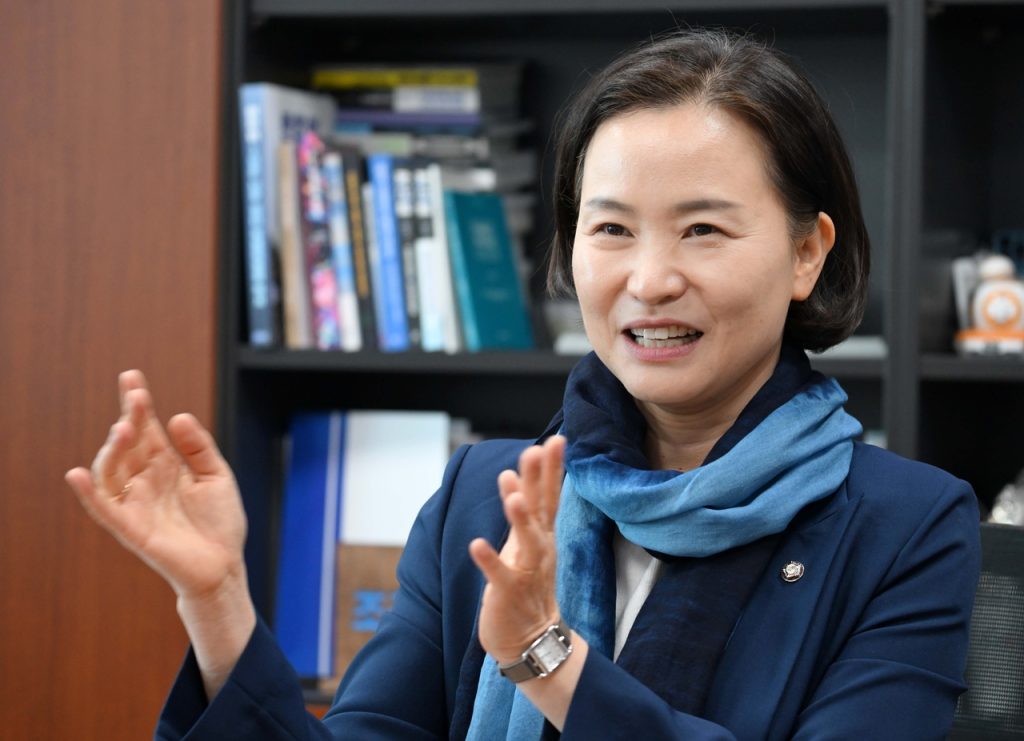
South Korea’s ambitious pursuit to emerge as a leading global artificial intelligence (AI) powerhouse is increasingly challenged by a critical constraint: its electricity infrastructure. According to Rep. Lee Hae-min, a former Google engineer now serving in the Rebuilding Korea Party, achieving the nation’s goal of ranking among the world’s top three AI nations hinges entirely on securing sufficient and scalable power.
“If we aspire to become an AI G3 nation, then power purchase agreements (PPAs) are not merely optional — they are absolutely essential,” Lee stated in an interview with The Korea Herald on Tuesday. “To reject this path is effectively to abandon our national AI aspirations.”
At the core of Rep. Lee’s advocacy is the urgent need to expand Power Purchase Agreements (PPAs). These crucial contracts enable companies, especially large data centers and AI firms, to directly acquire electricity from power generators. Globally, hyperscale operators rely on PPAs to secure stable, large-scale energy supply vital for intensive AI workloads.
However, Korea’s current energy framework poses significant challenges. Large data centers in South Korea are predominantly reliant on the national grid managed by Korea Electric Power Corp., with PPA options severely restricted, primarily to renewable energy sources and limited applications. Rep. Lee asserts that this traditional system is fundamentally inadequate for the burgeoning demands of AI. The existing grid infrastructure struggles to support hyperscale requirements, and the construction of new transmission lines is a lengthy process, often taking five to seven years – a pace entirely incompatible with rapid AI investment.
A critical AI data center bill, designed to broaden PPA access, is currently stalled in the National Assembly. Opposition stems from debates over including non-renewable sources like liquefied natural gas (LNG) and concerns about potential preferential treatment for specific industries.
“Possessing 260,000 GPUs, as per Korea’s recent Nvidia deal, does not automatically translate into functional AI services,” Lee emphasized. “You absolutely require robust data centers, efficient cooling systems, and, paramount among all, a reliable electricity supply.” She further highlighted that international tech giants show keen interest in investing in Korea, but ongoing power infrastructure limitations are a major deterrent, posing a substantial risk that vital capital may be diverted to other nations.
Tech Legislation as ‘Guideline,’ Not Constraint for Korean Innovation
Beyond addressing the pressing energy bottleneck for AI, Rep. Lee is also championing a transformative shift in South Korea’s approach to tech regulation. Leveraging her extensive engineering background, she advocates for legislation to operate as an agile, flexible framework rather than a rigid, prescriptive rulebook.
“Technology companies strategize five years into the future. Legislation, fixated on the present, inherently struggles to keep pace,” she explained. “Overly detailed laws risk stifling innovation and hindering industry growth.”
To effectively bridge this critical gap in Korean tech policy, Lee proposes establishing a dedicated science and technology support body within the National Assembly. This entity would empower lawmakers to expertly navigate complex and rapidly evolving issues, from artificial intelligence to semiconductors, drawing inspiration from models like the White House Office of Science and Technology Policy in the United States.
Regarding Korea’s AI Basic Act, she underscored its significance as an early and adaptable legislative foundation. “Our proactive start in AI legislation is crucial,” she stated. “Real-world application is the only way to discern effective policies.”
Rethinking Society: AI Era’s Economic Impact and Global Governance
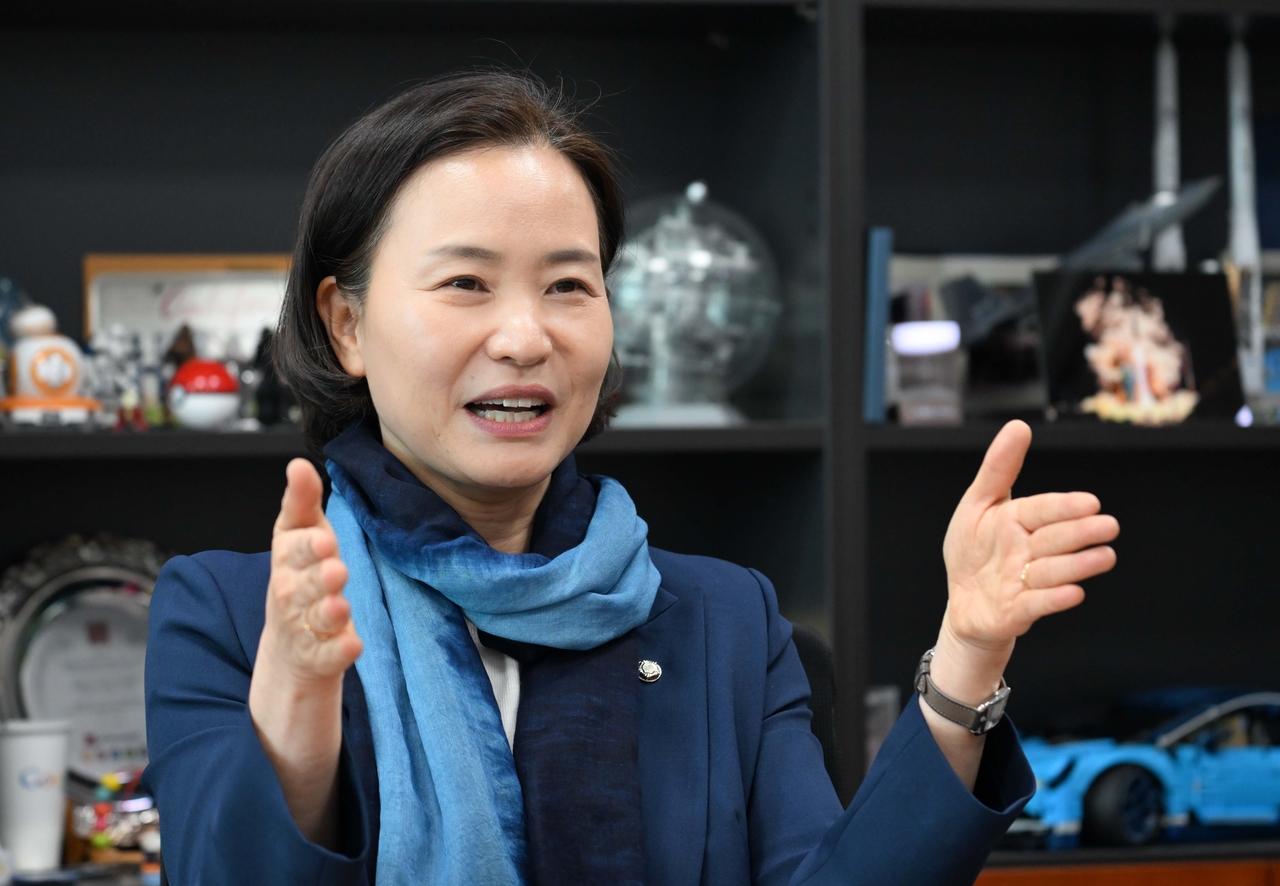
Rep. Lee Hae-min’s vision extends beyond immediate AI infrastructure and regulatory frameworks to encompass the profound broader economic and societal impacts of AI. She characterizes the current era as an accelerated industrial revolution, warning that without adaptive policies, it could rapidly exacerbate wealth concentration.
“The First Industrial Revolution spanned 200 years. We are now experiencing a similar transformation compressed into merely a few years,” she observed. Instead of advocating for a slowdown in AI adoption, Lee champions a fundamental redesign of how its economic gains are distributed. This includes strategies like reducing working hours in response to increased productivity, rather than resorting to job cuts.
“When AI enables the same output with fewer human resources, layoffs often appear as the simplest solution,” she noted. “However, a viable alternative is to maintain employment levels while decreasing working hours.”
Furthermore, she is actively exploring the establishment of an AI transition fund, strategically financed by productivity gains, to provide essential support for workers potentially displaced by automation and to ensure sustained consumer purchasing power. “Should consumers lose their economic capacity, businesses inevitably suffer,” she emphasized, adding, “Economic sustainability demands a balanced approach.”
Lee also highlighted a significant evolution in global AI governance, where private technology companies are increasingly instrumental in defining the ethical and operational boundaries of AI deployment. Citing examples like the tensions between the U.S. defense establishment and leading AI firms, she illustrated how developers, rather than governments, are beginning to dictate these critical limits.
With the pace of AI development rapidly accelerating worldwide, Rep. Lee asserts that South Korea possesses a unique opportunity to assume a more proactive role in shaping global AI norms — provided it first effectively addresses its domestic AI infrastructure constraints and power supply challenges.


