
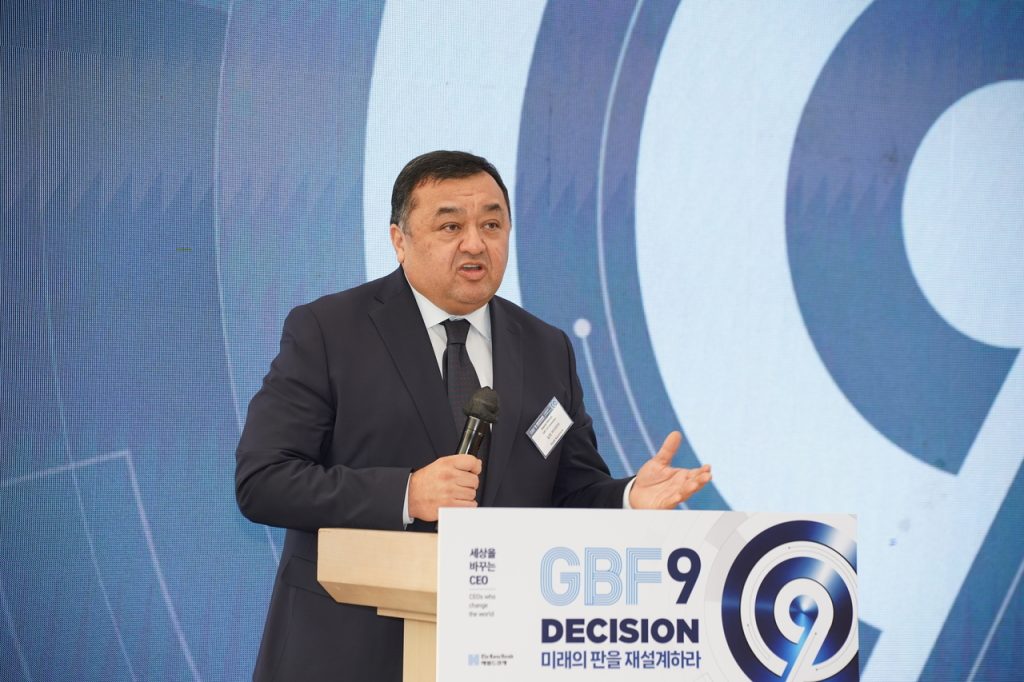
Uzbekistan’s Deputy Minister of Investment, Industry and Trade, Ilzat Ablaxatovich Kasimov, emphasized the potential for increased economic collaboration between South Korea and Uzbekistan during his address at the 2026 Global Biz Forum in Seoul. The forum, hosted by The Korea Herald and Herald Business, took place on Wednesday.
“As ties between our nations strengthen, there’s a growing interest within Uzbekistan’s government and business community in partnering with Korean companies. Uzbekistan’s rapid development is creating significant business opportunities for Korean firms,” stated Kasimov.
His remarks launched the forum’s first session, themed “DECISION: Reshaping the Future Landscape,” held at the Ambassador Seoul Pullman Hotel. The Global Biz Forum, now in its ninth year with bi-annual sessions spanning over two weeks, explores emerging global trends and challenges impacting the future economy.
During his visit to South Korea, Kasimov met with Industry Minister Kim Jung-kwan on Tuesday before heading to Australia later on Wednesday.

Deputy Minister of Transport Jasurbek Choriev also attended the forum, underscoring Uzbekistan’s competitive advantages as an economic partner and identifying key sectors for enhanced bilateral cooperation.
“Korean companies’ investments in Uzbekistan have been steadily increasing, with 683 joint ventures now operating, including major players like Samsung Electronics, LG, and Lotte Chemical,” Choriev noted.
“In recent years, Uzbekistan has established 24 free economic zones and over 30 technology parks, backed by government support that provides modern infrastructure, tax benefits, and administrative assistance to investors.”
Choriev emphasized that Uzbekistan, with its population of 38 million, acts as a gateway to Central Asia and boasts strong growth potential, with its GDP doubling in the last eight years.
He further explained that the nation’s substantial domestic demand for automobiles, along with its abundant agricultural and mineral resources, creates ideal conditions for economic partnership with South Korea in manufacturing, food processing, and related industries.
Prior to the forum, the two deputy ministers engaged in discussions with Jung Won-ju, Vice Chair of Jungheung Group and Chairman of Daewoo Engineering & Construction, and Herald Media Group CEO Choi Jin-young, exploring potential areas for collaboration.

Herald Media Group and Uzbekistan’s Ministry of Investment, Industry and Trade will jointly host the Korea-Uzbekistan Business Forum in June in Tashkent, the Uzbek capital. The forum aims to foster direct interaction between Korean and Uzbek business communities and strengthen bilateral investment ties, officials announced.
Wednesday’s event also featured former SMEs and Startups Minister Park Young-sun, who offered insights on how the South Korean government should approach the AI agent era.
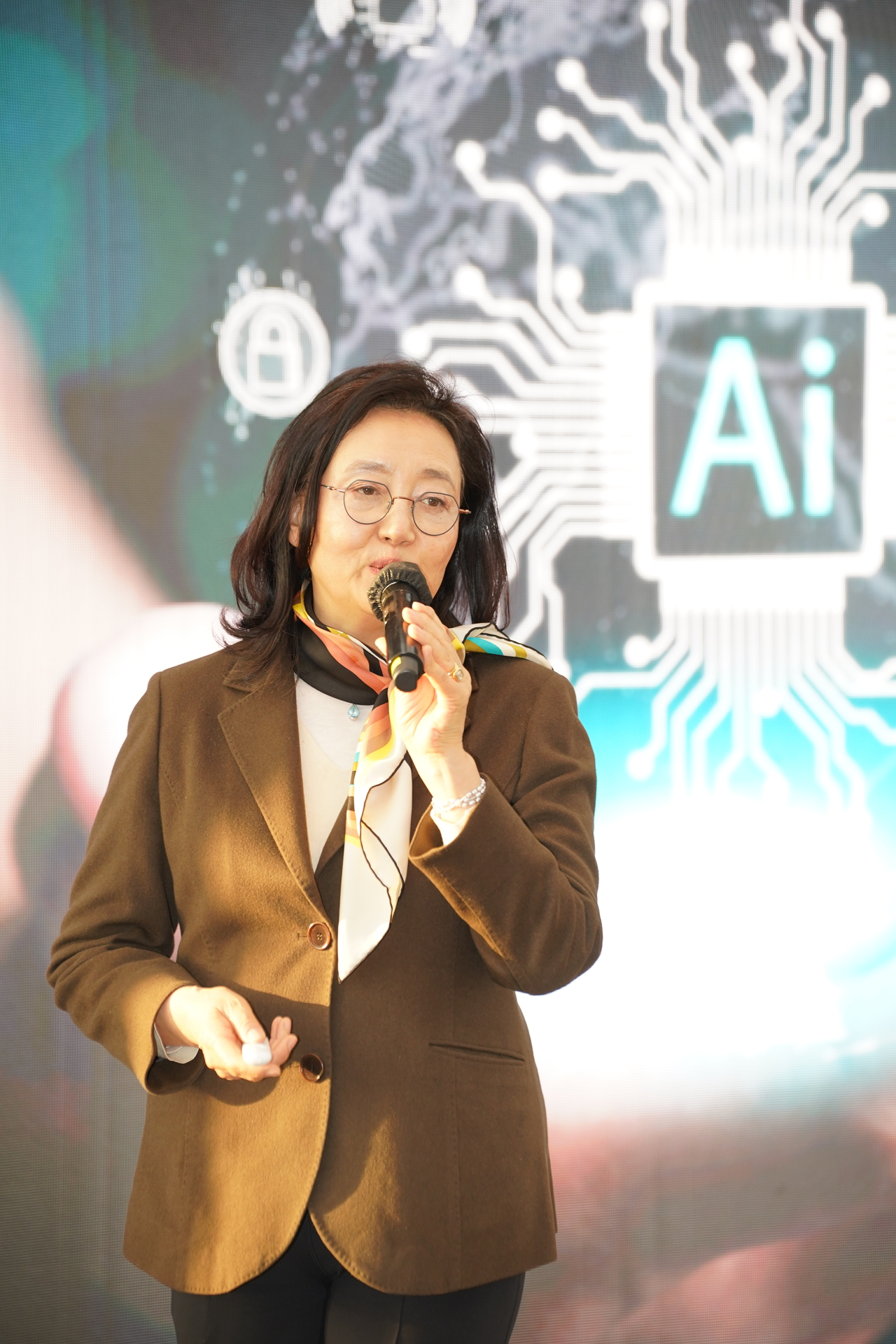
AI agents, capable of autonomous task performance, decision-making, and interaction with users or other systems based on data, are poised to revolutionize various sectors with minimal human involvement.
Park emphasized the critical need for national standards in “ontology,” a foundational framework for AI agents that organizes concepts, properties, and relationships across diverse datasets, facilitating more precise analysis.
“The race for dominance in the AI agent economy is already underway in the US, with major tech companies collaborating to establish standards. South Korea’s level of participation in this process will directly influence the nation’s AI future,” the former minister stated.
In February, the National Institute of Standards and Technology, under the US Department of Commerce, initiated a program to standardize data formats and authentication methods for AI agents, with the goal of enabling secure and seamless interactions across different systems.
Park characterized the standardization of ontologies across domestic industries as a crucial step in securing data sovereignty in the rapidly evolving AI landscape.
“Standardized ontologies across sectors beyond manufacturing, including public administration, would enable the structuring and connection of diverse data within a unified framework,” she explained.
“The widening gap in data capabilities between nations could lead to an era of data colonialism. The United States and China are already extending their influence by establishing data centers globally. We must also bolster our data infrastructure and computing capabilities to safeguard data sovereignty.”
cjh


