Retail-Driven Surge and Market Swings Raise Concerns in South Korea’s Stock Market
South Korea’s stock market is experiencing a period of intense activity, triggering concerns about potential overheating and increased volatility after a year-long rally. While valuations are currently below long-term averages, the rapid market swings are causing unease among investors and analysts.
The benchmark Kospi index closed at 5,781.2 on Friday, marking a significant increase of 152 percent from its 52-week low of 2,293.7 on April 9, 2025. This also represents a 119 percent rise compared to its value of 2,637.1 a year prior.
Prior to the recent US-Israel joint strikes on Iran, the South Korean stock market demonstrated a strong upward trend. On February 27, the Kospi reached an intraday high of 6,347.41, setting a new record before the geopolitical tensions impacted the market.
However, market volatility has increased sharply due to geopolitical risks stemming from the ongoing conflict in the Middle East. South Korea’s economy, heavily reliant on energy imports, has experienced a more pronounced impact compared to other markets.
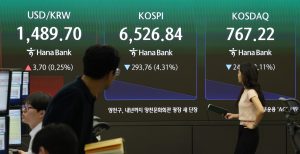
The Kospi saw a significant drop of 7.24 percent on March 3, followed by a further 12.06 percent decline the following day – the largest single-day drop ever recorded. Subsequently, the market rebounded by 9.63 percent on March 5, showcasing the extreme fluctuations.
During this volatile period, circuit breakers were activated twice within three trading days, temporarily halting trading for 20 minutes each time. Furthermore, sidecar activations were implemented to curb program trading for five minutes.
Following these disruptions, the Kospi has struggled to regain its upward momentum, failing to reclaim the 6,000-point level.
The VKospi, the Kospi 200 volatility index, surged to a record high of 81.99 earlier this month and has remained above 50, a level often interpreted as signaling market panic, highlighting the increased market uncertainty.
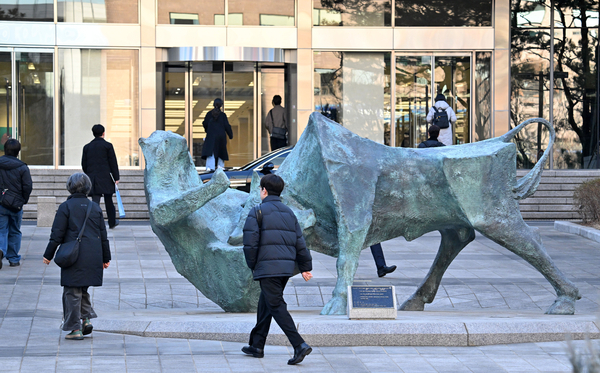
Global financial institutions are increasingly raising concerns about a potential market bubble. A recent Bank of America report described the Korean stock market’s movements as “textbook examples of a bubble.”
The report highlighted the Kospi’s extreme volatility, drawing parallels to past financial crises such as the 1997 Asian financial crisis, the 1999 dot-com bubble, and the 2008 global financial crisis.
Bank of America analysts suggested that South Korean retail investors have contributed to a “classic bubble environment” by fueling the recent surge in the market.
Consistent with BofA’s assessment, individual investors have been the primary drivers of buying activity this year, net purchasing 22.16 trillion won ($14.8 billion) worth of Kospi shares. In contrast, foreign investors have engaged in substantial selling, offloading 37.53 trillion won. Institutional investors have been comparatively modest net buyers, acquiring 9.69 trillion won.
Despite these concerns, some analysts believe that the fears of a bubble are exaggerated and that the Kospi still has room for growth.
Na Jeong-hwan, an analyst at NH Investment & Securities, argues that “Despite continued policy efforts to ease the Korea discount, the local equity market still remains undervalued in terms of price-to-earnings ratios.”
He added, “With upward revisions to Kospi earnings forecasts, the 12-month forward PER is at 9.5 times, below the 10-year average of 10.5 times,” suggesting the market is not excessively valued.
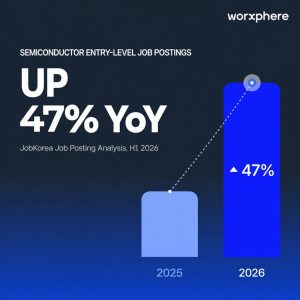
Furthermore, the ongoing semiconductor supercycle is seen by some as a potential catalyst for continued upward momentum in the Kospi.
Hana Securities analyst Lee Jae-man noted, “Excluding Samsung Electronics and SK Hynix, Korea’s semiconductor and hardware sector accounts for about 5 percent of the combined Kospi and Kosdaq market capitalization, still below its previous peak of 6.5 percent. This indicates there may be further room for share prices to rise.”
silverstar