
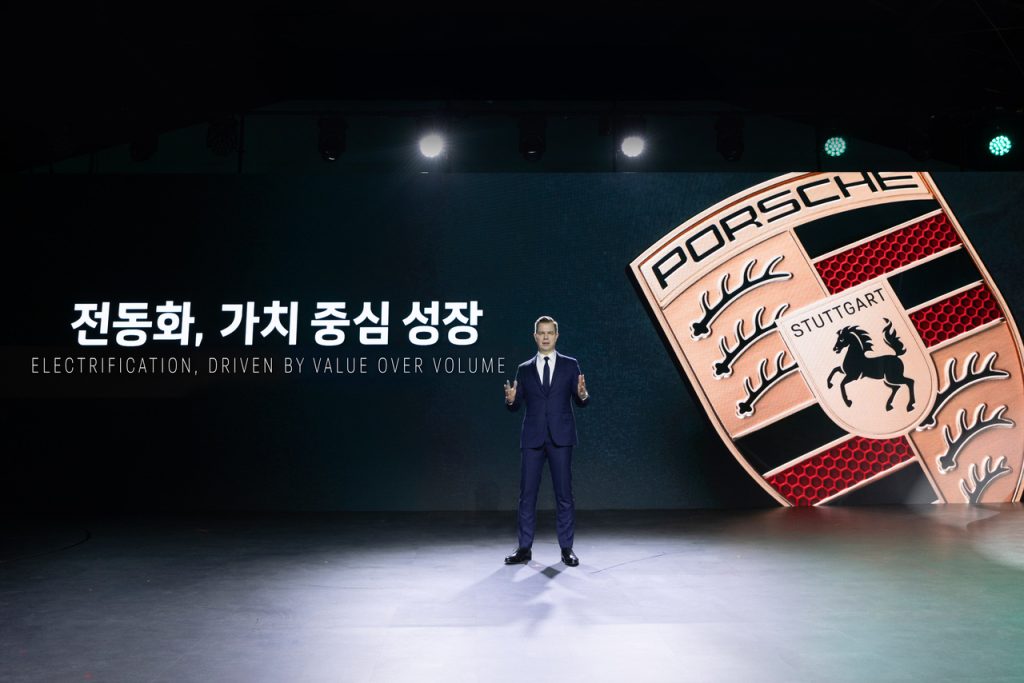
Porsche announced on Thursday its plans to introduce over 10 new models to the South Korean market this year, spearheaded by the East Asia debut of the all-electric Cayenne. This move underscores Porsche’s commitment to expanding its presence in the high-performance electric vehicle sector.
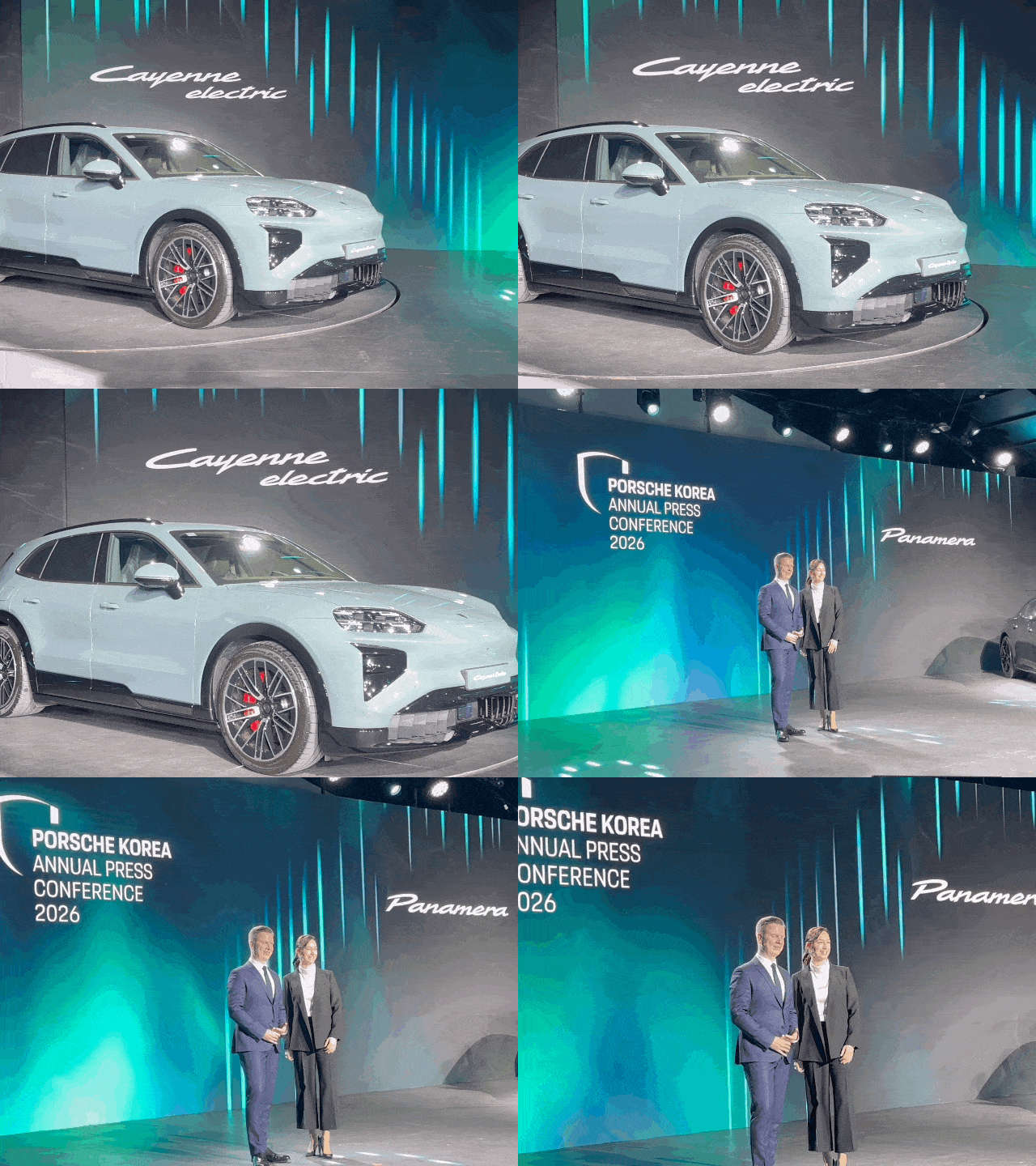
During a New Year press conference in Seoul, Porsche Korea CEO Mathias Busse revealed that the upcoming lineup will feature the Cayenne Electric, the Panamera Red Exclusive (a Korea-exclusive model), the new 911 Turbo S, and the Macan GTS.
“Bringing the Cayenne Electric to Korea at an early stage is particularly meaningful,” said Busse, highlighting the Cayenne’s popularity as one of the brand’s top-selling models in the country, coupled with the strong demand for high-performance EVs in the region.
South Korea has become a significant EV market for Porsche. Christiane Zorn, Vice President of Overseas and Emerging Markets at Porsche AG, noted that Korea is the company’s sixth-largest market for fully electric vehicles, driven by robust sales of the Taycan and Macan Electric.
Porsche currently holds a 44 percent market share of imported EVs priced above 100 million won ($66,700) in Korea.
Of the 10,746 vehicles sold last year – Porsche Korea’s second-highest annual total – over 60 percent were electrified models, encompassing both fully electric vehicles (34 percent) and plug-in hybrids (28 percent). Globally, internal combustion engine vehicles still account for 66 percent of Porsche’s sales, demonstrating Korea’s accelerated transition toward electrification.
Porsche is also focusing on localizing its battery supply chain. Starting this year, all EV models sold in Korea will utilize Korean-made batteries. LG Energy Solution will supply battery cells for the Cayenne Electric.
Furthermore, the company will equip the Macan Electric with Samsung SDI batteries, replacing the CATL (China) cells used in earlier models. This strategic move aims to align with local consumer preferences.
“We are working closely with Korea’s battery leaders to ensure the highest levels of quality, safety and reliability,” Zorn stated.
Korea’s importance in Porsche’s global strategy is steadily growing. Since establishing its local unit in 2014, the country’s share of sales in Porsche’s emerging markets has increased from 14 percent in 2018 to 19 percent in 2025.
Porsche Korea also plans to expand its service network, including opening a new center on Jeju Island, transforming its Ilsan facility in Gyeonggi Province into a brand experience space, and strengthening operations in Yangjae (Gyeonggi Province), Incheon, and Yeongdeungpo-gu (Seoul). The company aims to double its service network by 2030, enhancing customer experience and support.
hyejin2


