
Korean battery and EV makers see limited gains as Chinese supply chain remains entrenched
The European Union’s newly proposed Industrial Accelerator Act — often described as Europe’s answer to the US Inflation Reduction Act — appears less aggressive toward Chinese electric vehicles than expected.
Rather than curbing China’s grip on the EV supply chain, the policy highlights how difficult it may be for Europe to reduce its reliance on Chinese batteries and components — a reality that could create fresh challenges for Korean automakers and battery makers in the world’s second-largest EV market.
The European Commission proposed the IAA on Wednesday, requiring that a minimum portion of production for electric vehicles, wind power equipment and other clean-energy technologies take place within Europe when governments purchase or subsidize such products.
The regulation is expected to take effect six months after adoption.
The move has been widely interpreted as an initial effort to limit China’s growing influence in Europe’s EV market, where Chinese brands reached a record 12.8 percent share in November last year, according to Bloomberg.
Under the proposal, EVs purchased by European governments must undergo final assembly within the bloc. At least 70 percent of their components — excluding the battery — must also be manufactured in Europe.
For now, the rule applies only to public procurement, which represents a relatively small portion of the broader EV market. However, analysts say the policy could eventually expand to cover private purchases.
Lee Ho-geun, an automotive engineering professor at Daeduk University, said the proposal marks the EU’s first attempt to introduce concrete local-content targets for EV’s procurement.
“Although the EU currently applies these constraints only to public purchases, if local component sourcing proceeds smoothly without major issues, there is more than a 90 percent chance that similar rules will be extended to the private EV market,” Lee said.
Still, the regulation reflects Europe’s dilemma in reducing reliance on China’s supply chain.
“The exclusion of batteries from the 70 percent local production requirement shows the reality,” Lee said. “It is difficult for Europe to boost EV adoption without relying on price-competitive Chinese vehicles.”
Completely blocking Chinese batteries would likely impose high costs on consumers, a factor policymakers are cautious about.
Lee cited the UK’s decision in 2023 to delay its net-zero vehicle target from 2030 to 2035 after officials warned the policy could add 5,000 to 10,000 British pounds ($6,700–$13,300) to household costs.
Implications for Korean battery makers
The IAA still allows EVs equipped with Chinese-made batteries to qualify for public procurement as long as other requirements are met.
This effectively enables suppliers such as CATL to continue exporting low-cost batteries to Europe, limiting any immediate competitive advantage for Korean battery makers — LG Energy Solution, Samsung SDI and SK On — despite their local production bases in Poland and Hungary.
The Korean trio’s market share in Europe has already declined sharply.
According to market tracker SNE Research, their combined share fell from 71 percent in 2021 to 45.1 percent in 2024, when Chinese companies overtook them for the first time. By 2025, the figure had dropped further to around 35 percent.
“While the current IAA is unlikely to have a direct impact, it does little to favor Korean battery makers,” an industry source said on condition of anonymity. “The policy signals that Europe cannot ignore China’s price competitiveness in EVs and batteries.”
However, the legislation could still place some limits on Chinese expansion within Europe.
The bill states that investments exceeding 100 million pounds from countries controlling more than 40 percent of global production capacity in a sector — a threshold that includes China in EV batteries — may face additional scrutiny or restrictions, including limits on majority ownership.
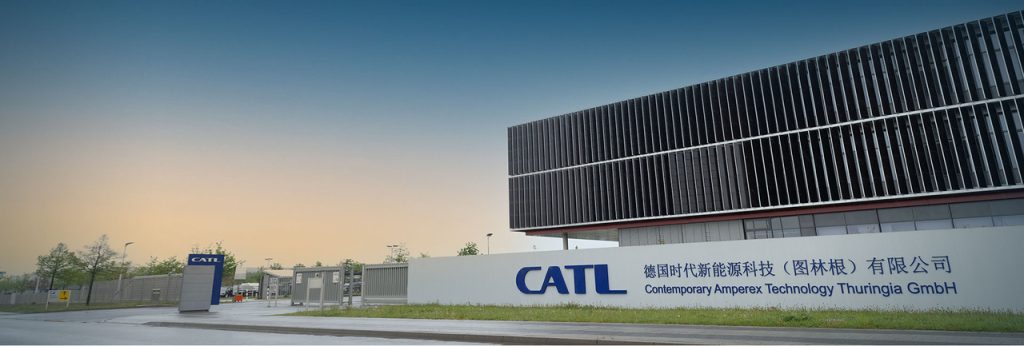
Such provisions could complicate further expansion by CATL, which already operates two battery plants in Europe and is building another.
Hyundai Motor Company and Kia may face greater long-term pressure than Korean battery makers.
The two automakers sold 183,912 EVs in Europe last year, with 82.8 percent exported from Korea.
Although Hyundai and Kia operate production facilities in Nosovice, Czech Republic, and Zilina, Slovakia, much of their latest dedicated EV lineup is still produced in Korea, and parts of their supply chains remain tied to Korean suppliers.
“Even though the 70 percent ‘Made in Europe’ rule currently applies only to public procurement, Hyundai and Kia will likely need to accelerate the localization of EV production in Europe if such rules expand to the private market,” Lee said.
hyejin2


