
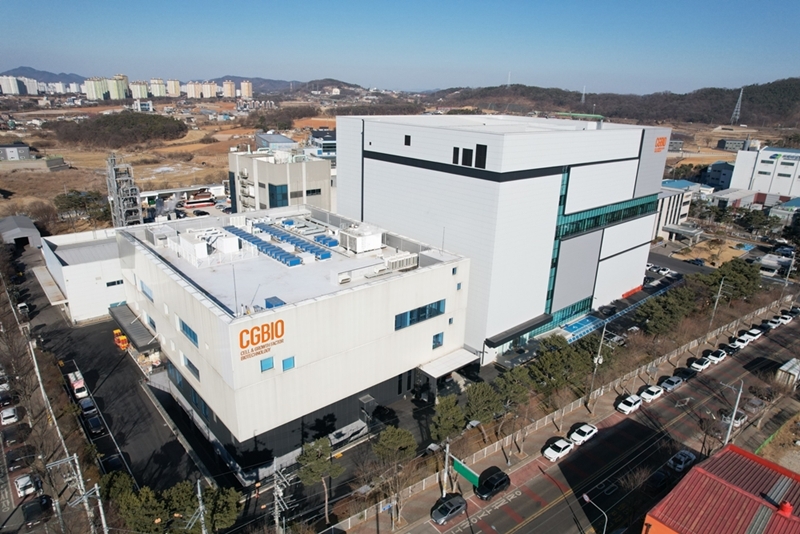
CG Bio announced on Wednesday the completion and commencement of full-scale operations at its second manufacturing facility, Novo Factory, after receiving final regulatory approval. This expansion significantly boosts the company’s regenerative medicine production capabilities.
Novo Factory will primarily focus on manufacturing Novosis Putty and other essential products for orthopedic surgery, supporting CG Bio’s strategic expansion into key international markets like the United States and Japan.
While CG Bio’s existing plant, S-Campus, specializes in dermal filler production, Novo Factory is strategically designed to adhere to stringent US Food and Drug Administration (FDA) regulatory guidelines.
Novosis, CG Bio’s leading bone graft substitute, combines hydroxyapatite ceramic scaffolds, mimicking the natural structure of human bone, with recombinant human bone morphogenetic protein-2. The Novosis Putty formulation is semi-solid, ensuring ease of handling during surgical procedures. Novosis OS is designed for orthopedic applications, meeting global clinical standards.
The Novo Factory boasts an annual production capacity of up to 1 million syringes based on a 3-milligram formulation of Novosis Putty.
The facility integrates advanced technologies for synthetic bone production, including precision molding and coating systems, optimized grinding technology, and high-capacity sintering equipment, ensuring consistent and scalable manufacturing processes.
CG Bio stated that the plant has an initial annual production capacity of 400,000 units for its Novosis and Bongros product lines, with plans for further capacity expansion in phases.
CG Materials, the raw material subsidiary, has also relocated to the Novo Factory complex. This move enables in-house synthesis of critical materials such as hydroxyapatite, beta-TCP, and BGS-7, used in products like Novosis and the premium collagen stimulator DClassy CaHA.
The Novo Factory was constructed to meet the FDA’s current Good Manufacturing Practice (cGMP) standards and international quality requirements like ISO 13485. It features state-of-the-art cleanroom systems, automated production lines, and validated sterilization processes to ensure compliance with global regulatory standards.
CEO Yu Hyun-seung emphasized that the new plant will serve as a strategic production hub supporting the company’s global expansion efforts.
“With strengthened manufacturing infrastructure, we will accelerate our entry into advanced regulatory markets such as the US and Japan,” Yu said.
jwjeon7625


