
The South Korean government announced a significant financial support package of 2.1 trillion won ($1.45 billion) on Wednesday, aimed at facilitating the restructuring project of Lotte Chemical Corp. and HD Hyundai Chemical at the Daesan industrial complex. This marks the first approved project under a broader, self-rescue initiative designed to revitalize the struggling petrochemical industry.
Lotte Chemical and HD Hyundai Chemical finalized their restructuring plan last year. As part of the agreement, Lotte Chemical will spin off its naphtha cracking center (NCC) located at the Daesan petrochemical complex in Seosan, approximately 100 kilometers south of Seoul. This spun-off entity will then merge with HD Hyundai Chemical.
This restructuring plan, the first of its kind in the petrochemical sector to receive government approval, seeks to address a supply glut by voluntarily reducing NCC capacity by 1.1 million tons. Furthermore, the companies aim to shift their focus towards the production of high-value and environmentally friendly products.
Following the government’s pledge last year to support companies undertaking “voluntary” self-rescue efforts, fourteen other major petrochemical firms have also submitted their business restructuring plans.
The 2.1 trillion-won support package for Lotte Chemical and HD Hyundai Chemical, unveiled during a meeting of economy and industry-related ministers, includes approximately 2 trillion won in financial assistance to alleviate the financial burden associated with facility shutdowns.
The government also stated that it will provide tax incentives, expedite the review process for the integration of the companies’ NCC operations, and support research and development (R&D) projects focused on transitioning to high-value and eco-friendly product lines.
A particular emphasis will be placed on supporting R&D projects geared towards developing high-value petrochemical products used in advanced industries, such as the semiconductor, display, aerospace, and secondary battery sectors, according to government officials.
The support package also encompasses measures to provide the companies with electricity at reduced rates by designating the Daesan complex as a special zone for direct transactions of locally produced electricity. Additionally, zero tariffs will be applied to raw materials imported by the companies, including naphtha and crude oil.
To further enhance the long-term competitiveness of the petrochemical sector, the government announced plans to develop a comprehensive support plan for the chemical ecosystem within the first half of the year. This plan is expected to include measures to promote artificial intelligence (AI) transformation within the industry and expand export opportunities.
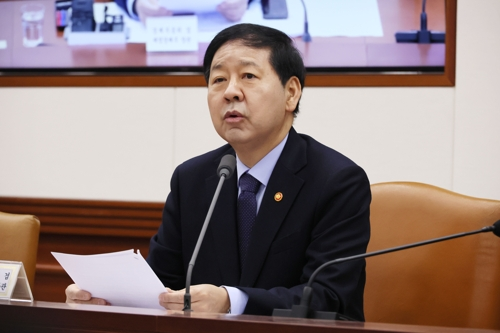
“The Daesan project will serve as a milestone and a model case for the revitalization of the petrochemical industry,” stated Finance Minister Koo Yun-cheol, urging other petrochemical firms to accelerate their efforts towards voluntary business restructuring.


