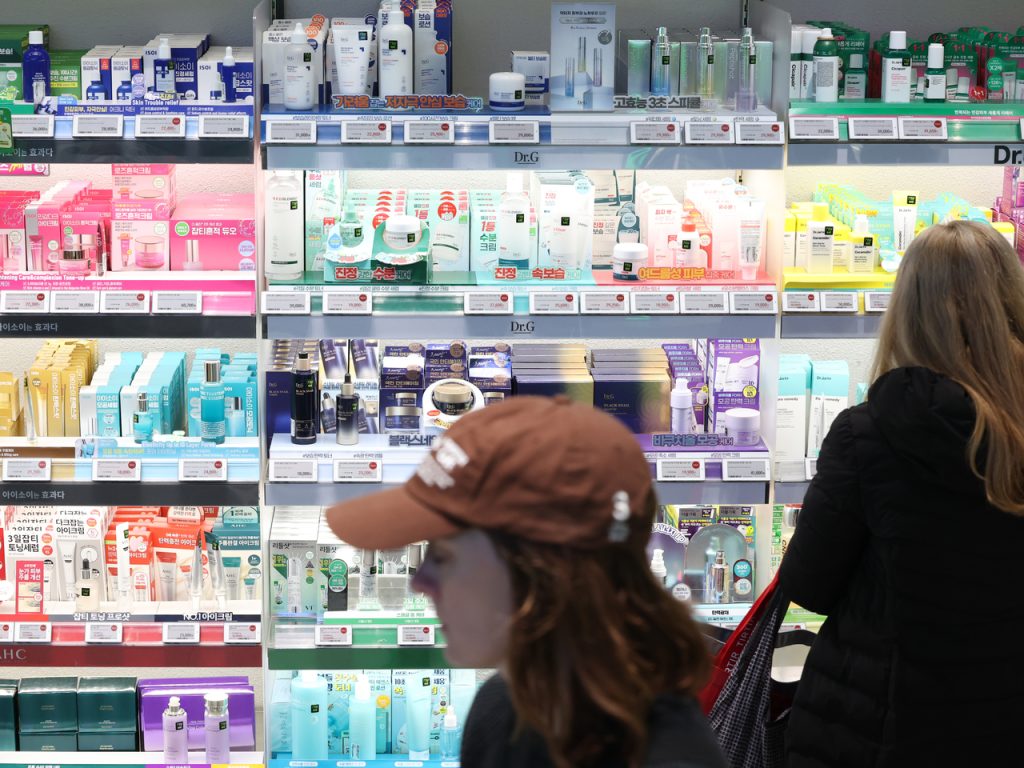
Experiencing a remarkable second global surge, South Korea’s cosmetics industry, widely known as K-beauty, is now thriving. This unprecedented boom is primarily fueled not by traditional corporate giants but by agile indie beauty brands, sophisticated manufacturers, and the powerful influence of social media.
Once predominantly led by established legacy companies such as Amorepacific Co. and LG Household & Healthcare Co., and driven largely by demand from China, the K-beauty industry is currently expanding its presence significantly in the United States and European markets, thanks to an innovative new generation of industry players.
As a direct result of this growth, South Korea has ascended to become the world’s second-largest cosmetics exporter, trailing only France. Beauty products have firmly established themselves as the nation’s premier consumer export item.
Recent statistics vividly illustrate the rapid expansion of K-beauty across the globe.
According to data from the Ministry of Trade, Industry and Energy, combined exports of Korean beauty products soared to $5.6 billion during the January-May period, a substantial increase from $4.6 billion recorded in the same period a year earlier.
This impressive surge follows a record-setting performance in 2025, when South Korea’s cosmetics exports reached an all-time high of $11.4 billion, having previously surpassed the $10 billion mark for the first time in 2024.
One of the most significant transformations in K-beauty’s ascendancy has been the profound diversification of its export markets.
Previously largely dependent on Asian consumers and dedicated fans of K-pop and K-dramas, Korean cosmetic products are now increasingly capturing the attention and loyalty of mainstream shoppers worldwide.
In a pivotal shift, the United States emerged as South Korea’s largest cosmetics export market for the first time in 2025, with shipments totaling an impressive $2.2 billion. This landmark achievement surpassed China, which had historically been the dominant destination for Korean cosmetics.
Europe is also rapidly developing into a crucial growth engine for K-beauty. Cosmetics exports to Europe witnessed a remarkable 60 percent year-on-year jump through April, reaching $820 million and even outperforming the US market during that specific period.
Industry experts are increasingly confident that the current K-beauty boom represents not a fleeting trend but a fundamental structural shift, as the market momentum shows no indications of slowing down.
“While China held the position of the largest export market for Korean cosmetics in 2024, the US took the lead in 2025, and Europe is poised to become the top destination in 2026. This dynamic evolution truly reflects the agile nature of the K-beauty industry,” noted Park Jong-dae, an analyst at Hana Securities. “At this current pace, South Korea could realistically challenge France for the world’s top spot within the next four to five years.”
At the very heart of K-beauty’s latest successful expansion are its innovative indie brands.
Unlike conventional cosmetics companies that historically relied heavily on department stores and traditional offline retail channels, these dynamic indie brands adeptly utilize social media, influential figures, and e-commerce platforms to directly engage with consumers globally.
Their agile approach allows them to quickly test new products, swiftly respond to emerging trends, and launch novel items at a speed that few legacy companies can rival.
This strategic shift has fundamentally transformed an industry once firmly controlled by giants like Amorepacific Co. and LG H&H.
Companies such as APR, d’Alba, Beauty of Joseon, Anua, and SKIN1004 have achieved rapid international expansion through popular digital platforms like Amazon and TikTok Shop, among others.
Among these successful enterprises, APR stands out as perhaps the clearest embodiment of K-beauty’s new and exciting era.
The company, renowned for its Medicube skincare range and cutting-edge at-home beauty devices, has grown to become South Korea’s largest beauty company by market capitalization, currently valued at approximately 15 trillion won. This valuation significantly exceeds the combined market value of Amorepacific (6.4 trillion won) and LG H&H (3.6 trillion won).
International markets, particularly the United States, now contribute a substantial portion of APR’s overall sales, propelled by viral success on TikTok and continuously expanding retail partnerships.
Underpinning the remarkable success of K-beauty’s indie brands is South Korea’s world-class manufacturing ecosystem.
Distinct from original equipment manufacturers (OEMs), which simply produce goods based on client specifications, original development manufacturers (ODMs) are involved in every stage, from initial product planning and formulation development to the final manufacturing process.
This integrated approach enables cosmetics brands to concentrate their efforts on essential aspects like marketing, branding, and distribution, while entrusting specialized manufacturers with comprehensive research and production responsibilities.
Industry leaders such as Cosmax and Kolmar Korea each generated over 1 trillion won in ODM sales last year, a testament to the impressive scale and advanced capabilities of Korea’s manufacturing sector.
As global demand for K-beauty products continues to escalate, Korean ODM companies have strategically expanded their production facilities in key regions like North America and Southeast Asia to more effectively cater to their growing international customer base.
Industry experts emphasize that the synergistic relationship between innovative indie brands and advanced ODM firms has forged a virtuous cycle that profoundly accelerates innovation. Fast-moving brands generate fresh ideas and valuable market feedback, while manufacturers swiftly transform these insights into high-quality, in-demand products.