Strait of Hormuz Reopening Sparks Hope for Stranded Ships & Energy Supply Chains, Industry Warns of Months-Long Recovery
The recent agreement between the US and Iran to conclude their conflict and reopen the strategic Strait of Hormuz has ignited optimism, particularly for export-reliant South Korea. This pivotal development is expected to alleviate a significant geopolitical risk, potentially allowing numerous vessels, stranded for months in the vital waterway, to resume their journeys and aid in stabilizing global energy supply chains.
However, industry experts remain cautious. Lingering uncertainties prior to the formal signing of the peace agreement on Friday prompt warnings that it could be an extended period before maritime traffic in the Strait of Hormuz returns to pre-conflict levels.
US President Donald Trump announced on Sunday that a comprehensive peace deal had been reached with Iran, bringing an end to all hostilities initiated by US and Israeli strikes on February 28. The protracted conflict severely curtailed passage through the strait, recognized as one of the world’s most critical energy and shipping choke points.
Iran has since confirmed the agreement, with both nations committing to fully reopen the strait upon the official signing of the accord, scheduled for Friday in Switzerland.
Immediate attention is focused on the fate of 24 South Korean-managed vessels, carrying a total of 137 Korean sailors. These ships, encompassing both South Korean-flagged vessels and those owned by Korean companies, are eager to exit the strait and resume operations. Notable among them is HMM’s cargo vessel Namu, which suffered an attack in May and was subsequently towed to Dubai, UAE, for repairs.
South Korean authorities have confirmed ongoing close communication with ship operators and crews. Preparatory measures are underway to assist these vessels as soon as passage through the Strait of Hormuz is officially reinstated.
Despite the positive diplomatic breakthrough, shipping industry officials stress that security risks remain a primary concern. Throughout the conflict, commercial vessels faced heightened threats of attack. Certain areas within the strait may require thorough clearing of naval mines and other hazards to ensure safe transit. Consequently, shipping companies are likely to prioritize clear evidence of safety and stability rather than immediately resuming operations post-agreement.
“Even with a formal agreement signed, it doesn’t instantly mean vessels can revert to normal operations,” explained a shipping industry official. “Physical threats must be eliminated, secure navigation routes established, and war-risk insurance complexities resolved.”
The official elaborated that shipping firms are exercising extreme caution regarding resuming operations due to persistent security concerns and elevated insurance premiums. With approximately 2,000 vessels currently trapped near the waterway, significant congestion is anticipated, further delaying the full recovery of maritime traffic.
“While the agreement sends a positive signal, full normalization will realistically take several months,” the official concluded. “For the present, shipping companies are diligently monitoring government guidance and ongoing negotiation developments.”
South Korea’s refining and petrochemical sectors have also expressed relief at the prospect of a peace deal. The reopening of the strait is expected to alleviate critical supply worries that have plagued the industry throughout the Middle East conflict.
These sectors have been particularly vulnerable to regional disruptions, given that South Korea imports approximately 70 percent of its crude oil and 18 percent of its liquefied natural gas from the Middle East.
A successful reopening of the Strait of Hormuz is widely expected to significantly reduce volatility and uncertainty in the global oil market.
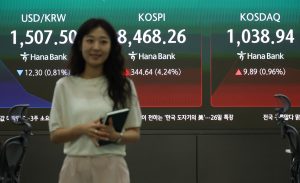
Global oil prices responded positively to the news. Brent crude prices registered a 3.9 percent decrease, settling at around $84 a barrel. Similarly, US crude dropped by 4.8 percent to approximately $81 a barrel, marking the lowest price recorded since the first week of the conflict in March.
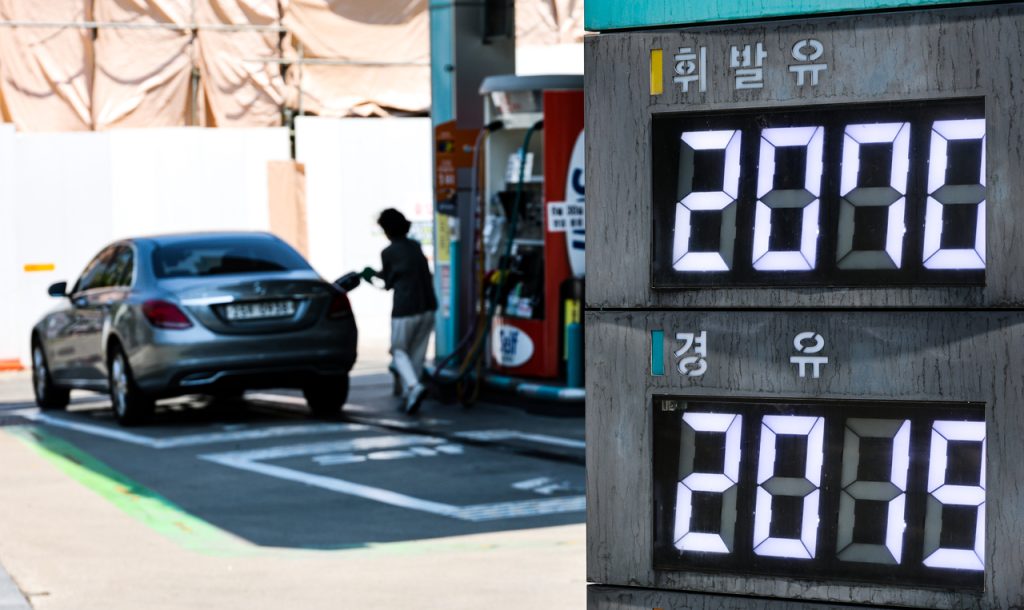
Domestically, South Korean fuel prices began to show signs of stabilization as expectations for a resolution grew. According to the Korea National Oil Corp.’s Opinet database, the nationwide average gasoline price slightly dipped by 0.5 won per liter from the previous week to 2,009.9 won ($1.33) during the second week of June. Diesel prices also saw a marginal decline of 0.3 won, reaching 2,004.8 won per liter.
Despite this improved outlook, industry analysts cautioned that a complete return to pre-conflict economic conditions could still be some time away.
“Given the extensive damage to oil-producing facilities, refineries, and other critical infrastructure during the war, it will require several months for these facilities to be fully restored,” an oil refining industry official commented.
A report released last month by the Korea Energy Economics Institute suggested that crude oil prices might remain above $90 per barrel even if a peace agreement is formally secured.
Attention now shifts to the government’s timeline for phasing out its petroleum price cap. This measure, implemented in March, aimed to mitigate cost burdens for both drivers and industries.
As the Middle East conflict nears its conclusion, there is a growing expectation that the price cap could be withdrawn in the coming months. However, the government maintains a cautious stance, fearing that removing the cap prematurely, before oil markets and supply chains achieve full stability, could trigger a sharp rebound in retail fuel prices and exacerbate broader inflationary pressures.
sahn