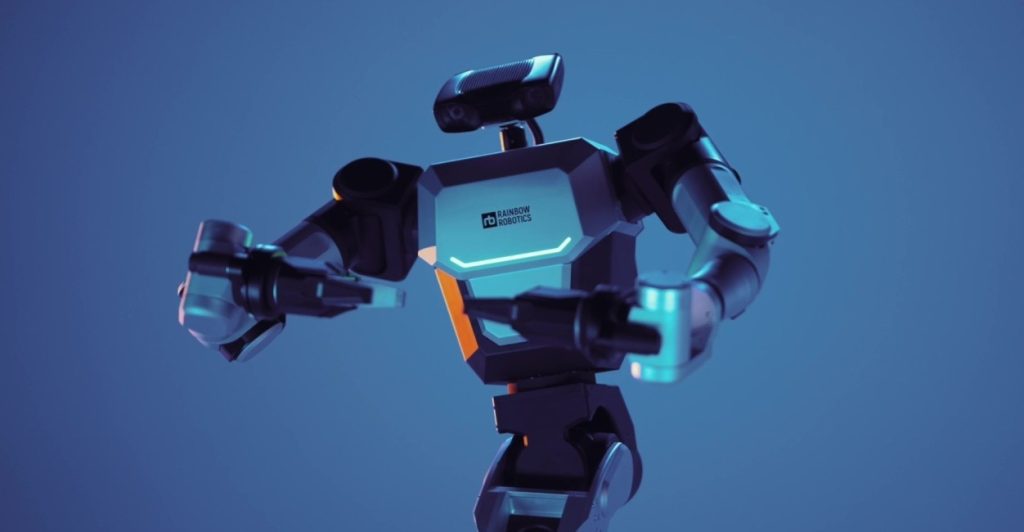
Rainbow Robotics, a cutting-edge robot manufacturer majority-owned by Samsung Electronics, has reportedly deployed its advanced mobile dual-arm robot, the RB-Y1, for trials within a Coupang fulfillment center. The e-commerce giant is evaluating the RB-Y1’s capabilities for critical warehouse operations, including sorting and moving goods, as part of its ongoing commitment to enhancing logistics automation. This pilot program, first reported by ETNews on Sunday, signals a significant step for robotic solutions in the e-commerce sector.
The current trials are meticulously assessing the robot’s operational reliability and its efficiency in handling goods within the fast-paced fulfillment environment, according to industry sources cited by ETNews. A successful performance from the RB-Y1 could potentially lead to a substantial commercial order, further solidifying the role of advanced robotics in modern logistics.
As of now, neither Rainbow Robotics, Samsung Electronics, nor Coupang has issued a public statement confirming this pilot program.
This deployment marks a pivotal moment for the RB-Y1, representing its first reported transition from research and development settings to a live commercial operational floor. Previously, the mobile dual-arm robot was primarily utilized in academic institutions, research facilities, and for internal factory trials at its parent company, Samsung, as well as at Toyota.
The RB-Y1 is engineered not as a humanoid walking robot, but features two sophisticated robotic arms mounted on a highly mobile wheeled base. This design allows it to navigate quickly and efficiently, emulating human torso movements for precise handling. With each arm capable of carrying payloads of approximately three kilograms, the robot is ideally suited for tasks involving lighter item picking, precise sorting, and efficient order fulfillment, rather than heavy lifting operations.
For Coupang, the primary appeal of integrating such robotics lies in potential cost efficiencies and improved operational safety. Robotics can significantly reduce labor requirements and mitigate a warehouse operator’s exposure under South Korea’s Serious Accidents Punishment Act, a law that holds executives criminally accountable for fatal workplace incidents. Investing in robotic automation thus offers both economic and safety benefits.
Coupang has demonstrated a strong commitment to technological advancements and automation, having invested over $84 million in global AI startups since 2023 to bolster its operational capabilities.
Despite reporting a $242 million operating loss in the first quarter—its largest in over four years—the company clarified that this financial outcome was largely due to a one-off compensation program related to a customer data breach, rather than an increase in core operating costs.
Beyond its engagement with Coupang, Rainbow Robotics is actively expanding its market presence and forging new partnerships. The company is currently in discussions to supply its robotic solutions to CJ Logistics, following a strategic robot-development agreement signed between the two firms last year.
Samsung Electronics reinforced its strategic vision for the future of robotics by increasing its stake in Rainbow Robotics to 35 percent and officially absorbing it as a subsidiary in 2024 through a significant investment of 267 billion won (approximately $176 million). This move underscores Samsung’s clear intent to position robotics as a core growth area for its future endeavors.
mjh