The recent **ceasefire agreement between the United States and Iran**, coupled with plans to **reopen the crucial Strait of Hormuz**, has significantly reduced a major external risk for **South Korea’s economy**. However, experts cautioned Monday that **global oil prices** may require time to fully stabilize and revert to **pre-conflict levels**.
**US President Donald Trump** confirmed Sunday that **Washington and Tehran** have finalized a **peace deal**, aiming to conclude their months-long conflict. He added that the strategically vital **Strait of Hormuz** is set to reopen following the formal signing of the agreement later this week.
Following this announcement, **international oil prices** experienced a notable retreat. **Brent crude** decreased to approximately $87 per barrel, while **West Texas Intermediate (WTI)** fell to around $84 per barrel, a significant reduction from previous levels that neared $100 during the intense conflict period.
This recent development holds immense significance for **South Korea**, a nation that relies almost entirely on **crude oil imports**. Approximately 70 percent of its **oil supply** originates from the Middle East, with a substantial portion transported via the **Strait of Hormuz**. Earlier this year, South Korea actively sought to diversify its **crude supplies** and **shipping routes** amidst the regional instability.
Industry experts anticipate that the **reopening of the Strait of Hormuz** will substantially mitigate the risk of **oil supply shortages**, alleviate **shipping delays**, and reduce both **war-risk insurance premiums** and **freight rates**. These factors combined are expected to exert further **downward pressure on global oil prices**.
**South Korea’s refining and petrochemical industries** are poised to be the primary beneficiaries of these changes.
Refiners heavily depend on **Middle Eastern crude oil**, while the **petrochemical sector** primarily sources **naphtha** from the Gulf region. Consequently, a decrease in **crude prices** is projected to significantly lower **import costs** and enhance **profit margins** across these crucial **energy-intensive industries**.
Despite these positive indicators, industry officials and experts caution that **consumers** may not immediately experience the full **impact of lower oil prices**.
Typically, changes in **international crude oil prices** take approximately two to three weeks to be fully reflected at **domestic gas stations**. This delay is attributed to factors such as shipping durations, refining processes, and existing inventory cycles, affecting **local fuel prices**.
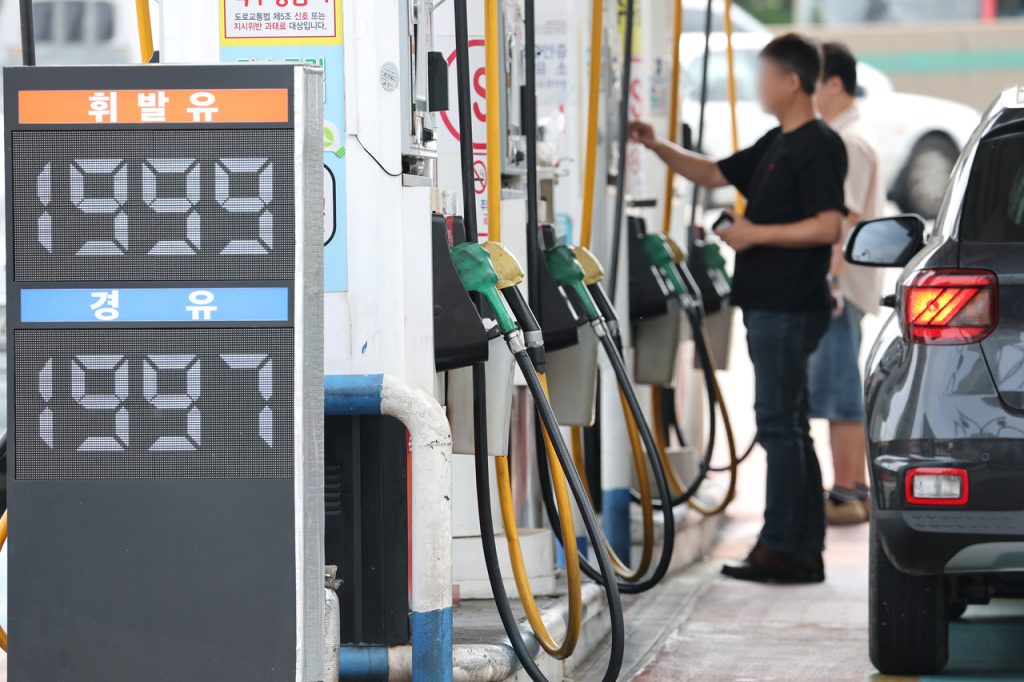
Following a surge after the outbreak of the **Middle East conflict**, **domestic fuel prices in South Korea** have largely stayed above the 2,000-won per liter threshold, even with slight decreases observed in recent weeks.
Data from the **Korea National Oil Corporation’s Opinet system** indicates that the average nationwide **gasoline price** for the second week of June decreased by 0.5 won from the prior week, reaching 2,009.9 won per liter. Similarly, **diesel prices** saw a modest slip of 0.3 won, settling at 2,004.8 won per liter.
Furthermore, the complete **normalization of physical oil supplies** and the wider **supply chain recovery** could take a considerably longer period.
**Crude oil ships** have been stranded in the **Persian Gulf** for over three months, and damaged production facilities will likely require significant time before they can resume full **oil production operations**.
Last week, the **HMM oil tanker Universal Winner** and a liquefied natural gas (LNG) carrier successfully arrived in **South Korea** after navigating through the **Strait of Hormuz**, bringing the count of stranded **Korean vessels** in the region down to 24.
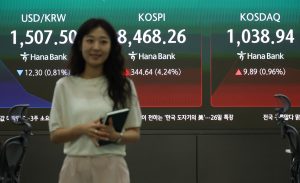
Another notable **economic challenge** arises from the strong **Korean won-dollar exchange rate**.
The **Korean won** has consistently hovered near the 1,500-per-dollar mark in recent months. This **won strength** escalates **import costs** for South Korea, potentially diminishing some of the anticipated benefits from declining **crude oil prices**.
Industry officials also express ongoing caution regarding the **durability of the ceasefire agreement**. This has led **South Korean refiners** to adopt a cautious, wait-and-see strategy before significantly increasing **imports of Middle Eastern crude** in the immediate future.
After months dedicated to **diversifying their supply sources** during the conflict, **South Korean refiners** are hesitant to rapidly reverse their strategies. They await greater assurance regarding the **security of shipping routes** through the strait and the comprehensive implementation of the peace agreement before making major adjustments.