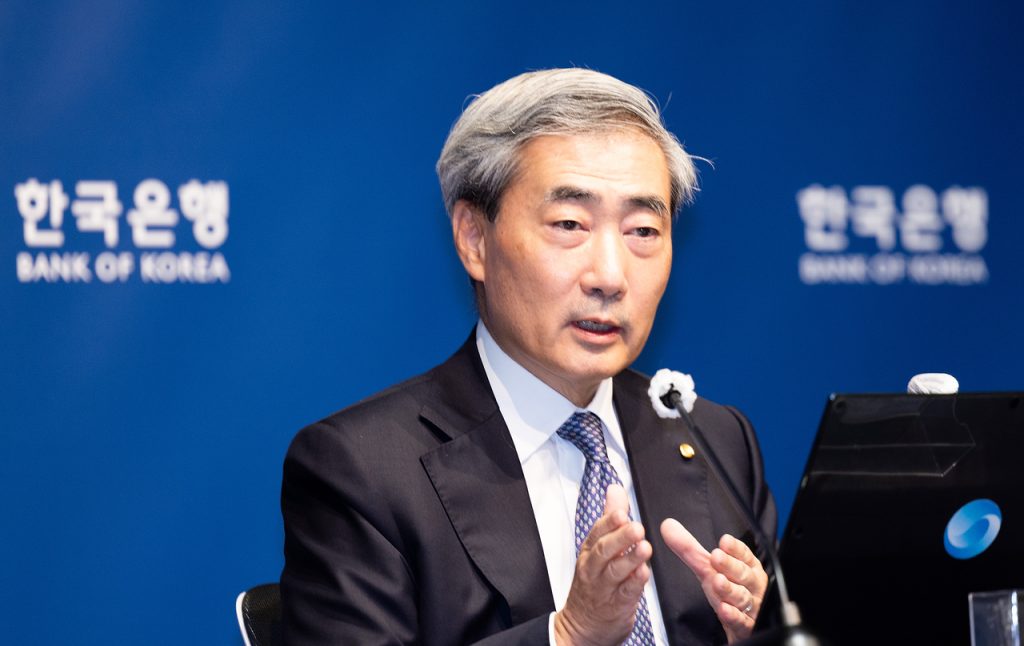
Bank of Korea (BOK) Governor Shin Hyun-song recently underscored the critical need for an interest rate hike at the upcoming monetary policy meeting. This decisive move aims to mitigate surging inflation, primarily driven by the ongoing geopolitical tensions and the prolonged Middle East conflict.
Speaking at the Bank of Korea’s 76th-anniversary celebration, Governor Shin acknowledged the inherent trade-offs often present in monetary policy decisions. However, he clarified that at this juncture, “such trade-offs are not significant,” thereby allowing for a clear policy direction.
He further stressed the imperative to “prioritize price stability and raise interest rates without delay,” signaling a firm and decisive shift in the BOK’s approach to current economic challenges and inflationary pressures.
The Korean economy currently exhibits solid growth, primarily bolstered by robust semiconductor exports. Governor Shin highlighted this strength by citing a notable 1.8 percent expansion in the first quarter.
Despite this economic resilience, **inflation concerns** have sharply escalated amidst the prolonged Middle East conflict. South Korea’s consumer prices surged by over 3 percent in May, recording their fastest increase in 26 months and underscoring the growing pressure on household budgets.
Even core inflation, which meticulously excludes volatile food and energy costs, climbed 2.5 percent last month. This indicates broad-based price increases extending beyond immediate external shocks, suggesting deeper inflationary trends.
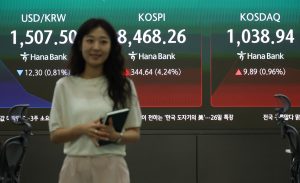
Furthermore, the weakening Korean won, largely attributed to significant sell-offs of domestic stocks by foreign investors, is projected to intensify inflationary pressure by driving up import prices, Governor Shin noted, adding another layer of complexity to the economic outlook.
Financial stability also faces threats from growing financial risks, as recent data revealed a sharp increase in household lending last month. This surge is primarily linked to a rise in loans for stock investments, fueled by a sustained market rally, posing potential systemic concerns for the broader financial system.
Considering the current landscape of robust economic growth, persistent inflation, and emerging financial stability challenges, Governor Shin concluded that “the path for monetary policy is relatively clear,” indicating a focused direction for future actions.
These remarks align with the central bank’s recent indications of a clear pivot towards a more stringent monetary tightening stance in the months ahead, signaling a proactive approach to economic management.
During its previous rate-setting meeting, the Bank of Korea maintained its benchmark interest rate. However, officials clarified that the precise timing of a future rate hike would be contingent on evolving inflation trends, even as semiconductor-driven exports continue to bolster overall economic expansion.