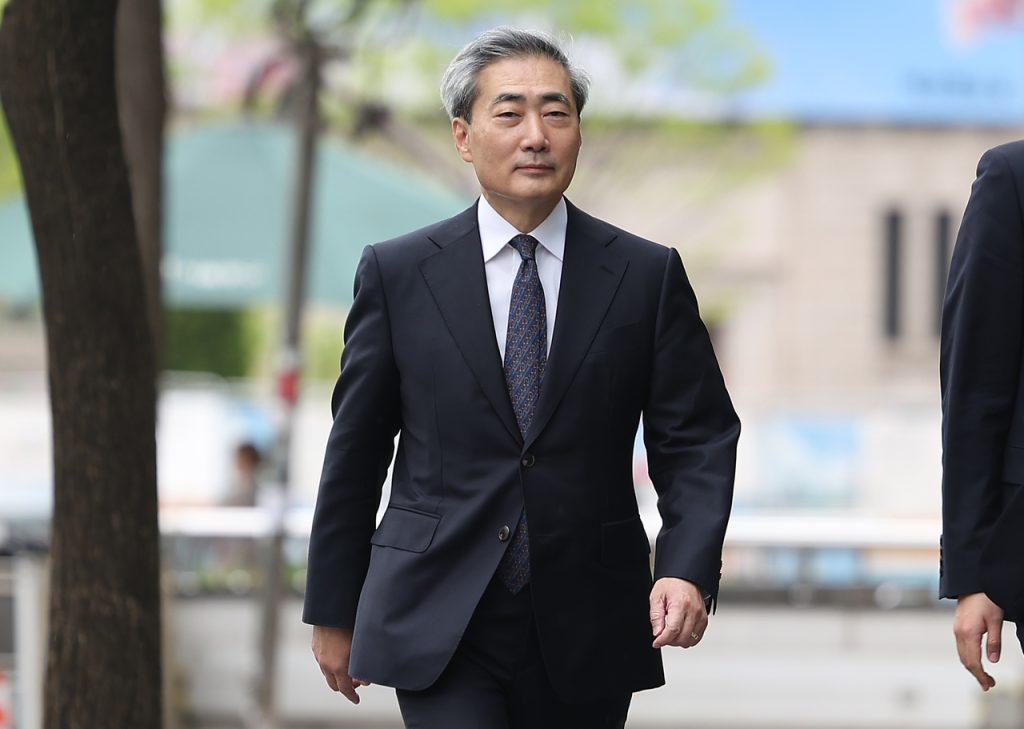
In a significant development for South Korea’s financial landscape, President Lee Jae Myung on Monday officially approved the appointment of Shin Hyun-song as the new Governor of the Bank of Korea (BOK), the nation’s central bank. The announcement, confirmed by Cheong Wa Dae, marks a pivotal leadership transition for the country’s monetary policy.
Shin Hyun-song is scheduled to commence his term as the top monetary policymaker on Tuesday, stepping into the role vacated by outgoing Governor Rhee Chang-yong, whose tenure concluded on Monday. This transition ushers in new leadership for South Korea’s central banking authority.
The path to this key appointment followed parliamentary approval earlier in the day. The National Assembly’s Strategy and Finance Committee formally adopted its confirmation hearing report during a plenary session, securing bipartisan agreement five days after Shin’s rigorous hearing process.
This confirmation process, however, experienced unusual delays, stemming from opposition concerns regarding the alleged illegal reissuance of Shin’s daughter’s passport. Such allegations led to a rare parliamentary deadlock, with the committee initially failing to adopt the report last week – an unprecedented occurrence since the Bank of Korea governor’s confirmation hearing system was established in 2014.
Born in Daegu in 1959, the new BOK Governor possesses a distinguished academic background. Shin Hyun-song pursued his studies in philosophy, politics, and economics at the prestigious University of Oxford, where he subsequently obtained both his master’s and doctoral degrees in economics.
His extensive professional career includes several prominent international roles. Notably, Shin served as a professor of economics at Princeton University and led the Monetary and Economic Department at the esteemed Bank for International Settlements for a remarkable 12-year period, contributing significantly to global financial stability discussions.
Further showcasing his broad expertise, Shin Hyun-song’s resume includes tenure as a resident scholar at the International Monetary Fund (IMF) and participation as a member of the financial advisory committee at the Federal Reserve Bank of New York. Domestically, he held the influential position of senior economic secretary to former South Korean president Lee Myung-bak.