
South Korea is set to inject a significant 9 trillion won ($6.05 billion) into its Economic Development Cooperation Fund (EDCF) through 2028, marking a pivotal shift in its global development strategy. While adjusting its overall three-year commitment, the nation is strategically broadening its support to high-priority sectors including artificial intelligence (AI), digital technology, culture, green energy, and critical supply chains.
This forward-looking three-year roadmap, unveiled on Monday, signals the government’s intention to transform the EDCF from a conventional official development assistance (ODA) mechanism into a more strategic development finance instrument. This strategic evolution aims to empower Korean companies to expand their footprint globally and fortify international supply chain connections.
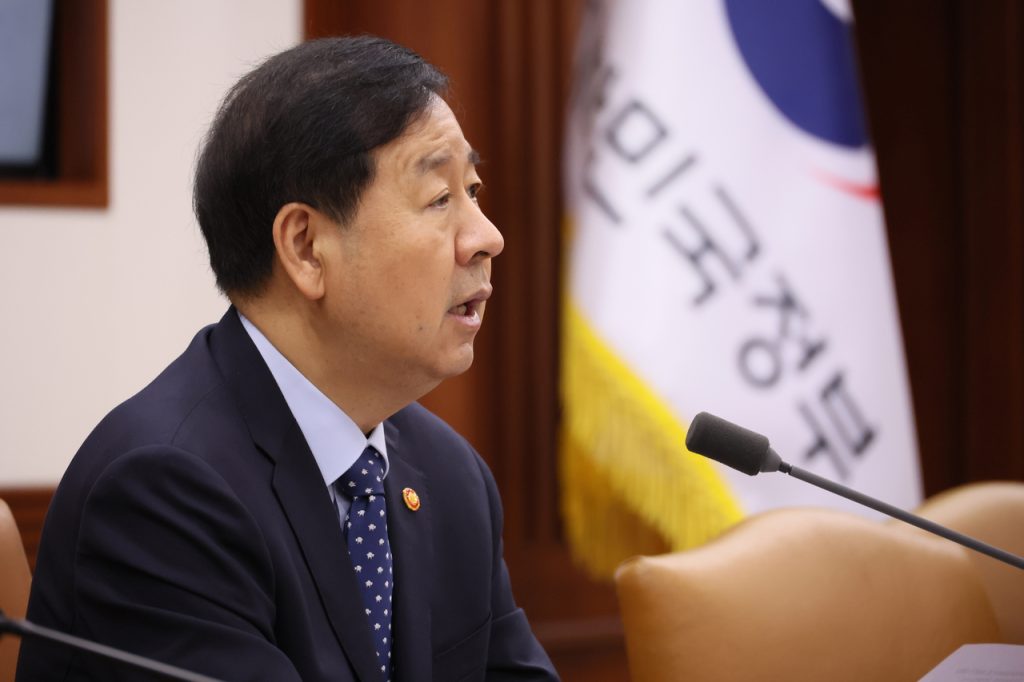
During an EDCF management committee meeting in Seoul, Deputy Prime Minister and Finance Minister Koo Yun-cheol highlighted that this strategic realignment mirrors a broader global trend of recalibrated overseas development expenditures among major donor nations.
Koo noted, “Major donor countries are strengthening the link between official development assistance and their economic and security interests while, overall, reducing the supply of development finance.”
He further affirmed, “Korea too will operate the EDCF in a way that contributes to mutually beneficial growth with recipient countries based on public trust.”
This revised plan represents a 35 percent reduction from the 14.1 trillion won initially earmarked for the 2025-2027 midterm program. This more selective approach is a direct response to deepening global geopolitical tensions and the widespread trend of fiscal prudence.
However, this narrower financial commitment is paired with a significantly broader strategic vision. Instead of solely focusing on traditional large-scale infrastructure and construction projects, the South Korean government is now deliberately directing a greater portion of the EDCF towards sectors where its industrial strengths align perfectly with growing demands in developing economies.
This new direction includes pioneering ‘signature projects’ that leverage advanced Korean technology to develop AI-based public infrastructure. The government intends to significantly expand AI-enabled initiatives designed to enhance the efficiency of crucial sectors like transportation networks, power grids, and medical systems. Furthermore, in the cultural sphere, the EDCF aims to back large-scale projects possessing significant symbolic value and strong spillover potential, thereby accelerating the globalization of Korean content.
Established in 1987, South Korea’s EDCF has historically provided long-term, low-interest loans to support vital economic and social infrastructure projects in emerging economies, with the overarching goal of fostering sustainable growth in recipient countries.
jwc


